Weather in Phoenix broke some records this weekend (87 degrees!), so my friends and I took the opportunity to get outdoors and enjoy some sunshine. Camelback Mountain Desert Preserve was established in 1968 by then-president Lyndon Johnson and has become a popular area for hiking recreation.
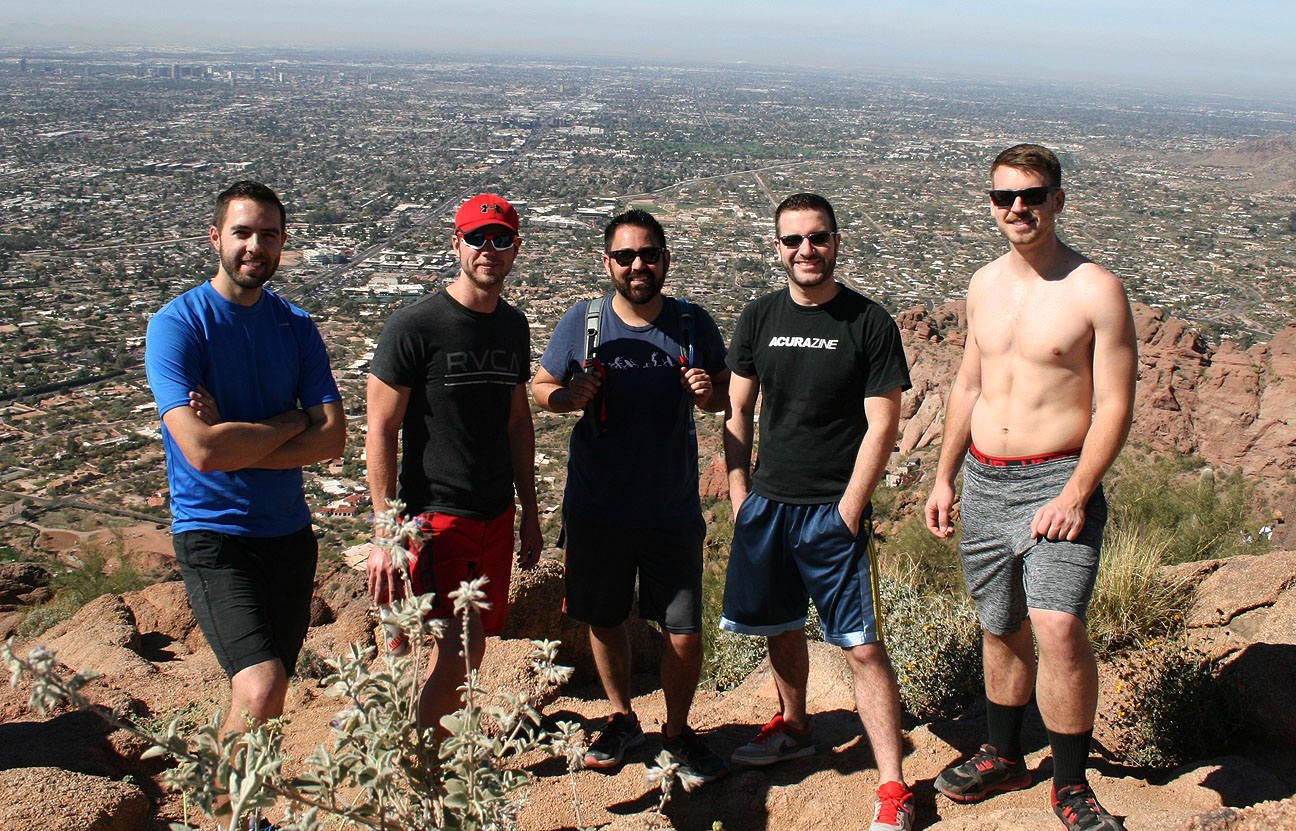
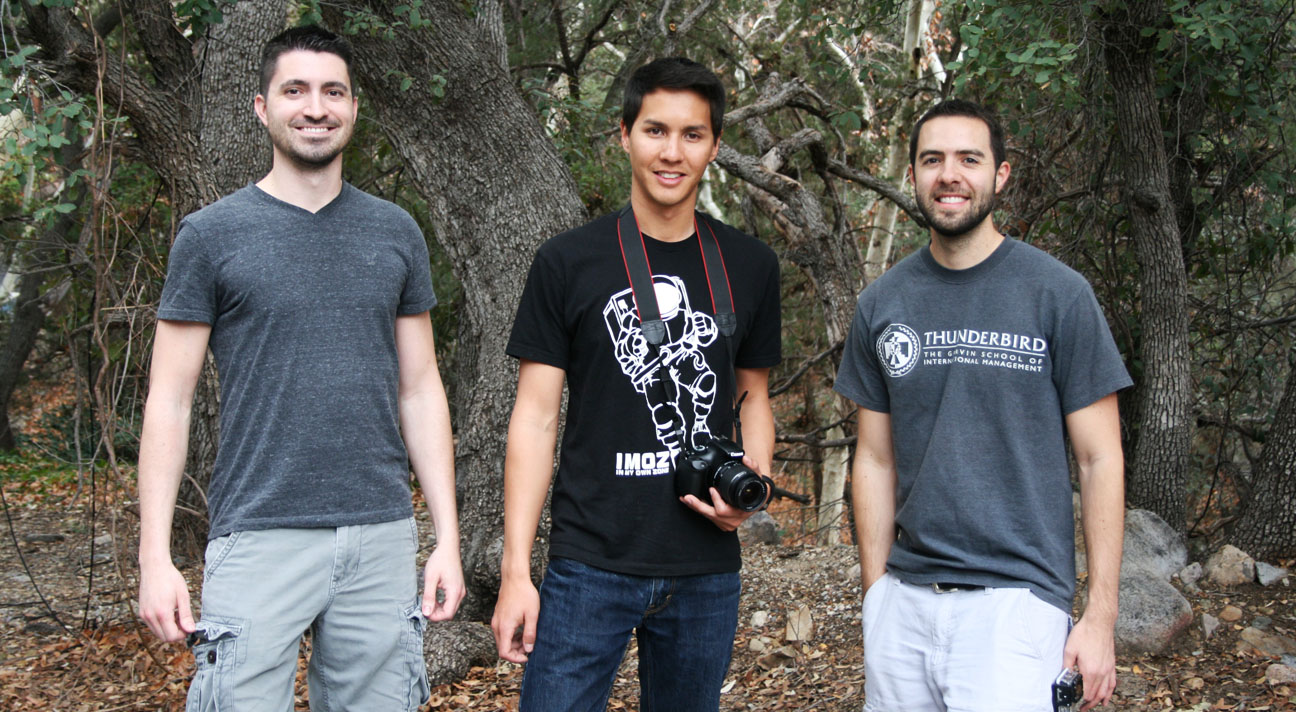
Along with 4 friends including my friend Conor who’d flown in from New York for the weekend, I hiked the Cholla Canyon trail. It’s only about 1.5 miles long each way, but the elevation gain is 1,200 feet and in some areas it requires getting on hands & knees to scale the faces of rocks. The view from the top was worth it. Here I’m pictured with Brad, Matthew, Conor, and Justin.
Heading to the trailhead with Brad, Conor, and Justin
I think we had to park as far away from the trailhead as the length of the hike itself. Very busy day!
Trailhead arrival
The summit is 2,704 feet in elevation. On a clear day, expansive views can be enjoyed a full 360 degrees.
Afterward, we bought out the lemonade stand at the base of the hill. I hadn’t packed any water – big mistake!
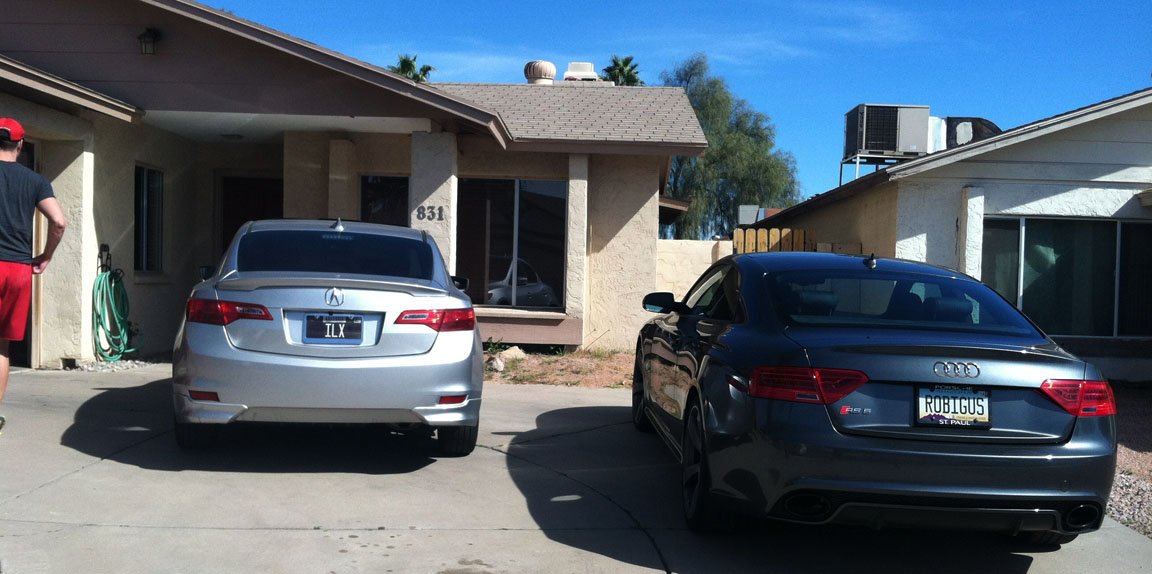
Brad’s 2013 Audi RS5 looked right at home in the driveway. I want it!
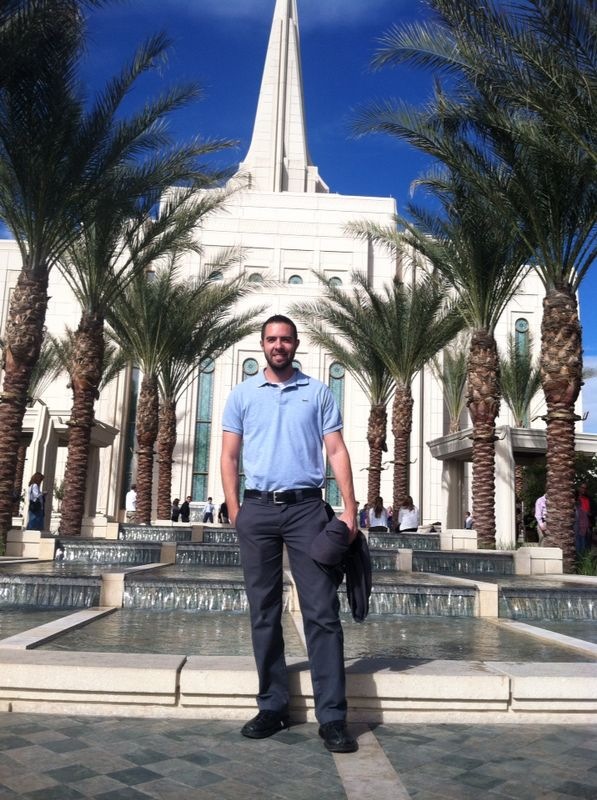
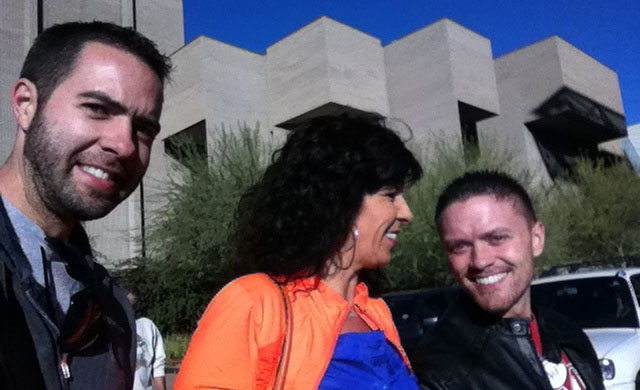
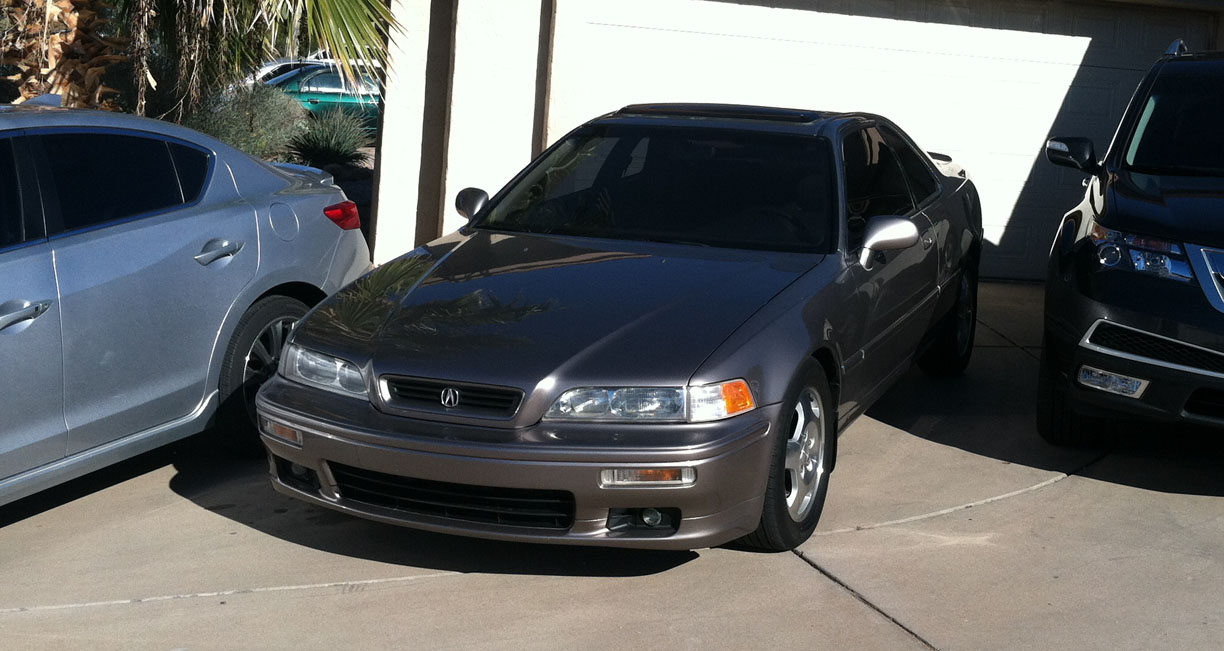
Later in the weekend, I drove Conor out to Gilbert, Arizona in the 1994 Legend coupe. He’d never seen a Mormon temple before so we checked out the brand new one that was just completed there. It’s the 142nd temple in operation for the Church of Jesus Christ of Latter-day Saints.
The temple sits on 21 acres southeast of Phoenix and 83,000 square feet of floor area. It’s open to the public for tours until the March 2nd dedication date. I took a tour of the building a couple of weeks ago and was very impressed with the craftsmanship and architecture.
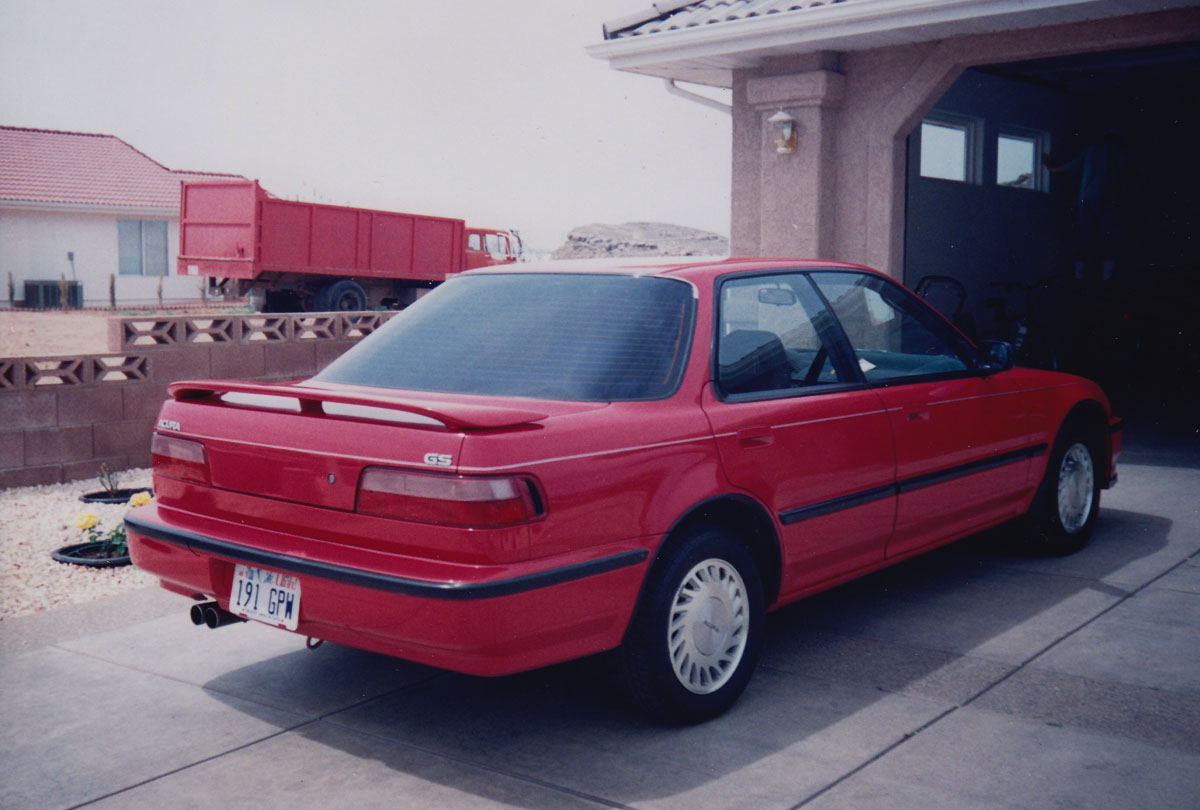
Thought I’d add a little throwback segment today since I scanned some old pictures this week. I’ve shared before that my first Acura love was a car that my mom bought when I was 14 years old. It was a Rio Red 1990 Acura Integra GS Sedan with an automatic transmission. That car was a huge upgrade from some of my mom’s previous rides, including a Pontiac Grand Prix and a Jeep Cherokee. I loved how sporty it was.
Here’s a photo taken on November 9, 1996 at a family dinner outing. We parked next to my uncle Dande’s Bahama Gold Metallic 1988 Acura Legend L Sedan 5-speed that I later owned. Acura parking only! I was already addicted even back then.
Here are a couple of photos that were taken after a detail in St. George, Utah.
I kind of wish we still had that Integra! Though, the Acura ILX today carries on the Integra’s DNA as the brand’s stylish entry level compact sedan.
That old Integra provided reliable service until we upgraded to a 1993 Legend L Sedan in June of the following year. Meanwhile, we enjoyed that sporty little ride.
Bear with me here as I show you perhaps the nerdiest science experiment you’ll ever see. For the last few years, I’ve had some die cast 1:18 scale model cars on my rooftop. Neighbors have commented on them. Visitors spot them from the driveway frequently. But there is a reason for all this. It’s a durability test.
I introduce to you: The Test Fleet
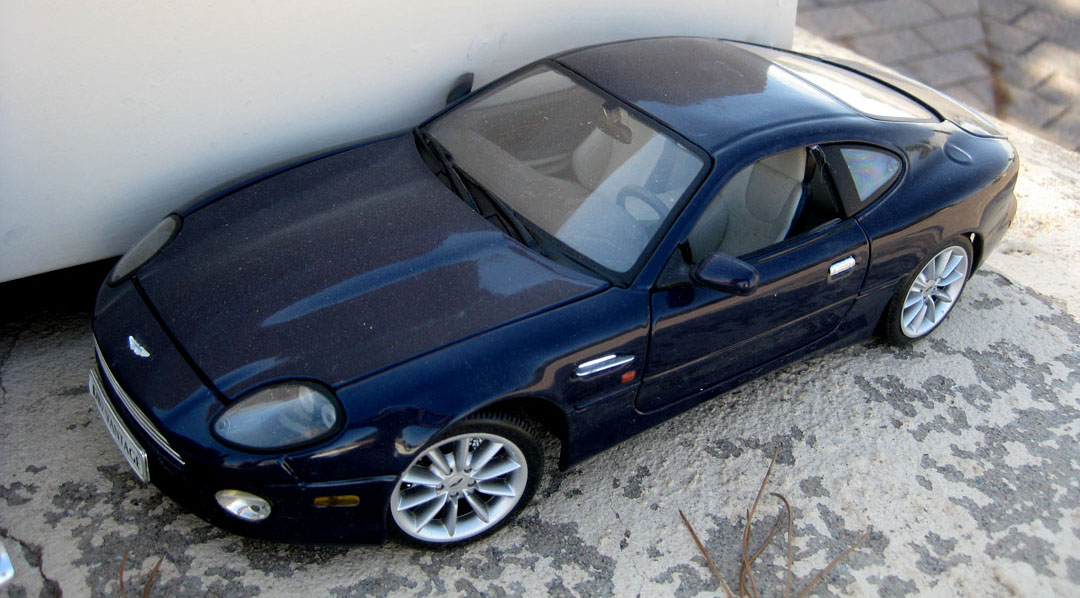
2000 Aston Martin DB7 Vantage
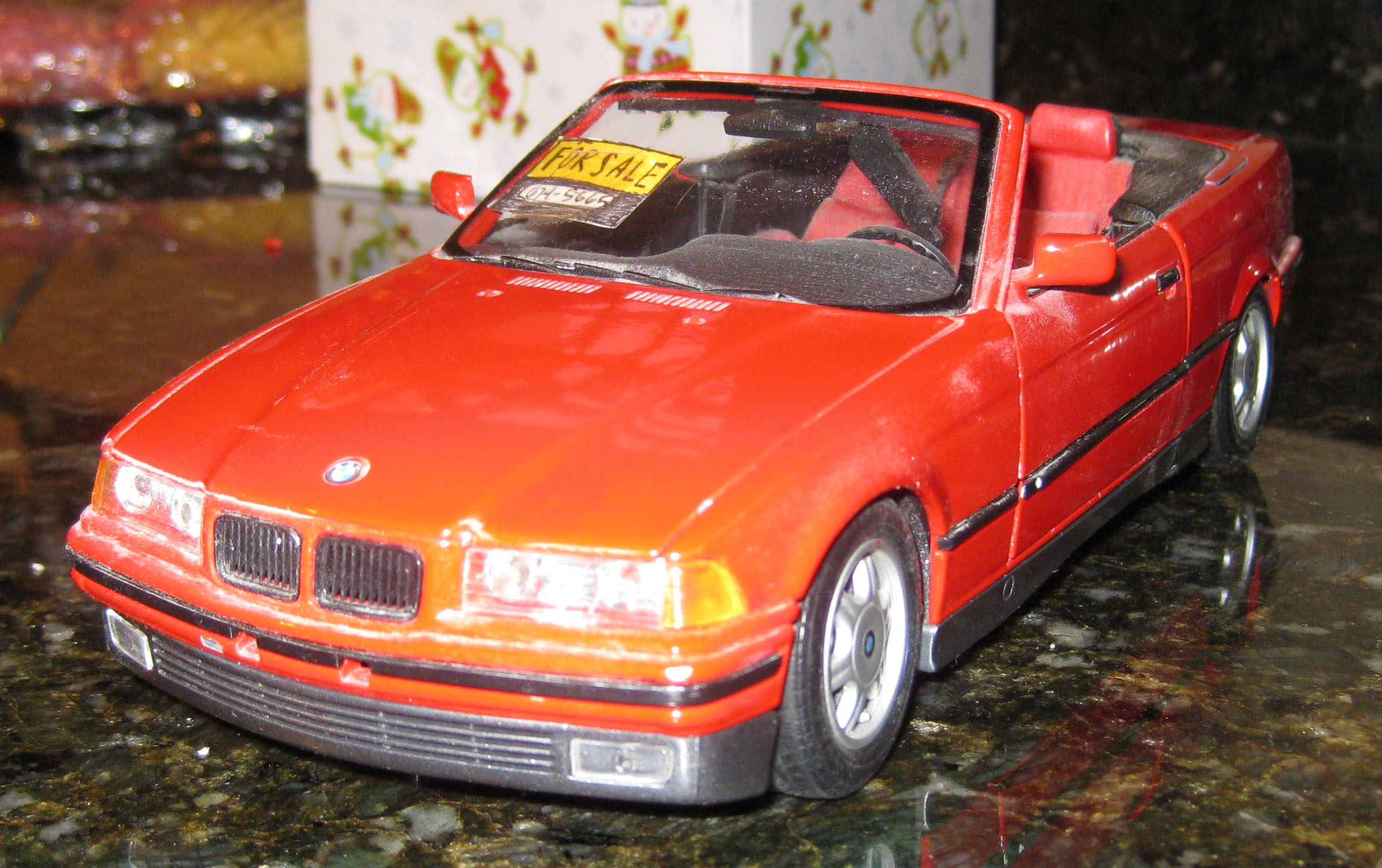
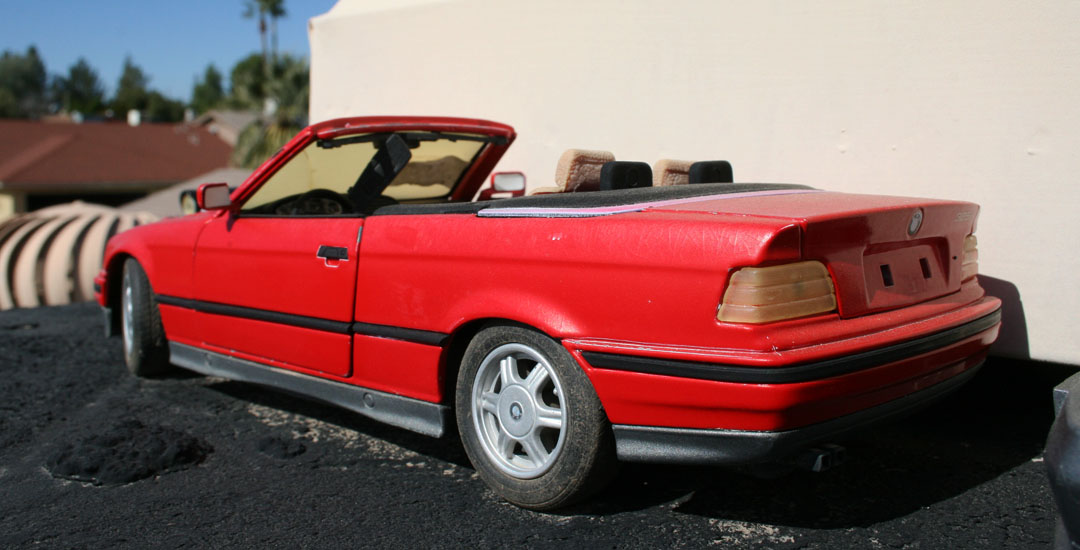
1993 BMW 325i Convertible
1957 Chevrolet Nomad
1957 Ford Thunderbird
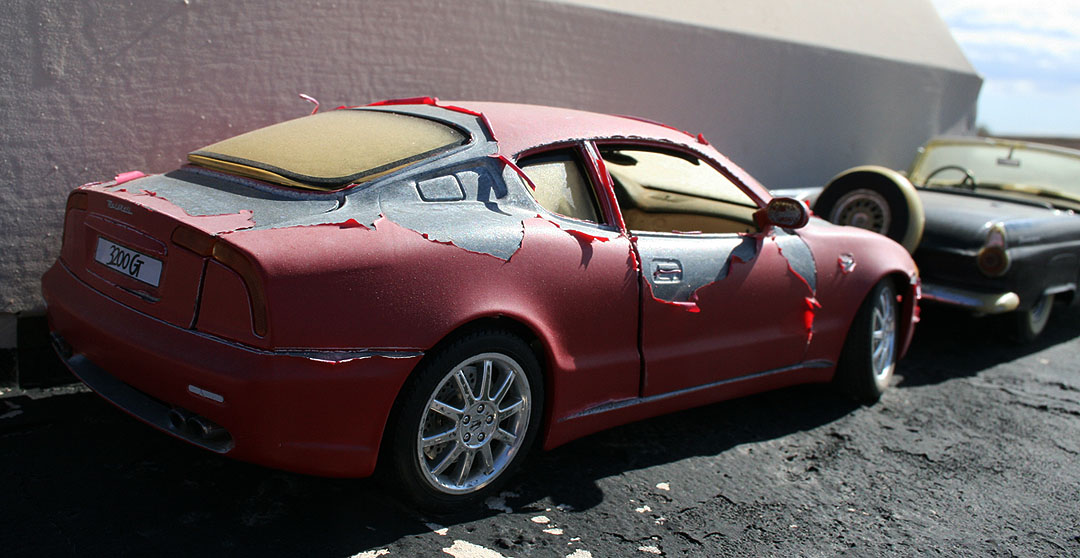
1998 Maserati 3200 GT
1989 Mercedes-Benz 500SL Convertible
Scope of Experiment
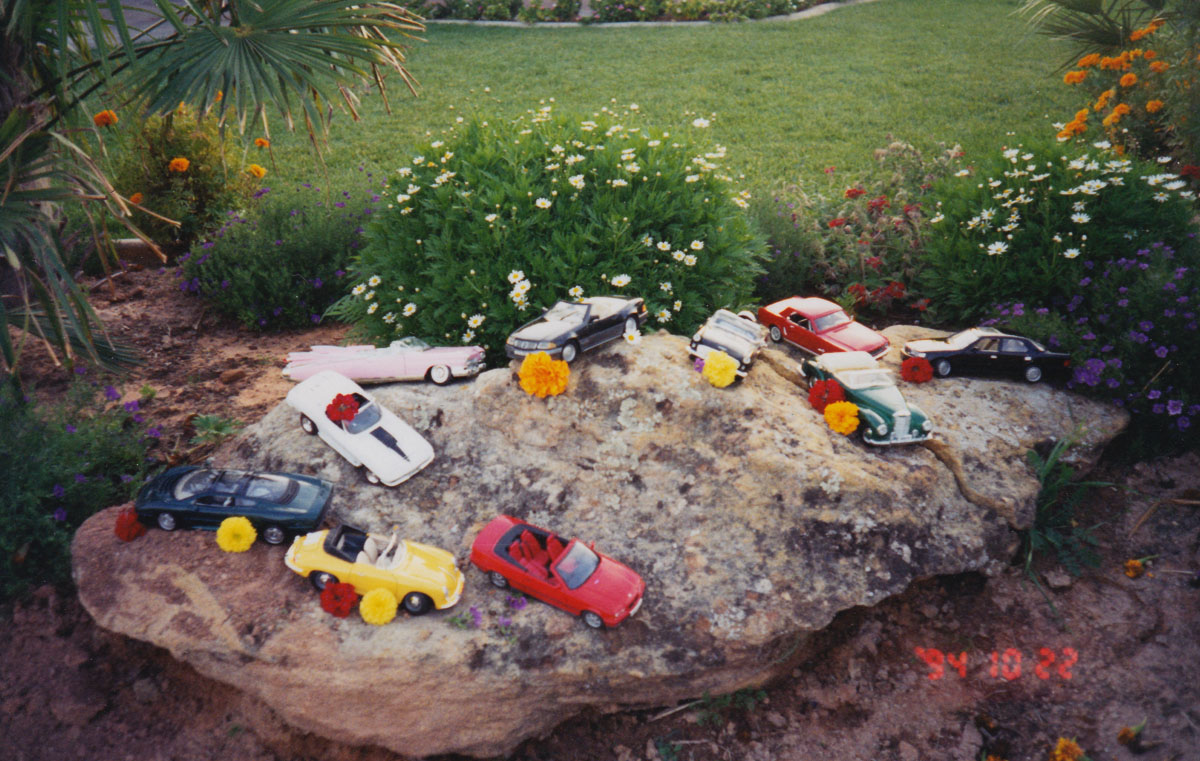
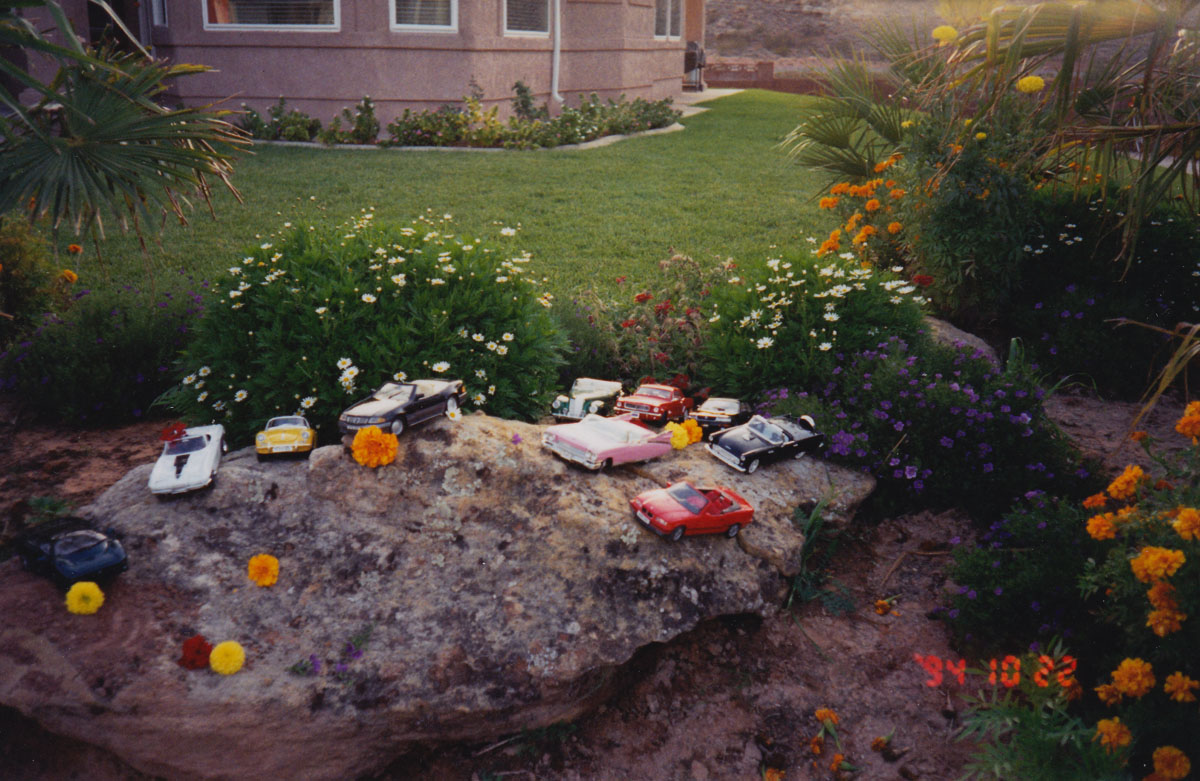
Many years ago, a Saturday closet-cleaning activity left with me a box full of 1:18 scale die cast model cars that I needed to get rid of. I’d had some of them for many years. Here are photos from 1994 with the cars neatly displayed (with flowers from mom’s planter!).
The thought crossed my mind that I could put these model cars to a test much like I’ve time-tested cars of the life-size variety. Would the harsh Arizona climate take its toll on a model car in the same way it does to regular cars? There was only one way to find out. I climbed up a ladder and put the cars on my rooftop, surrounding the chimney on a platform that would shield them from the wind.
The launch date for my durability evaluation program was just over 4 years ago, in December 2009, with just the BMW 3-series and the Ford Thunderbird. About 6 months later, I added 4 more vehicles to the fleet and all 6 cars have been under periodic analysis ever since. Every few months, I scale my ladder and take photos of the current status of each of the cars.
In August 2012, I sprayed all the cars with a heavily concentrated saltwater solution to hasten the corrosion process. The results were readily evident when I checked on the cars a month later. Otherwise, the process has been completely natural with weather conditions in Phoenix, ranging from freezing temperatures all the way up to temperatures in the low 120’s Fahrenheit. I have made no effort to clean the vehicles after our desert rain and dust storms. I did paint the driveway surface black to simulate blacktop.
Indeed, the sun’s wrath hath no mercy even on a play toy. Here’s how they’ve fared over the years:
DB7: Definitely the best paint here, the Blue Sapphire finish still looks presentable. However, this car has also had the most access to shade. Aside from some discoloration of the windows & plastic trim, it has weathered the storms very well.
May 2011
February 2014
325i: Sometime in 2011, the BMW lost a headlight in a late summer monsoon thunderstorm. The interior has deteriorated so badly it’s difficult to tell what color the seats used to be; they’re currently a brownish hue and appear almost as if they’ve been burned. Seat control mechanisms failed in 2012 so the front seats are fully reclined. One windshield sun visor has been lost. Taillights have faded considerably. Dust/wind storms frequently blow the driver’s door open.
December 2009
February 2014
Nomad: Despite having the advantage of afternoon shade, the Nomad’s paint has perhaps fared the worst. Horizontal surfaces developed cracks within the first year. Plastic trim yellowed and the chrome lost its luster shortly thereafter. However, the Nomad has been steadfast in its body rigidity. High wind gusts have never opened its doors, unlike with the imports, BMW and Mercedes.
May 2011
February 2014
Front End
Thunderbird: The interior of the Thunderbird has collected a great deal of debris. It’s full of needles and dust. The engine bay has done a poor job of insulating its 4.8 liter V8 from the elements of nature. It would take a great deal of restoration work to clean things up and make it road-worthy once more.
October 2010
February 2014
Engine Bay
3200GT: This Italian is ready for the junkyard. The paint transitioned from red to pink and then started chipping off in large sections. Within a couple of months of project onset, the headlight seals had failed and allowed dirt inside. By Fall 2013, a headlight lens had broken open entirely.
May 2011
February 2014
Ghastly Results
500SL: The Benz’s light colored interior was a wise choice by the design team, since it shows remarkably little wear. Exterior trim has developed many issues, including broken grille slats, a warped wiper blade, and lower body cladding that is separating from the body itself.
May 2011
February 2014
Since my friend Tyler asked for a model car update, this post is directed to him specifically.
So there you go. Tyler, further updates will follow as requested :).
Just go make today’s post educational, everyone’s homework is to watch this 12-minute YouTube video describing how to shift a 13-speed manual transmission. I find it fascinating. Gotta drive one!
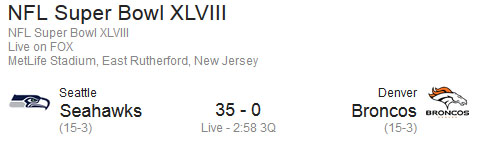
Happy Superbowl Sunday. Here’s the score. I think you’re OK to look away from the TV for a minute.
About a month ago, I received an email inquiry about my availability for an interview with a Japanese automotive lifestyle magazine called Kurumag. The magazine’s third issue is under development and they wanted to include my story! I may need to call upon those of you who are fluent in Japanese to translate it, but I’m stoked to see how it turns out. This morning, I received a visit from the following:
Yujiro Otsuki, Motorsports Marketing Photographer
Shigeyuki Ishikawa, Managing Editor, Automobile Business Division
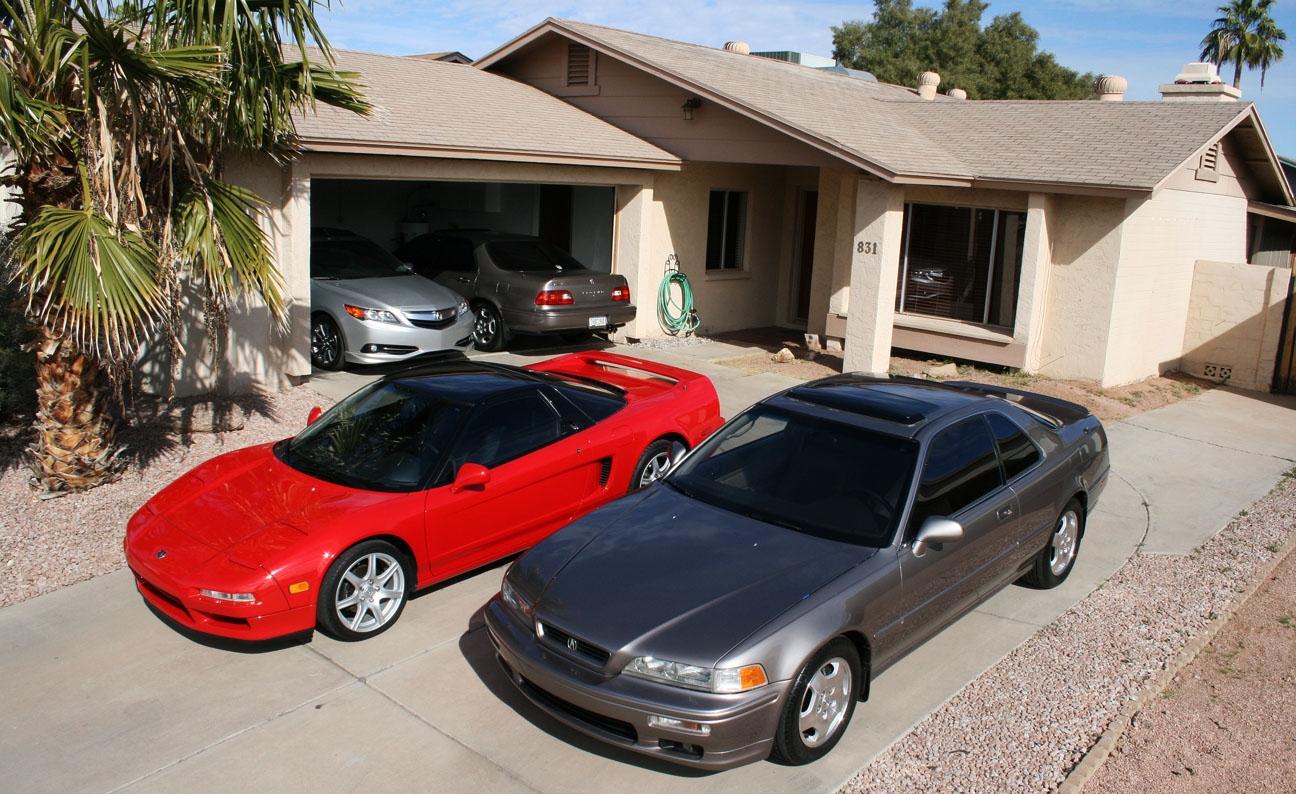
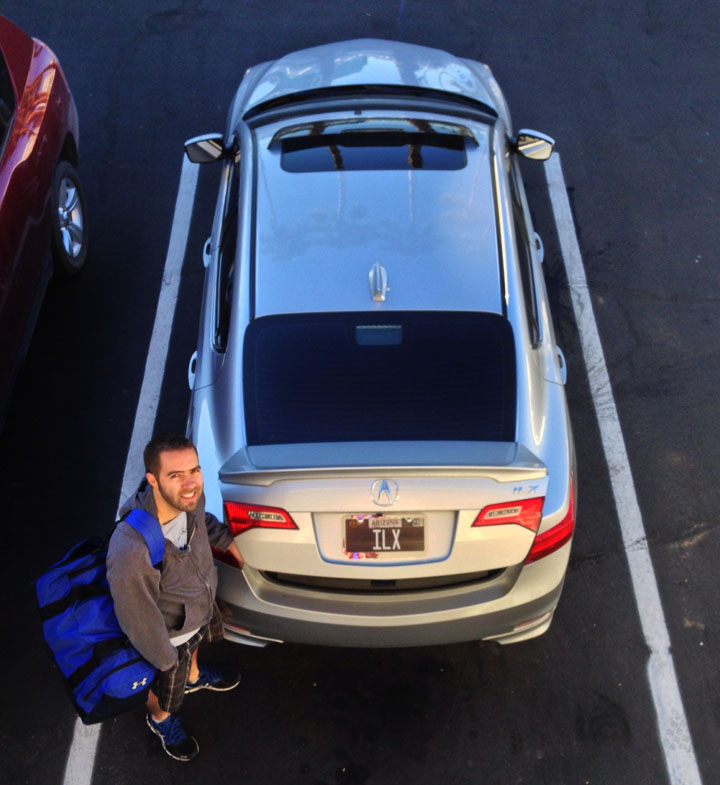
Here’s a sneak peek at the vantage point we were able to achieve with some strategic parking and a step ladder.
Mileage, by the way, for the cars in this picture was:
2013 ILX: 65,802
NSX: 97,567
Legend 1: 144,429
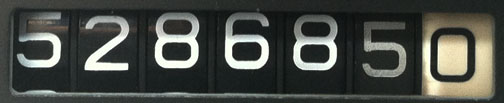
Legend 2: 528,562
Total: 836,360
Here’s an example of Kurumag, the Winter 2013-2014 Issue, featuring Ken Block
I’m pretty anxious to see what these guys come up with! The magazine is very widely distributed so maybe I’ll pick up a few followers from that side of the world. Many thanks to Yujiro and Shigeyuki for making the time to come visit with me. My Legend sedan turned over a memorable milestone while out & about today.
Here are a few shots of my ILX from a quickie trip up Arizona Highway 87 toward Payson yesterday. I found a concrete underpass that begged to have its picture taken.
The ILX has a menacing appearance from this perspective.
Go toward the light!
Wait, is that Harry Henderson painted on the wall back there?
This masterpiece, it appears, may have originated from two different artists. Oh, the many things you see when driving the road less traveled. “So Dope,” for sure.
The real deal (I had nightmares about this guy back in 1987):
Dang, broken foglight lens. Discovered it this morning!
Welcome back! It was an Acurrific Saturday with our caravan of three Acuras around the hills of Tucson, Arizona. This is a continuation of our adventure from that day full o’ fun. After having visited the Kitt Peak National Observatory, the next destination on our radar was a small canyon located about 25 miles south of Tucson called Madera Canyon.
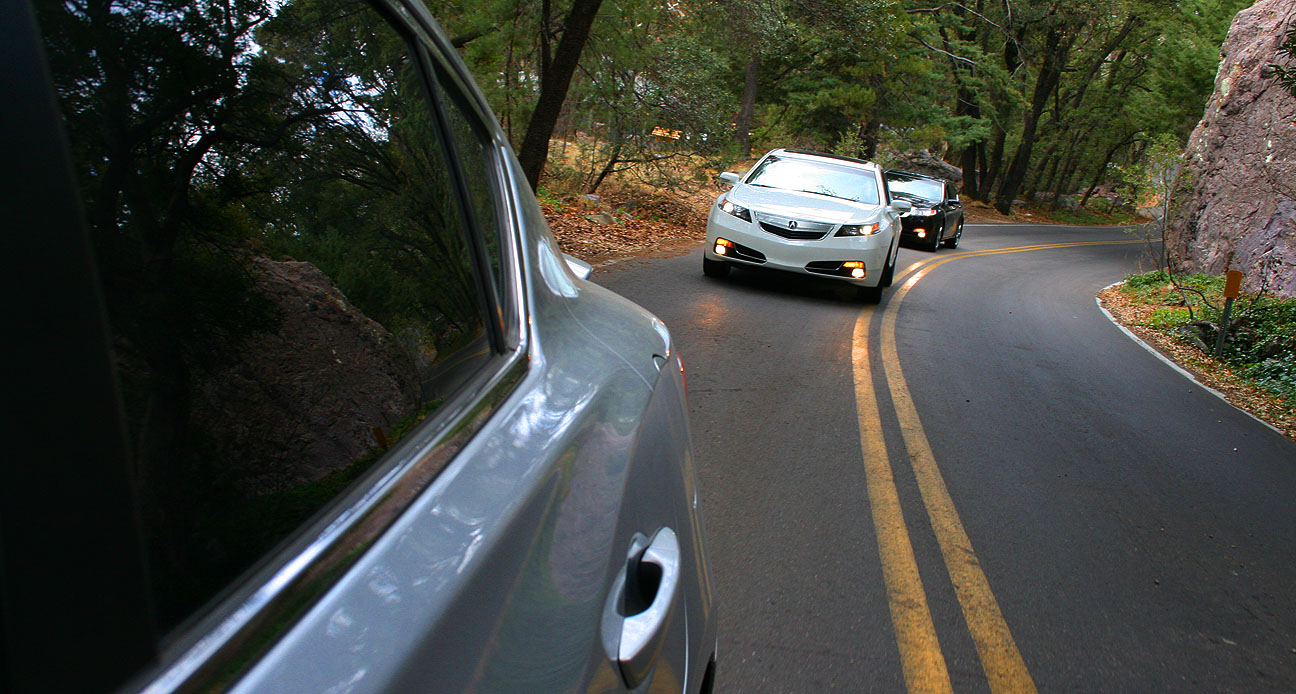
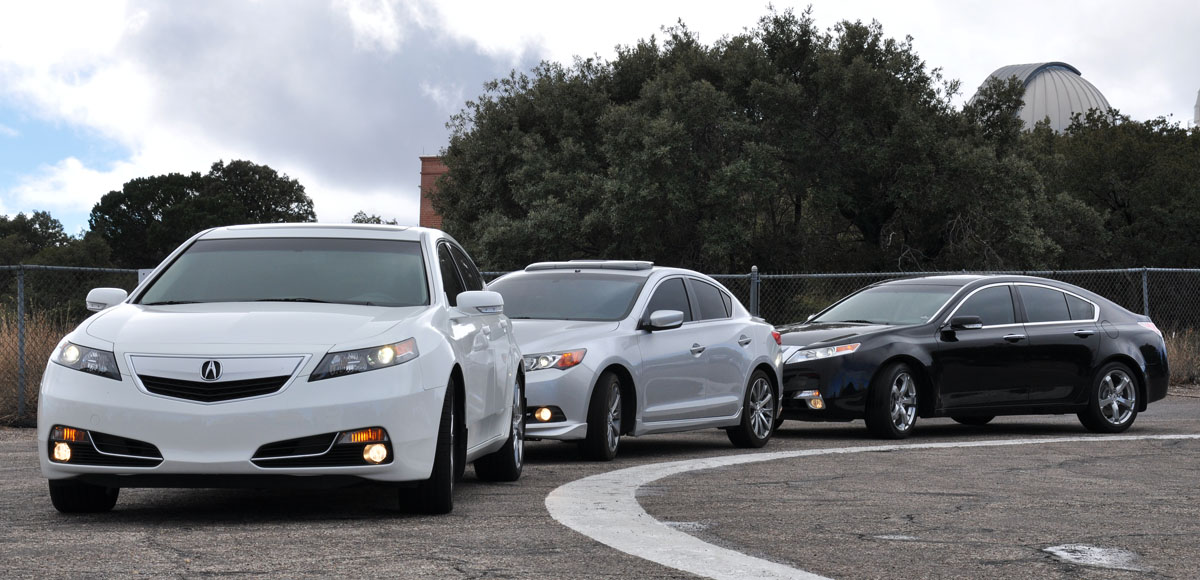
From the Kitt visitor center parking lot, we stood about 4,000 feet above the elevation at the valley floor below. We eagerly climbed into our sport sedans and set out to experience an exhilarating drive. Paul led the way in Sport mode with his pearl white TL SH-AWD, while I followed closely behind in the ILX and Jason brought up the rear in his black TL SH-AWD. The Kitt Peak access road is a driving enthusiast’s dream: a 12-mile narrow two-laner with plenty of blind/sharp corners and some seriously panoramic views of the valley floor below. All drivers’ eyes, however, were glued to the road ahead rather than the peripheral views because the highway begged to be experienced at speed.
Thankfully, the ILX 2.4 is a high-revving machine and I was able to go easy on the brakes as I slid the gearbox between 3rd & 4th gears and listened to the growl at 4,000 RPM and higher. At over 65,000 miles I’ve yet to do any work to the brakes and I’ve only had the manual transmission fluid changed once. It’s still as smooth as the day I got the car with 16 miles on it in June 2012. And even without AWD, it held its own against the TLs in the corners!
After the refreshing (and remarkably traffic-free) descent to the valley floor, our Acuras then made their way across Highway 86 toward Interstate 19 and the town of Green Valley. As I’ve blogged before, I-19 is the only interstate in the country that is signed with metric distances. At Exit 63 (63 kilometers from the Mexican border) we exited for lunch at The Olives Bistro. From there, we were just moments away from our final destination for the day.
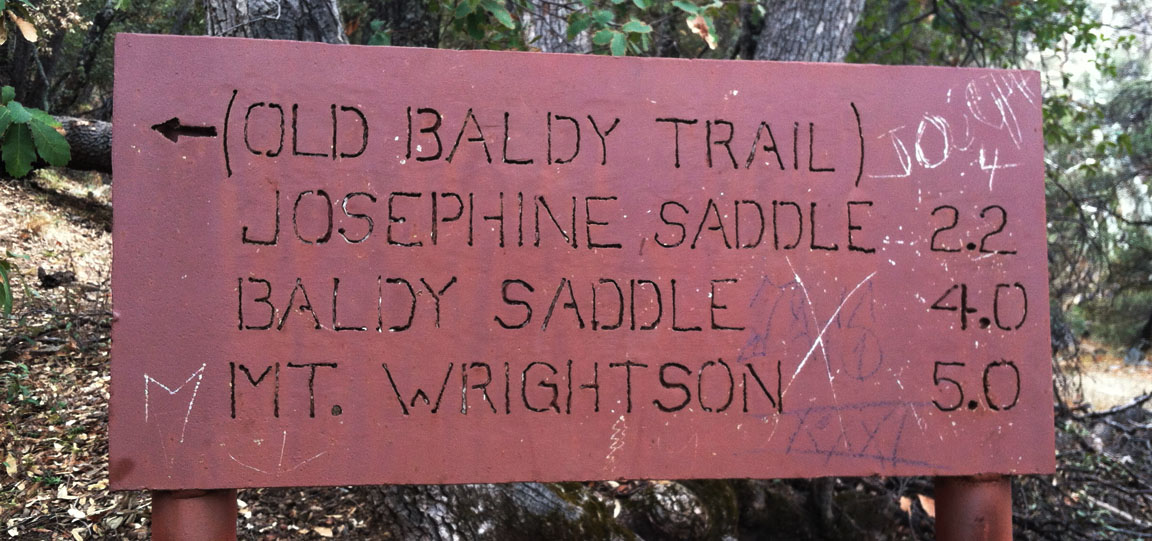
Madera Canyon (madera, by the way, is Spanish for “wood”) winds some 25 miles through the Santa Rita Mountains as it gains elevation. The canyon is one of the southwest’s most popular places for birdwatching. There are over 250 species that call this area home, including 15 different species of hummingbirds. The two-lane road that winds its way through the canyon is a dead end. There is a visitor parking lot at the end that also doubles as a trailhead for a half-dozen different hikes. Jason, Paul, and I hiked about 30 minutes toward Josephine Saddle before deciding to double back.
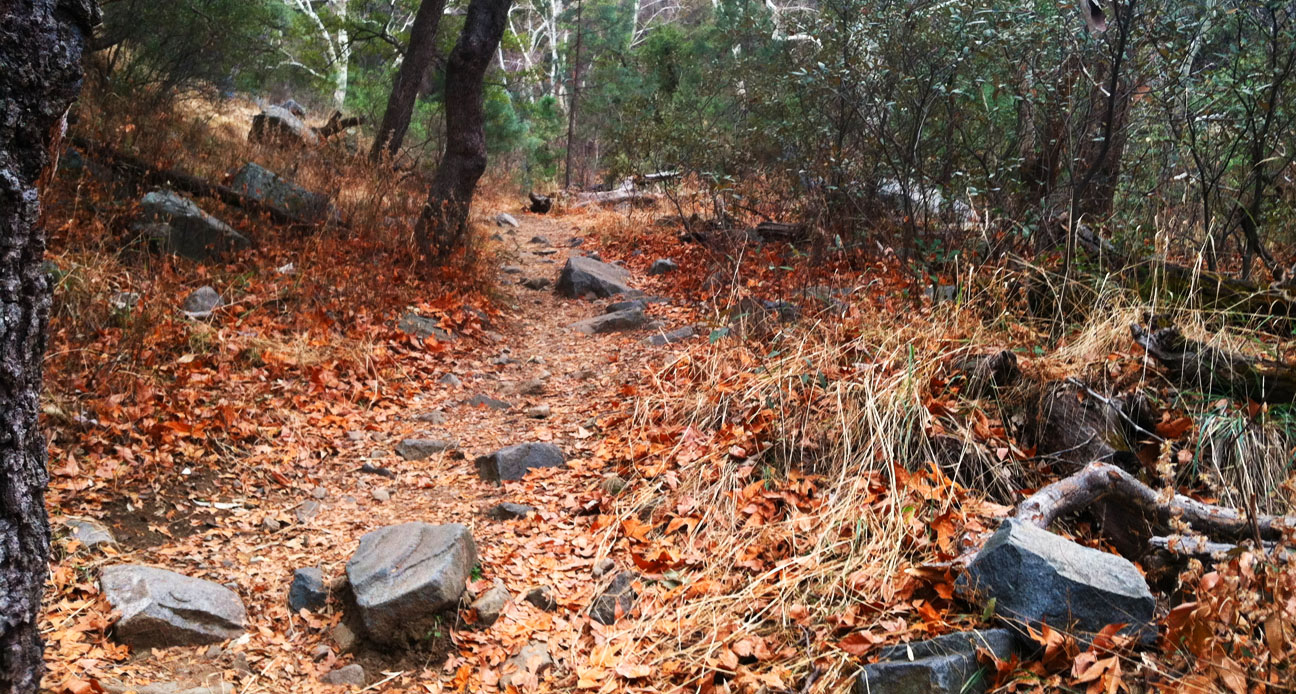
The few times when we stopped to catch our breath on the steep incline, we noted how silent it was. No rustling of leaves, no sounds of traffic. It was just us and nature. On the note of “sounds,” we did have one funny realization over the course of Saturday’s trip. Each time we’d all pull our cars over to get a group picture, as soon as we exited our vehicles with our key fobs in our pockets, our Acuras would beep due to the key proximity sensors alerting us that the keys were not detected. It was a symphony of Acura beeps and we had a good laugh about it.
On the way out of the canyon, we made a pit stop at a gift shop full of bird feeders, postcards, and walking sticks. Here are the photos and a video from the rest of our Saturday trip!
Metric units of measure abound in the regions surrounding Interstate 19 south of Tucson
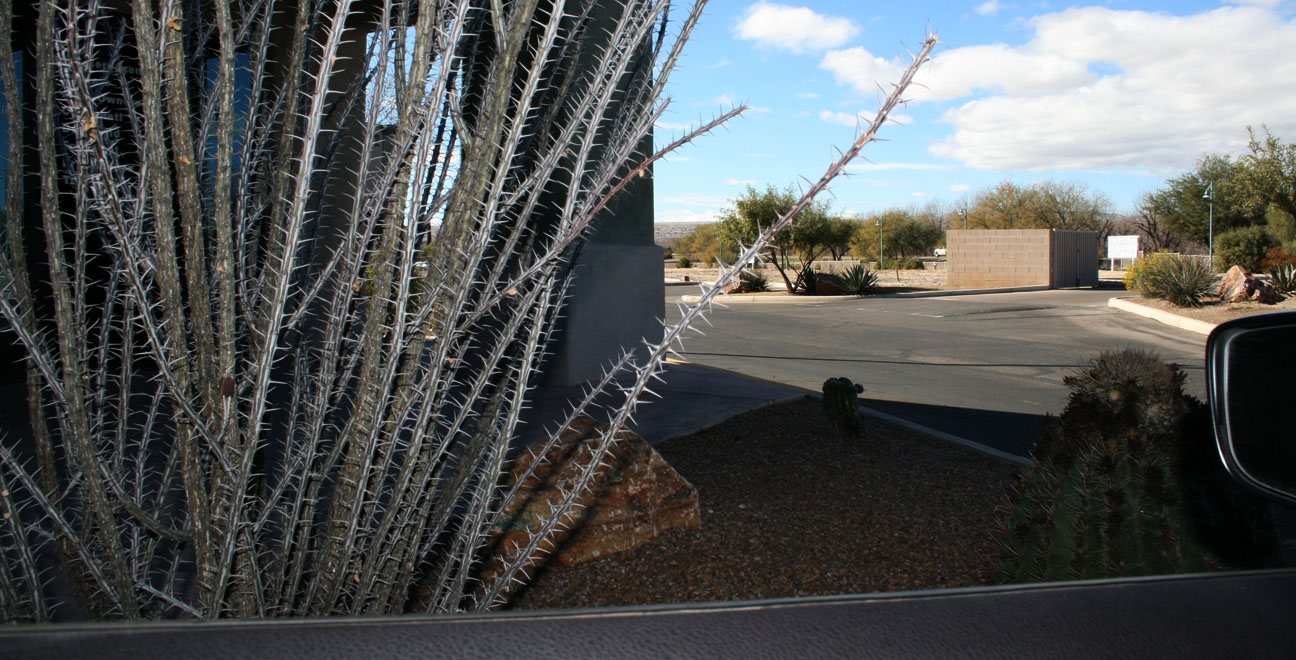
Only in Arizona do you have to watch out for prickly cacti when exiting your vehicle.
From there, we were only about 10 miles from the southern end of the Madera Canyon road. State Route 83 is accessed via a separate (dirt) road that branches off the main highway. I’ll save that drive for another day!
It was a perfect afternoon to explore a new destination.
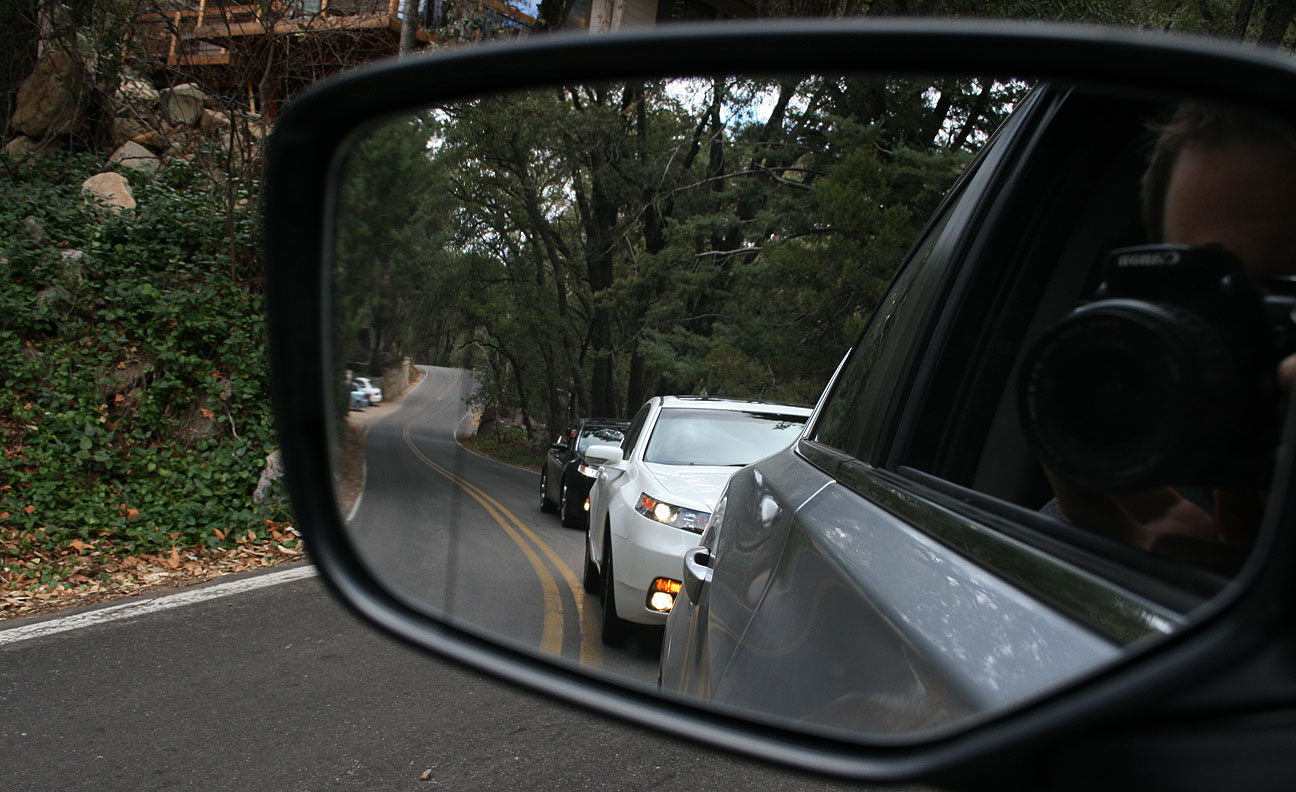
Can’t complain about the scenery in the rearview mirror, either.
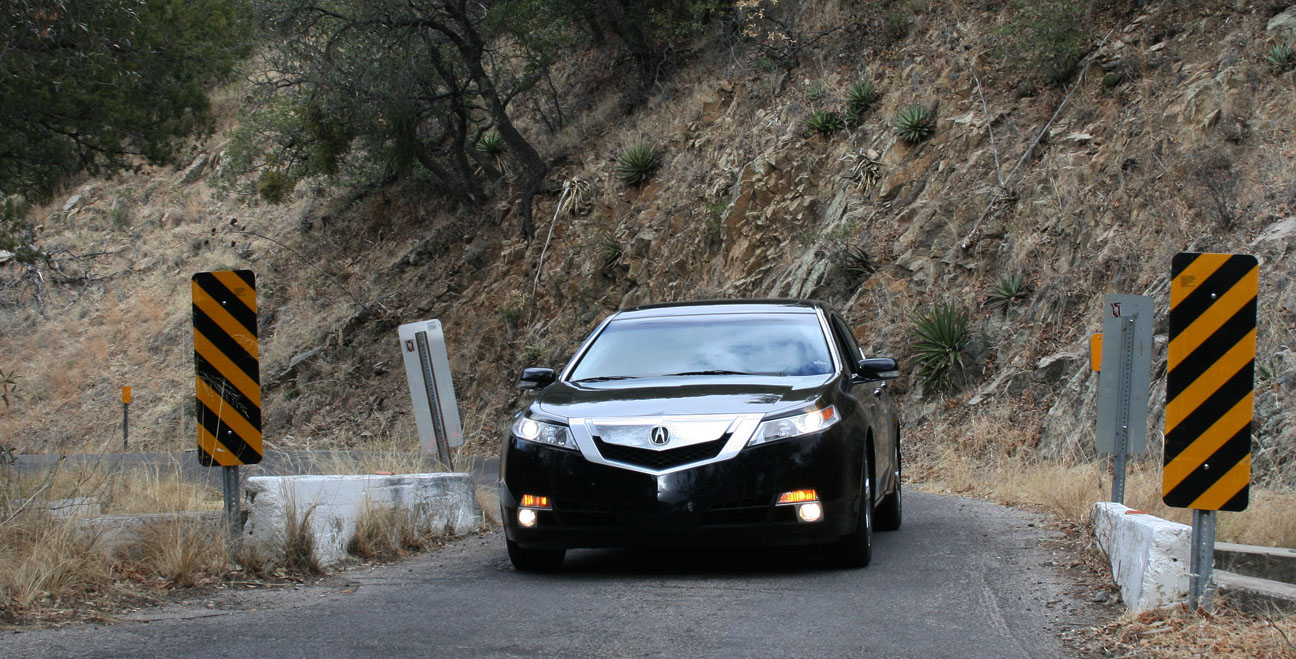
We drove over a total of five one-lane bridges to get to the trailhead at the end of the canyon.
Jason rolled down his window and all I heard was Journey blasting at full volume.
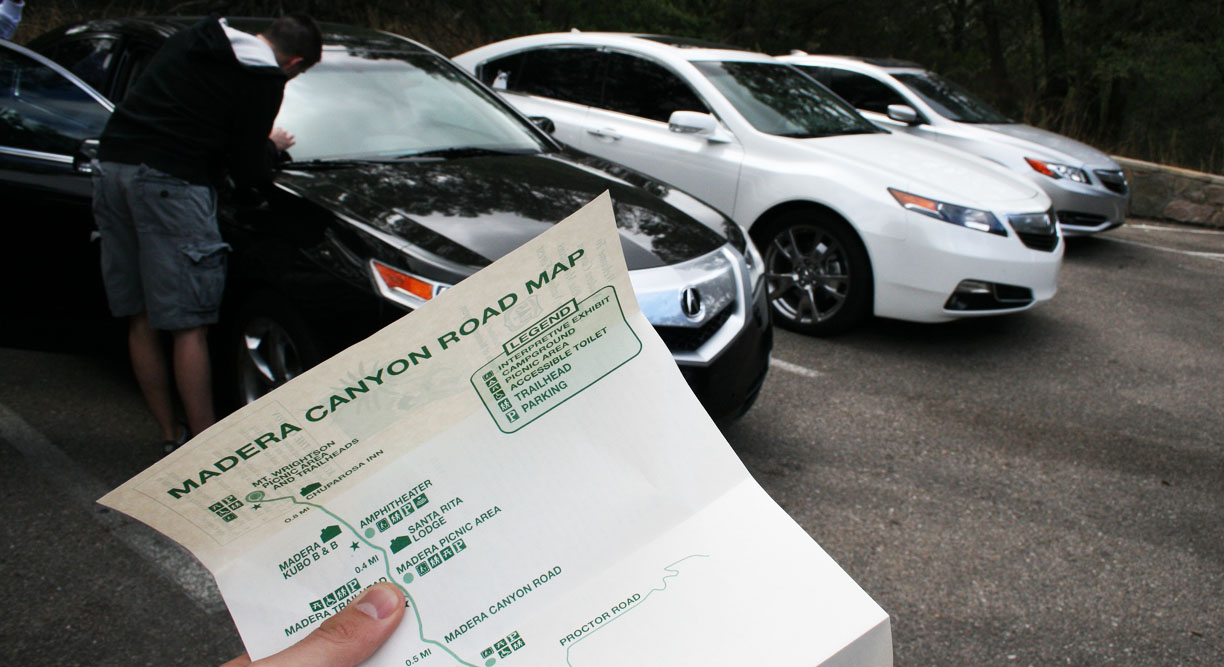
Map in hand, we paid our $5 for day use and headed to the Mount Baldy hike trailhead.
I definitely didn’t have the energy to attempt Mt. Wrightson at 10 (steep) miles round-trip.
Taking a quick breather.
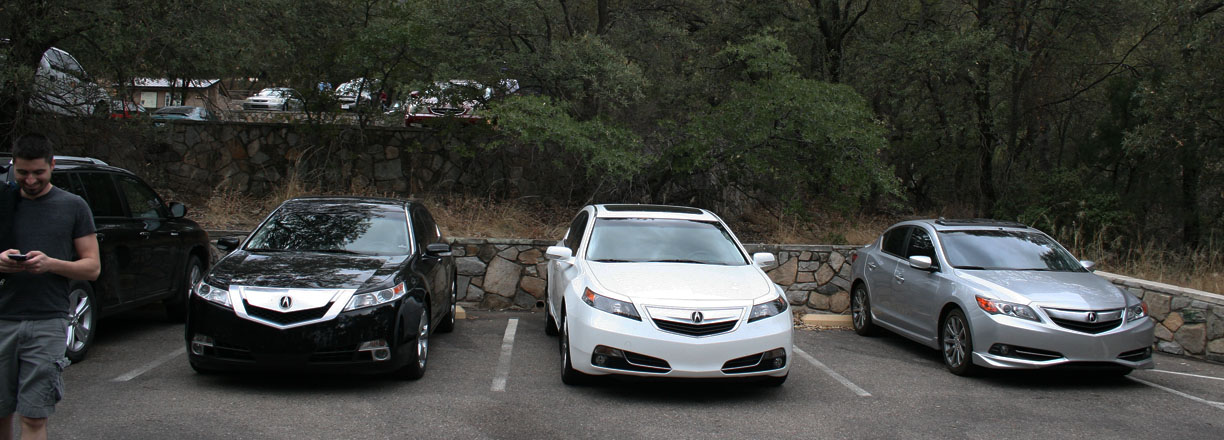
Back at the cars! There was a family the came walking past. “Look at all the Acuras,” one boy said as he pointed to our trio of backed-in cars. We all just laughed.
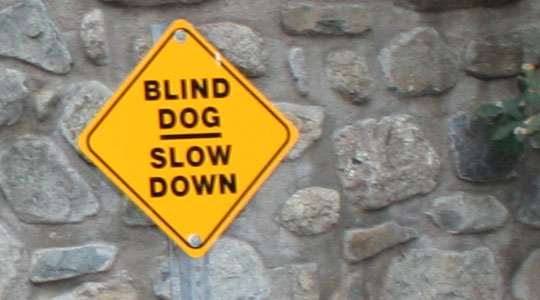
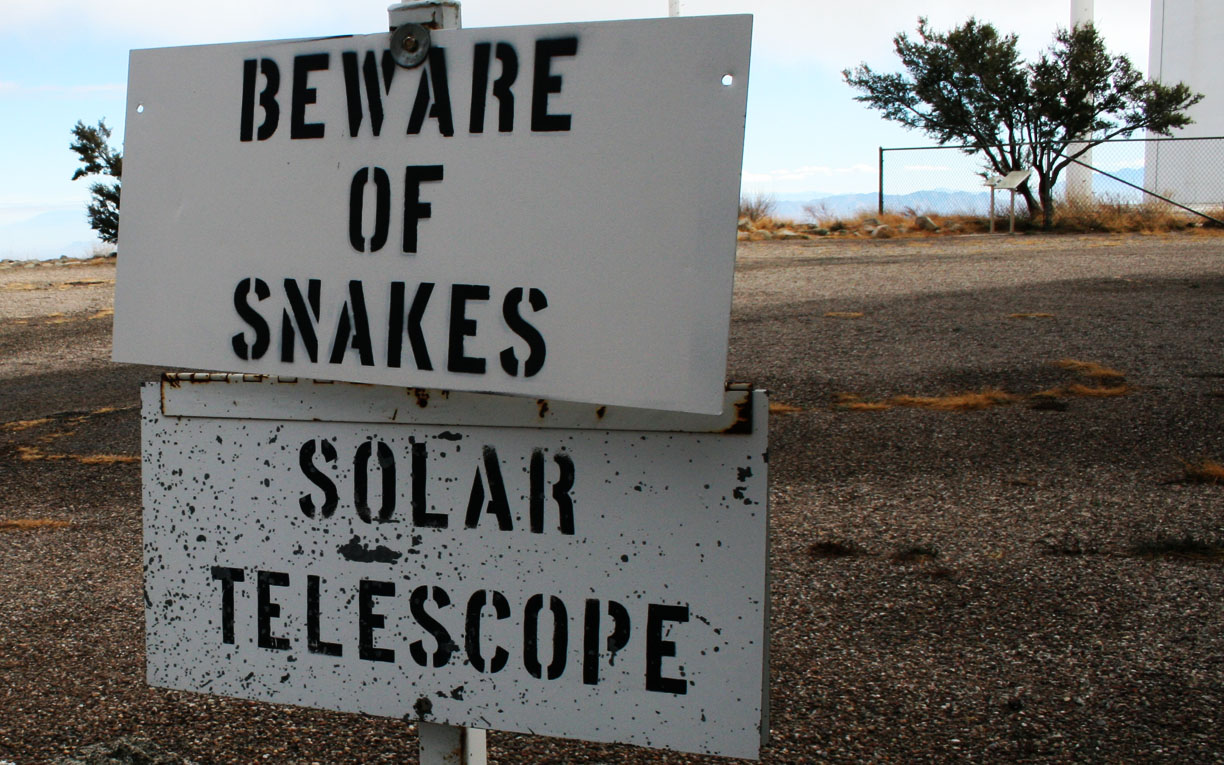
There’s a warning sign you don’t see every day!
This gift shop was full of knick-knacks, but I decided against making a purchase.
Alright, classic car gurus. Tell me what we’re looking at here. I’m guessing 1952 Chevy station wagon. The body was remarkably rust-free! This was sitting hidden off the main road, tucked away.
Fun restoration candidate for someone! Jason’s first comment as we were walking up to it: “Hey, is that a first generation HHR?” Haha.
Thanks, Paul and Jason, for a great day on the road!
Nerd alert! I’ve had a soft spot for science ever since childhood, and I met one of my heroes – Bill Nye the Science Guy – when I was in college. But I’ve lived in Arizona for over 8 years ago and only recently learned that it’s home to an observatory with the largest collection of optical telescopes in the world. Arizona is chock-full of hidden gems.
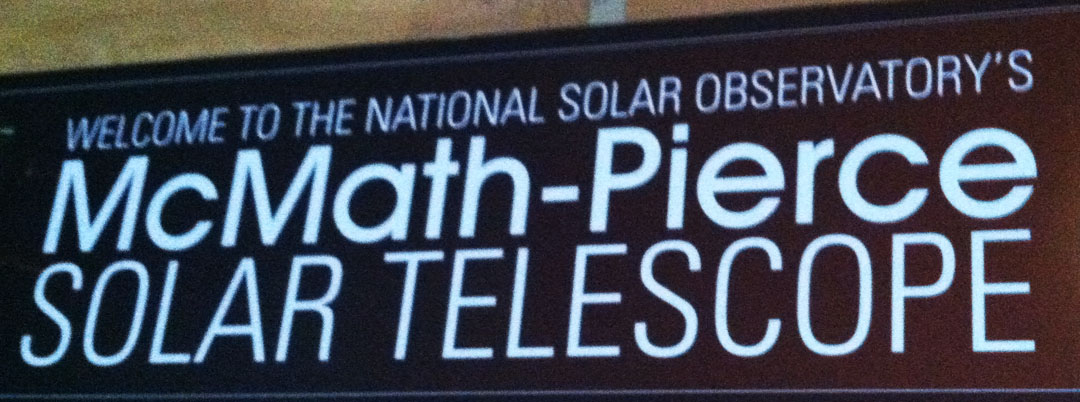
I first heard the name “Kitt Peak” when I drove past the turnoff last July while on a roadtrip to Why, Arizona. Since then, I’d been wanting to make it back for a formal visit. There are 3 tours offered daily. Along with my friends Jason and Paul, I made it to the 10:00 a.m. program yesterday, which would focus on the McMath-Pierce Solar Telescope. It is the world’s largest solar telescope.
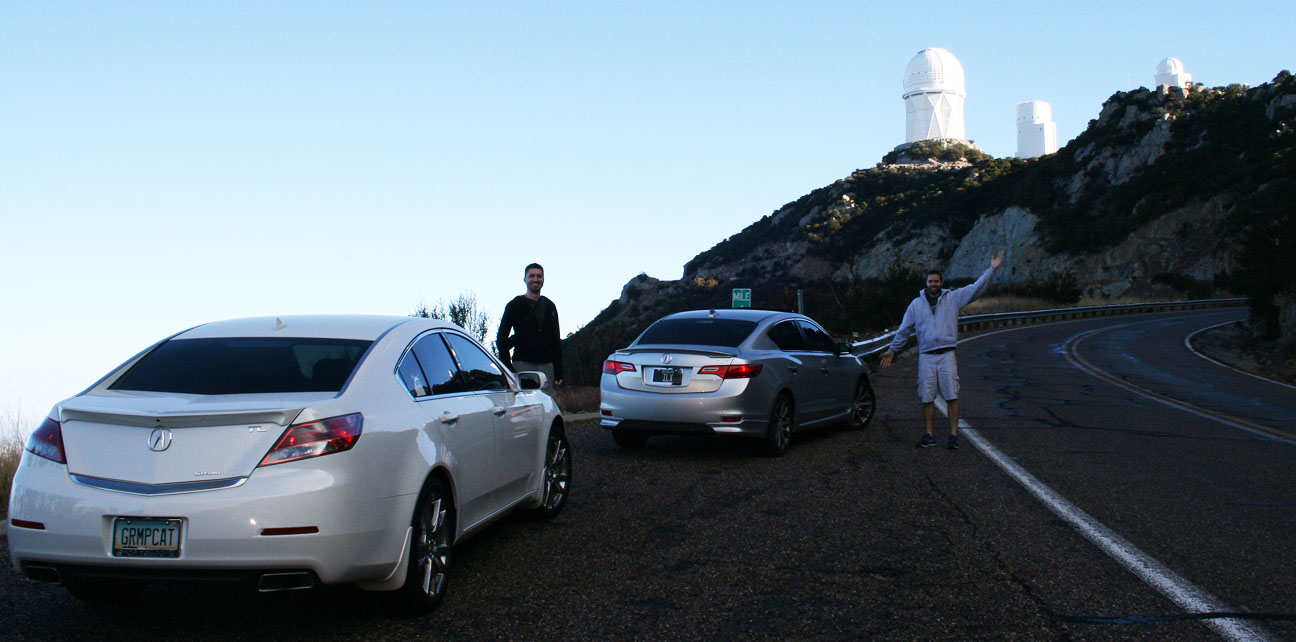
This was a family outing. And by that, I mean all three vehicles in our caravan were Acuras:
Black 2010 Acura TL SH-AWD 6MT (Jason)
White 2013 Acura TL SH-AWD AT (Paul)
Silver 2013 Acura ILX 6MT (Tyson)
The boys and I broke this trip into a two-dayer, with a Friday night rendezvous in Tucson before the big day. After a hotel buffet breakfast, we fired up our cars and headed westward through the Sonoran Desert on a beautiful morning. As soon as we exited Highway 86, the Tucson-Ajo Highway, I knew we were in for a treat. The next 12 miles were filled with great curves and some of the best scenery in the southwest. I took the lead in the ILX and we climbed to an elevation of 6,880 feet at the summit. Jason and I rowed our manual gearboxes, while Paul manipulated his paddle shifters to command action from his 6-speed automatic transmission. The temperatures were notably cooler as we made our way toward the top.
Kitt Peak’s construction dates back to 1958 when the National Science Foundation supplied funding under President John F. Kennedy. Extensive site evaluations had designated Kitt as the best place for a national observatory: It had more “good seeing days” (273 per year, to be exact) than any other potential site. However, because the land was owned at the time by the Tohono O’odham Indian Nation (and considered very sacred), the U.S. had to negotiate with the tribe before it could lease 2,000 acres. Among the contract terms: The observatory must buy electricity that’s supplied by the reservation. Those stipulations are still in full force today.
By 1962, the McMath-Pierce Solar Telescope had been completed and astronomers were coming from all around the world to try it out. The telescope stands a massive 100 feet in the air, 200 feet into the ground, and has a 500-foot-long angled section that is exactly parallel to the earth’s axis. A telescope uses a series of mirrors and discs that reflect light and focus it to create an image. Even though McMath-Pierce is now over 50 years old, the technology that it employs is still relevant. Infrastructure has been updated with fiber optic communication equipment. Little known fact: The telescope also acts as a gigantic sundial. I guess that makes two massive sundials I’ve visited in recent months. Our tour guide, Larry, took us inside the telescope for a closer look.
Some 2,500 visitors travel to Kitt Peak each year to see McMath-Pierce as well as some of the 17 or so other telescopes on-site. I’d love to go back to Kitt and stargaze sometime during one of the nightly observing programs. For now, enjoy some of the many photos below from this part of our trip! Tomorrow, I’ll share the adventures of the rest of our Saturday Acura drive: A trip to Madera Canyon.
Thanks for coming along!
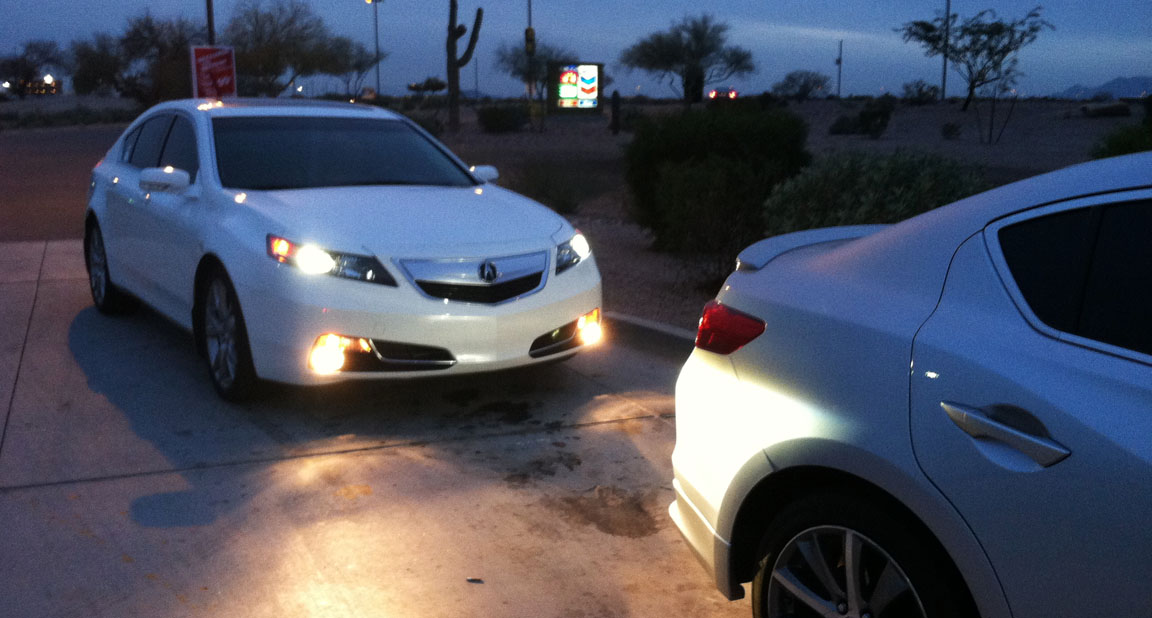
TL & ILX gearing up for departure on Friday evening
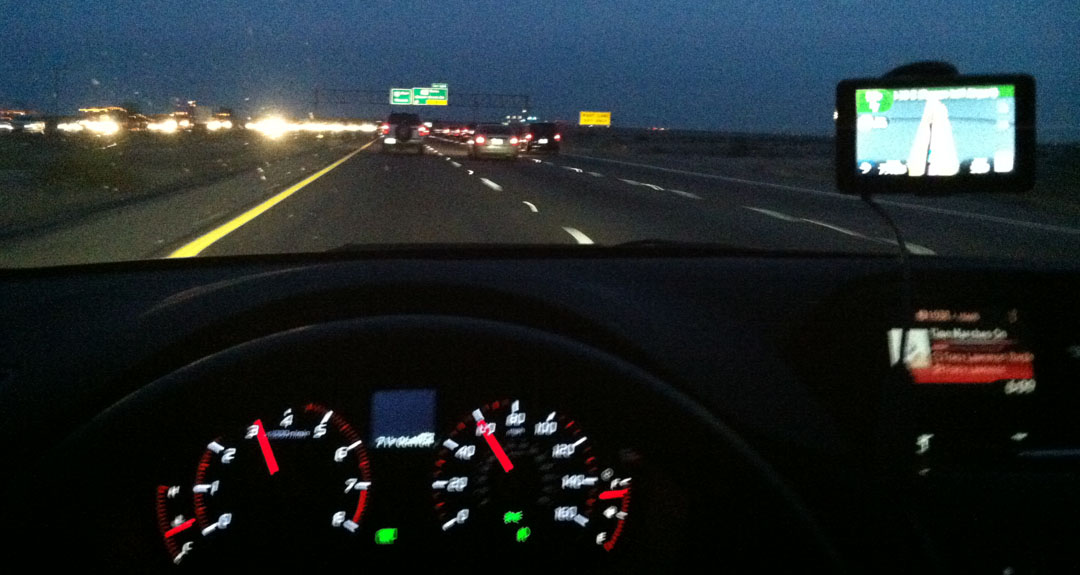
Eastbound on Interstate 10 – it’s about a 90-minute drive to Tucson.
The Shell station located in Picacho Peak, Arizona has a good sense of humor.
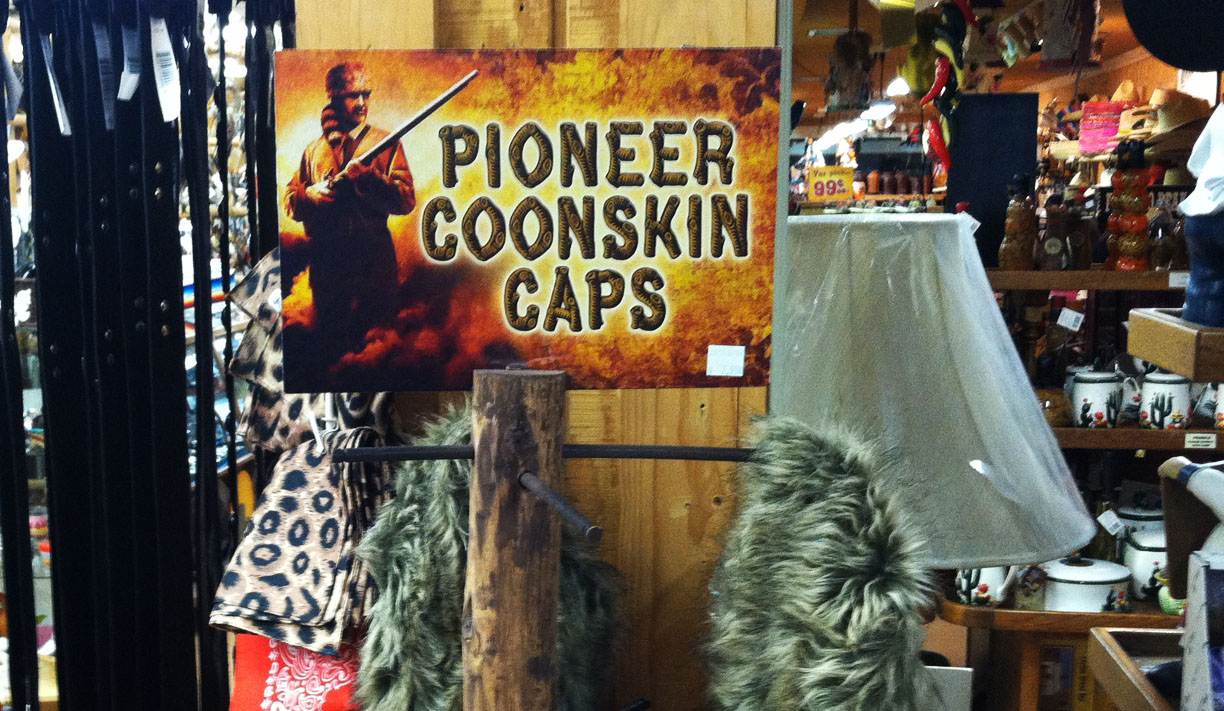
… Not to mention some great souvenirs. Coonskin cap, anyone?
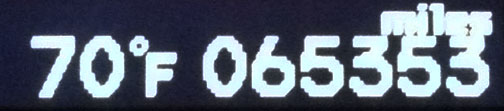
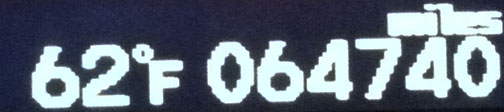
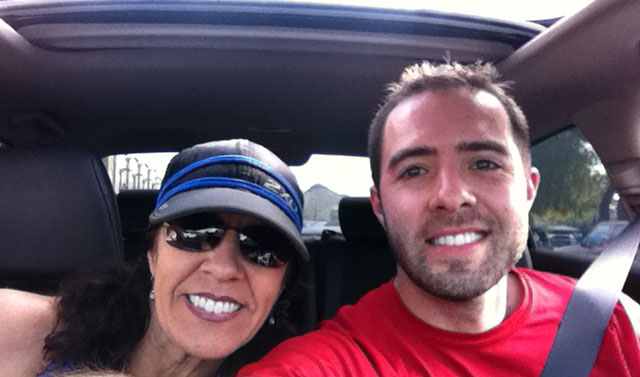
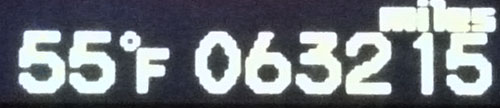
Upon arrival in Tucson, I happened to hit 65,065 miles with an exterior temperature of 65 degrees Fahrenheit. The stars would have been in greater alignment if I had been going 65 miles per hour at the time.
Saturday morning: Mini waffles to fuel us for a long day of adventure behind the wheel.
Let’s load ’em up!
Couldn’t have asked for better weather for a Saturday drive.
Which would you pick?
Westward on the Ajo Highway, we knew we were getting close.
Paul snagged a great picture of the ILX from the rear. Kitt Peak was in the distance, awaiting our visit.
And, here we are at the turnoff.
From there, it was 12 miles to the summit at just under 6,900 feet in elevation.
This type of sign gets me excited.
As expected, views were exceptional from all around as we climbed the mountain.
At these elevations, snow is possible and even likely this time of year.
Getting close!
In 1957, our Acuras would have never made this trip. Here’s what the Kitt Peak access road looked like then.
We soon rounded a bend and saw some of Kitt Peak’s telescopes in the distance.
Made it!
The visitor center & gift shop dates back to 1962 and is staffed by members of the Tohono O’odham Indian Nation.
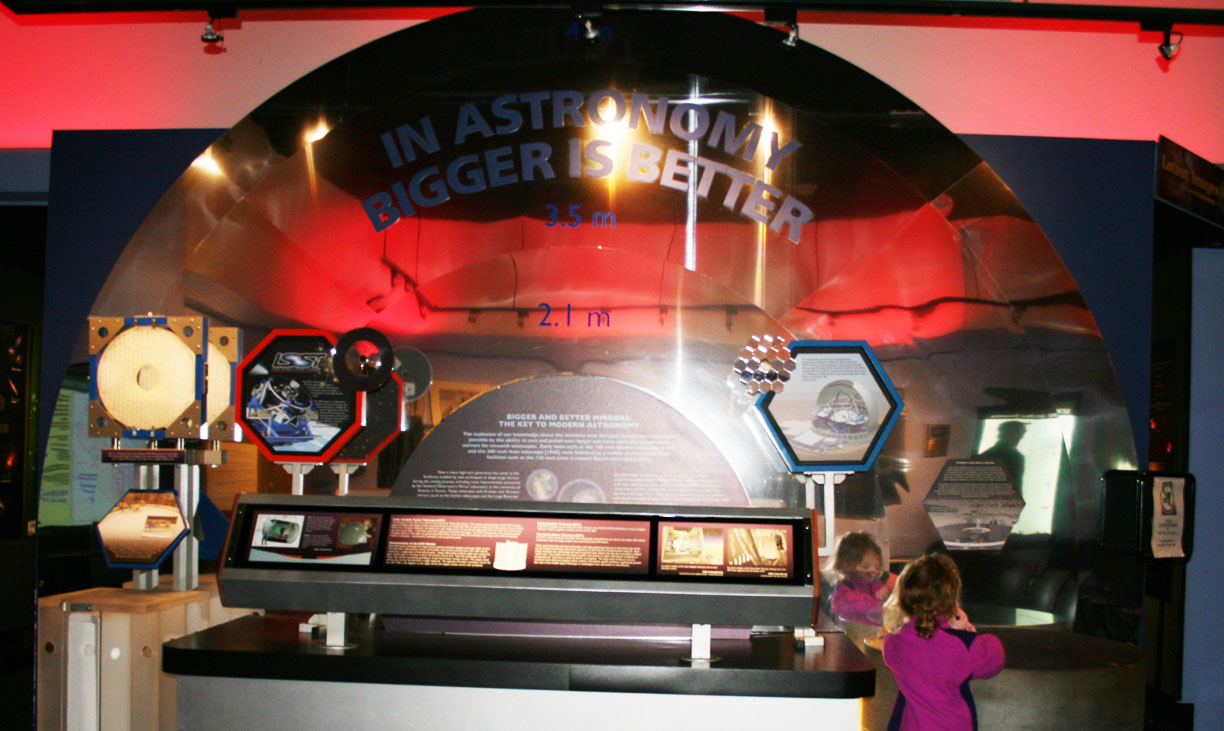
Inside, there are many informative displays. This one gave a comparison between the various sizes of reflective mirrors that are used in telescopes today.
Our tour group was led outside to the massive white structure which was the McMath-Pierce Telescope.
Yikes!
The telescope is actually made of copper, but it was painted white so that it can be as reflective of light as possible.
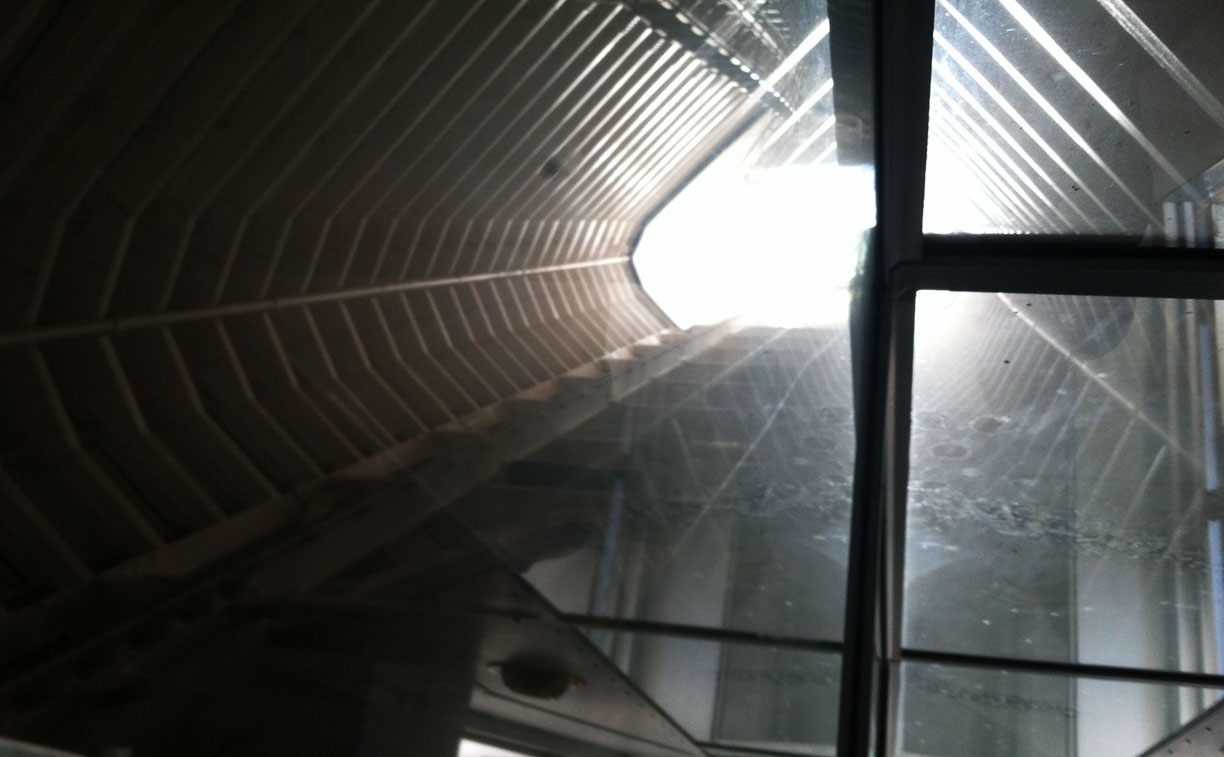
Inside, we stared down the inner barrel at all the mechanical components that make the telescope work.
This was a neat picture of what the telescope looked like when it was under construction.
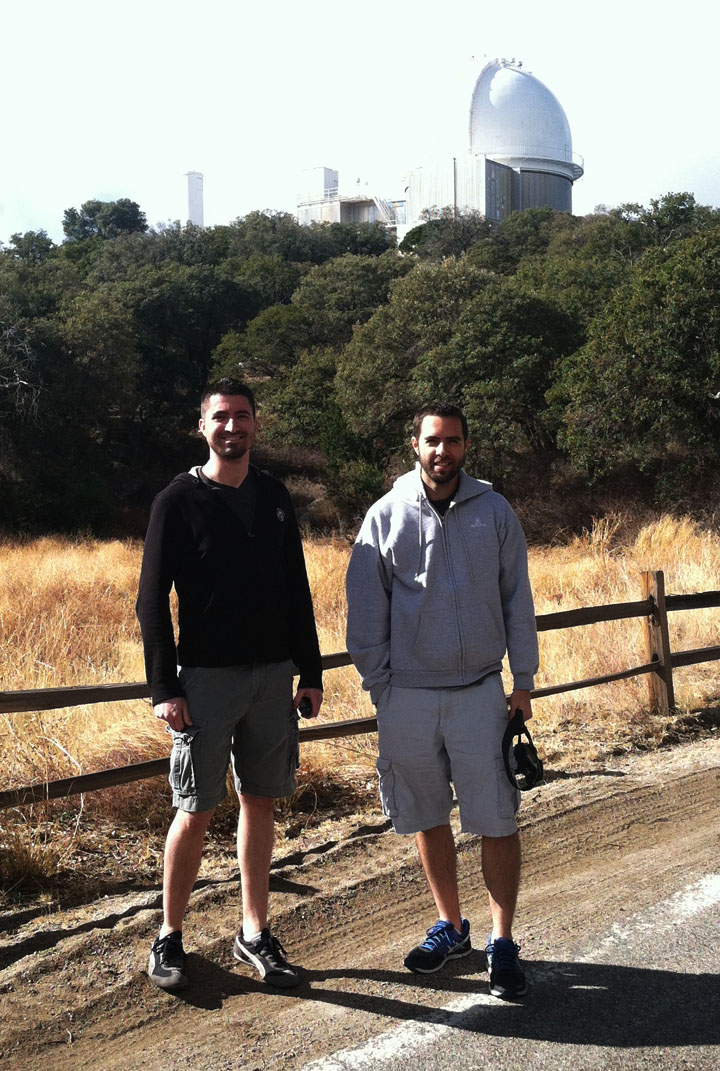
Here, Paul and I are standing in front of a 2.1-meter telescope in the background.
Back to the Acuras we went for the next leg of our journey.
Paul took the lead in the white one and we made our descent.
Later that afternoon, we explored one of Arizona’s hidden canyons. Come back tomorrow & read about it!
Posted in Arizona, ILX on January 19, 2014 by tysonhugie
Odometer (Legend): 528,530
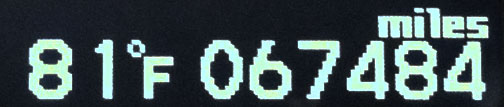
Odometer (ILX): 64,740
If there’s anyone who knows about going the distance, it’s my mom. My black & blue Asics running shoes have a few hundred miles on them, which may seem like a lot. Truth is, though, I’ve been lapped time and time again by my mother. Drive to five? Try five hundred, five thousand? She’s crossed the finish line over 160 times in competitive races since she started running in the late 1990s, having logged over 20,000 miles. By foot!
Below is a neat tradition my mom has for her full (26.2-mile) marathons. She’ll wear 26 bracelets on her wrist – each one dedicated to a particular friend of family member. As she completes each mile while thinking about that person, she’ll transfer that person’s bracelet from one wrist to the other.
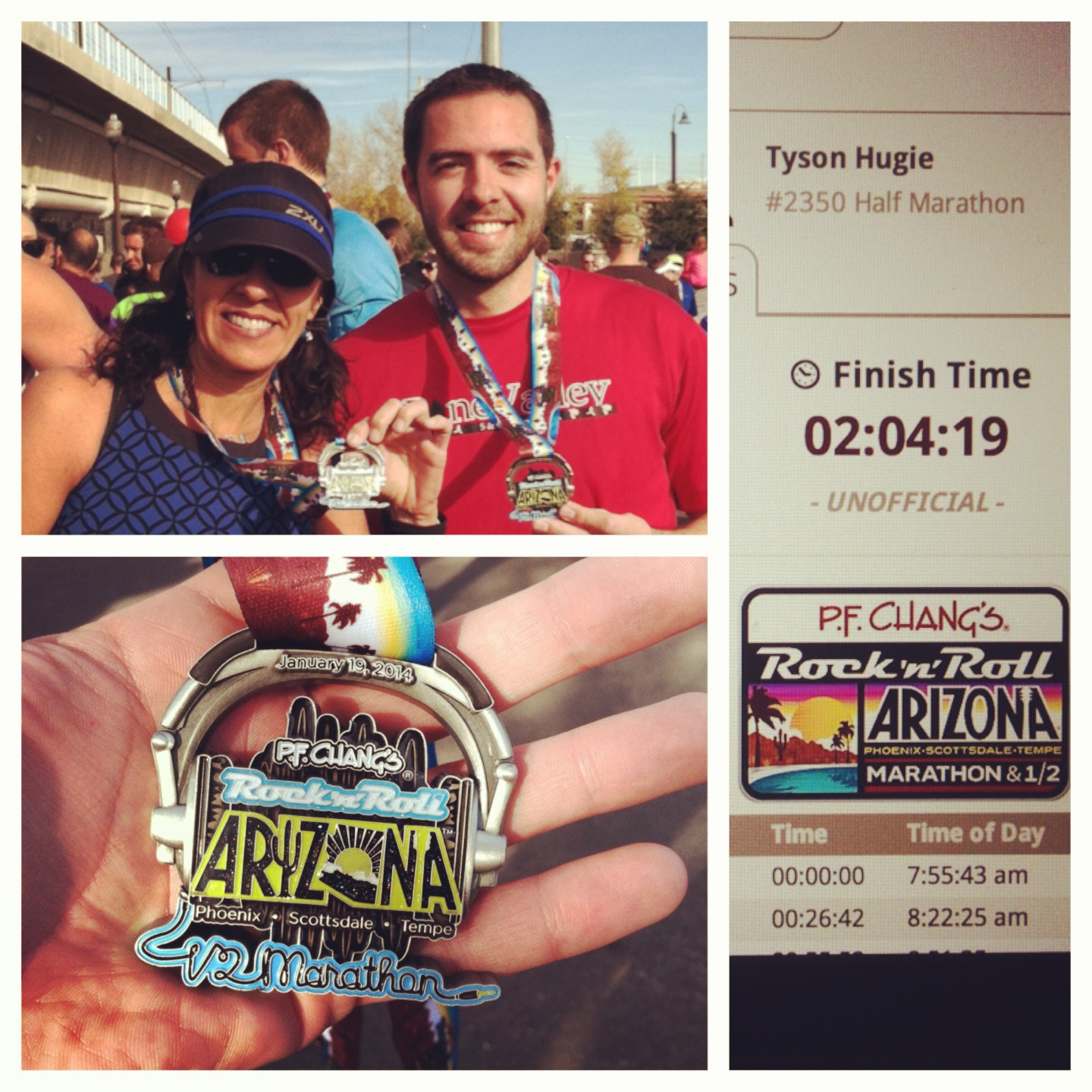
Each year, mom comes to Phoenix from Utah for a winter getaway. In this blog post, you’ll get a play-by-play of our 13.1 mile race this morning as well as some other weekend activities. Tomorrow night, I’ll share the experience of our visit to one of the world’s premiere collector car auctions, right here in Scottsdale. Saddle up, pardners.
A Friday night out on the town in central Phoenix with friends preceded a busy weekend.
Long distance running is a hobby I took on about 8 years ago, and I can’t let it go. I saw a fitting sign today held up by a marathon spectator: “Running is a mental sport. And you’re all insane.” I think they’re absolutely right – anyone would have to be crazy to voluntarily subject his or her body to a dozen miles of pounding the pavement. There were 13,407 people today who ran the 13.1 mile half-marathon. That comes out to 175,631.7 miles that were run this morning between Tempe, Scottsdale, and Phoenix Arizona.
Saturday morning, we headed to the Phoenix Convention Center in the ILX to retrieve our race information & “goodie bags.”
Optimal weather – as Phoenix is known for this time of year – was in plentiful supply.
Downtown, we met up with our friend Aaron who’d also be running the race the following day.
The following quote has become a mantra for Drive to Five over the years. The joy of getting from Point A to B, for me anyway, has always been more important than the origin or the destination.
A quick brunch visit at Windsor satisfied our hunger before a busy afternoon that followed.
Linh, Kevin, Tia, Paul in the back, and some cheesy guy taking a 5-person ‘selfie’ in the foreground.
Paul’s TL was looking spectacular, as always.
What’s a mom visit without a little shopping at Scottsdale Fashion Square?
Race day came bright and early for us all. We each laced up and put 13.1 miles on our running shoes. Weather was perfect. I approach a long-distance run much like I do a long-distance drive. It must be broken up into more manageable segments. Take a 13-mile race, for example, and make it four 3-mile races, with a little extra tacked onto the end. That’s how I visualize it. I do the same on a long drive. If I’m heading to a destination 1,000 miles away, I’ll drive 250 miles at a time and only worry about making it that far – without stressing about the long road ahead. I ran into my friend Thomas at the start line, and we were off.
Just when I started feeling a little worn down at around mile 7 or so, I saw an amazing athlete with a prosthetic leg. She was moving and grooving. I no longer felt an ounce of fatigue. I was inspired.
A few miles later, I saw a man dribbling two basketballs and running at the same time. I later googled “Doctor Dribble” online and found that he has a fanpage on Facebook and he’s in part sponsored by the Rock & Roll marathon series. Pretty awesome! I sure wish I had his coordination.
Of all the things I most looked forward to as I neared the finish, know what was at the top of the list? Chocolate milk. I knew they’d have plentiful supply of this chocolatey goodness in the recovery area. I took two bottles. It was the most delicious thing I have ever tasted.
Final standings – well, mom kicked my hiney, as she always tends to do. She went on to place 20th in her age division and still looked like a million bucks. How DOES she do it?
Mom rolled in 15 minutes before I did.
Group shot at the finish – Tyson, Tia, Paul, Jonathan, and Aaron – glad to have succeeded!
I finished 3,918th out of those 13,407 total finishers. That comes out to a 9 1/2-minutes-per-mile pace. Slow poke compared to most of the competitive runners out there. It felt amazing to get back into my leather-lined ILX and roll the moonroof open for a leisurely drive back home to relax.
Thanks, mom, for the continued motivation!
Here’s a quick iPhone video from the race start line, as well as a few seconds of Dr. Dribble in action.
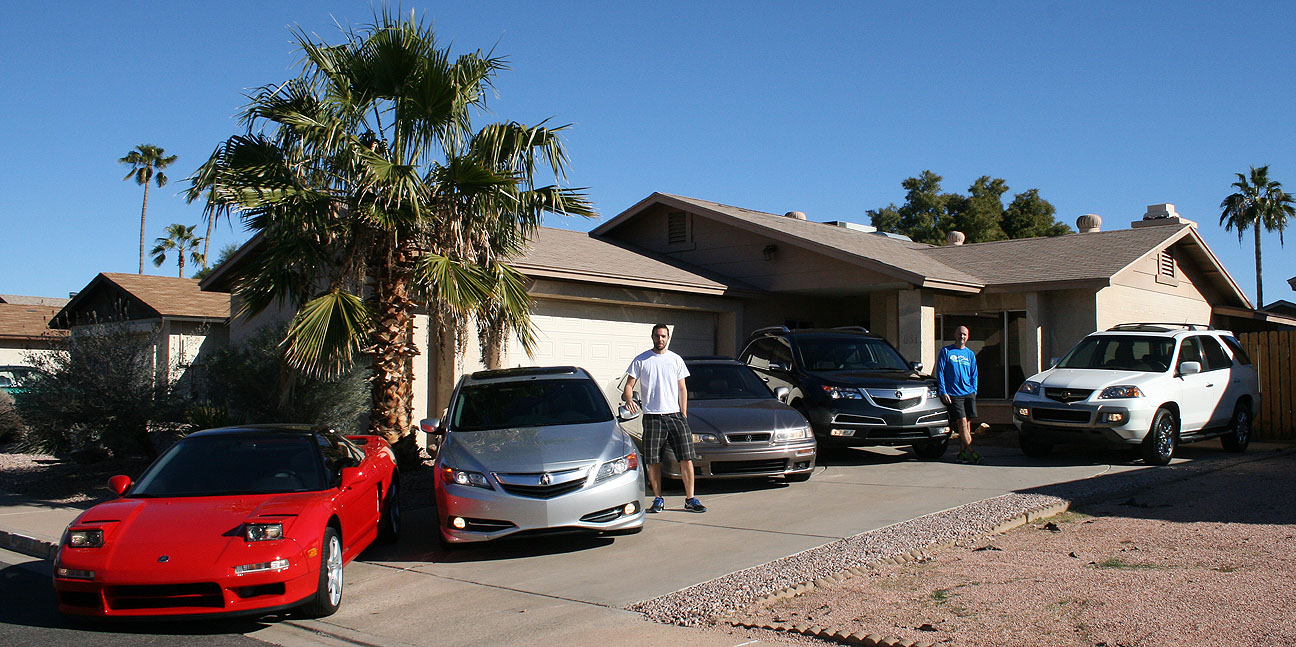
Each year, I receive a visit from my dad & stepmom between Christmas and New Year’s Day. This year, they showed up in their new 2013 Acura MDX. It seemed only fitting that we lined up the available Acuras for a quick driveway photoshoot. My neighbors, without a doubt, were watching out the windows and rolling their eyes.
1992 Acura NSX: 98,500 Miles
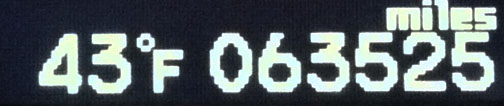
2013 Acura ILX: 63,525 Miles
1994 Acura Legend: 528,279 Miles
2013 Acura MDX: 10,800 Miles
2004 Acura MDX (friend’s): 90,400 Miles
Interestingly enough, the 4 other Acuras in the picture still don’t add up to the mileage of the 1994 Legend. In fact, their combined mileage of 263,225 is still less than half what the Legend has alone.
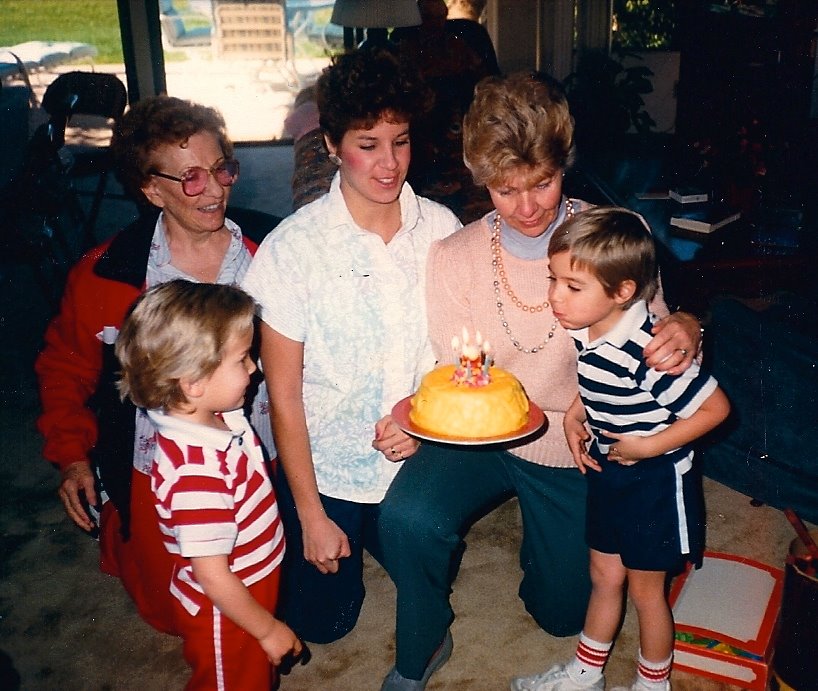
As part of dad’s visit, we worked on a bunch of home improvement projects and also celebrated my birthday which was on 12/28. I like having a birthday that’s sandwiched between Christmas and NYE. The below picture must have been taken around my 5th birthday or so. Long live the 1980’s! Check out those stripes.
My friend Cody wins an award for this fantastic Acura-themed birthday wish on Facebook.
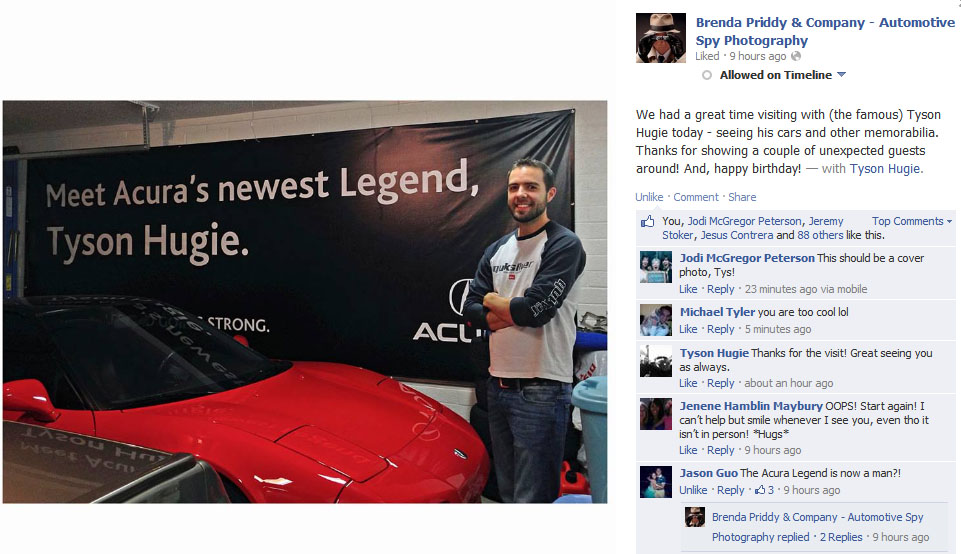
Later in the day, I received a very nice visit from world-famous automotive spy photographer Brenda Priddy.
And best of all, my 2-year-old niece, Vivienne, made my day with this sidewalk chalk message sent from Utah.
We dined at one of my favorite Mexican joints in the Phoenix valley, called Nando’s Mexican Cafe.
To celebrate my #32, my dad and Tanya and I took the ILX to a 1939 movie set called Old Tucson Studios, just west of Tucson, Arizona. The 200-mile round-trip drive from Phoenix was a great chance to visit with them.
I’ve blogged about Old Tucson before back in April and it was every bit as interesting on the second visit as the first.
We learned about some of the 300+ Western films that were produced here.
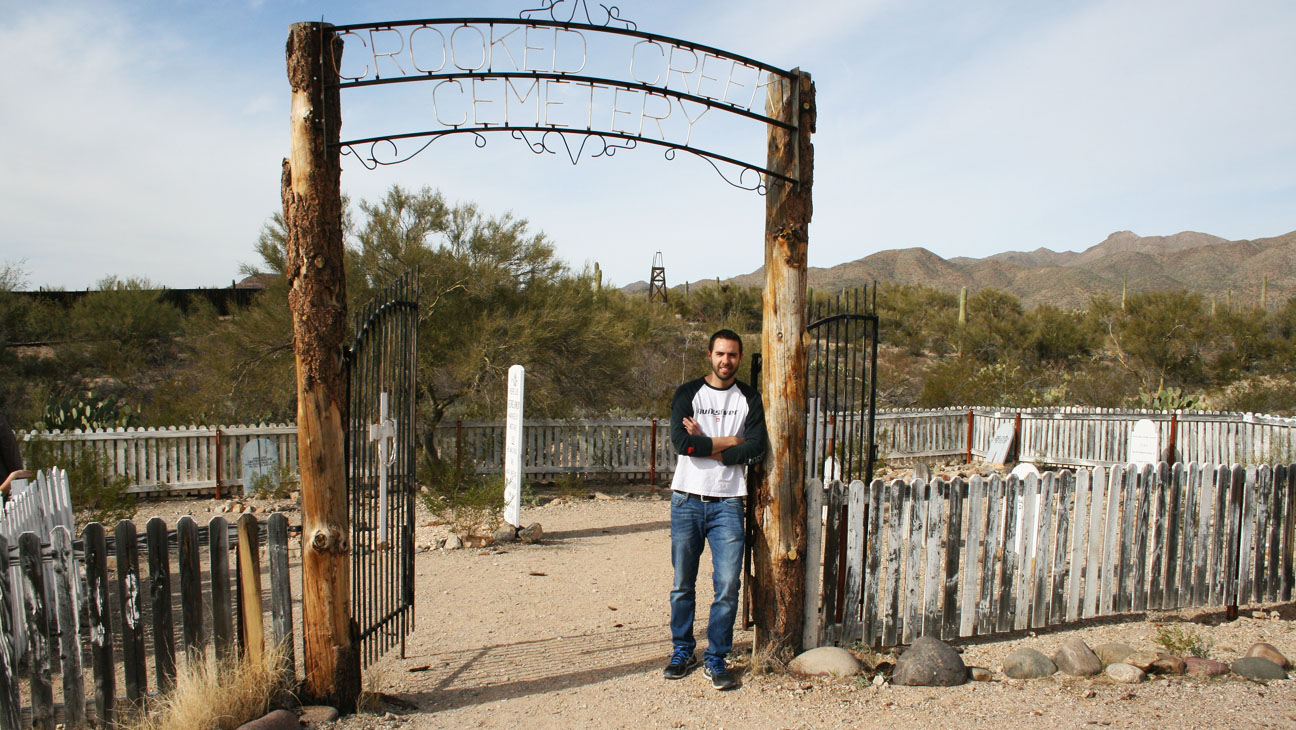
Standing at the cemetery entrance
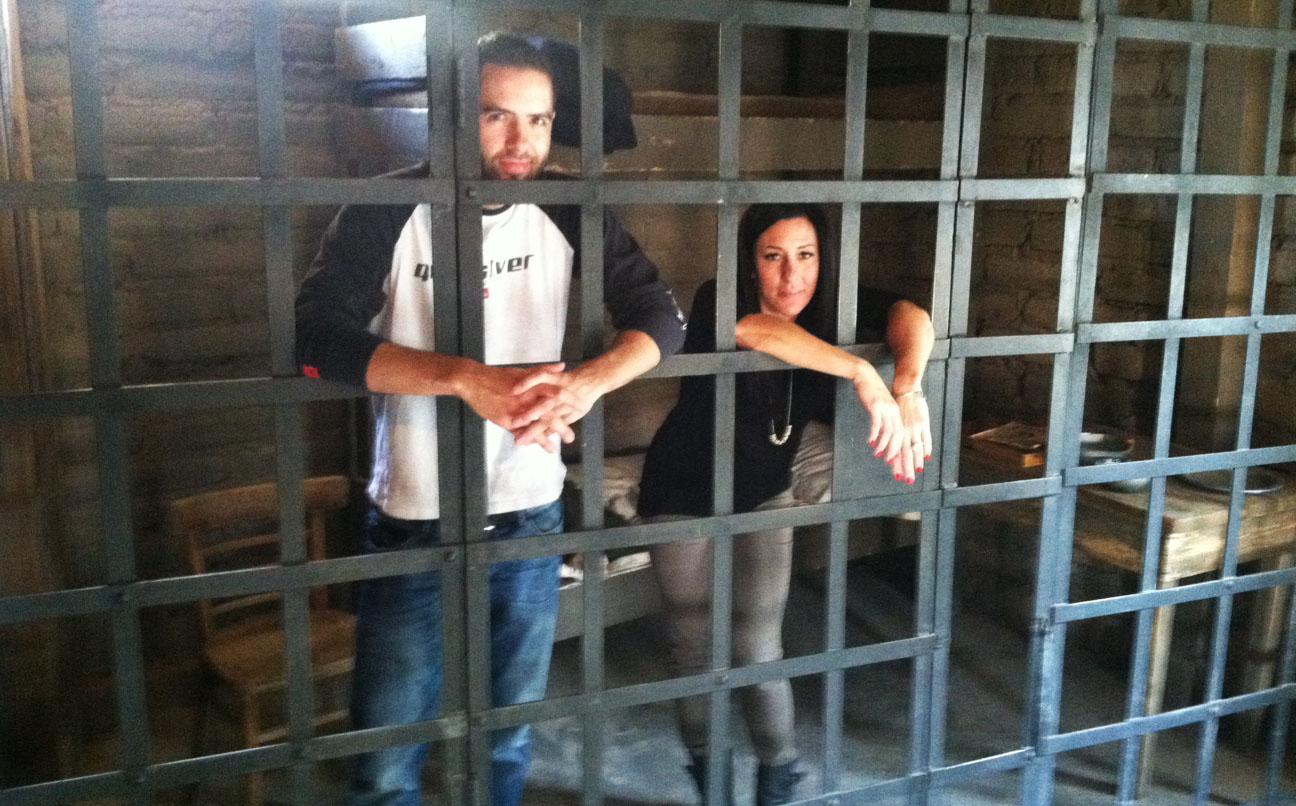
With Tanya, in jail!
And inside the lobby of the Grand Hotel
This set was used as an 1863 bank in various films.
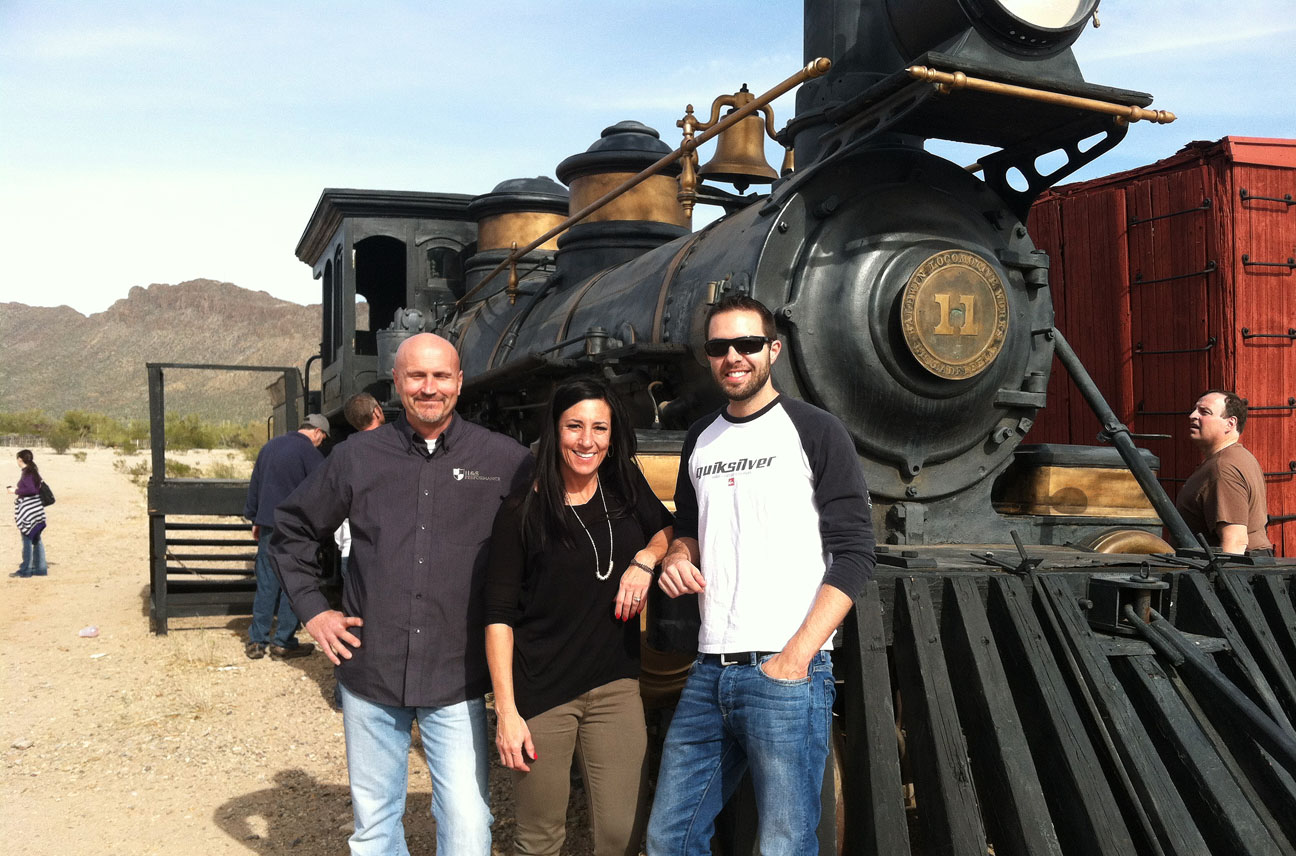
The star of the show was this 1897 steam locomotive that was used in such movies as Tombstone and Wild Wild West. It is a Virginia & Truckee Railroad No. 11.
Parting shot before we rolled back to the Phoenix area in the ILX.
I’m one year older and a little bit wiser. The adventures will keep on coming. My friend Ami’s post said it best!
Arizona is full of white-knuckle canyon drives, and this week I’d like to share another one with you.
On a brisk 41-degree Christmas morning in Phoenix, armed with a chocolate milk, an iPod loaded with good music, and a full tank of premium fuel, I headed out in the ILX to the White Mountains to attend a luncheon with friends in Show Low, Arizona. This drive would take me eastward on US Highway 60 through the Salt River Canyon Wilderness which comprises over 32,000 acres of terrain in the Tonto National Forest. My favorite stretch includes the 87 miles between Globe and Show Low — the focus for today’s discussion.
The Salt River Canyon is been referred to as a “mini” Grand Canyon, and for good reason. Around every turn is a scenic panorama of sandstone cliffs that defy gravity and entertain the eyes. And unlike its big brother canyon in the northern part of the state, Salt River Canyon can be driven from rim to rim; just don’t bring a passenger who gets easily motion sick. There are oodles of curves that require maximum driver attention. Highway 60 is a two-laner that falls 2,500 feet in elevation over the course of just a few miles to the canyon floor below, where for millions of years the Salt River has been carving out its course. The ILX made short work of the 6% grades since I was able to downshift into 3rd gear for the 25 mph curves and rarely hit the brakes.
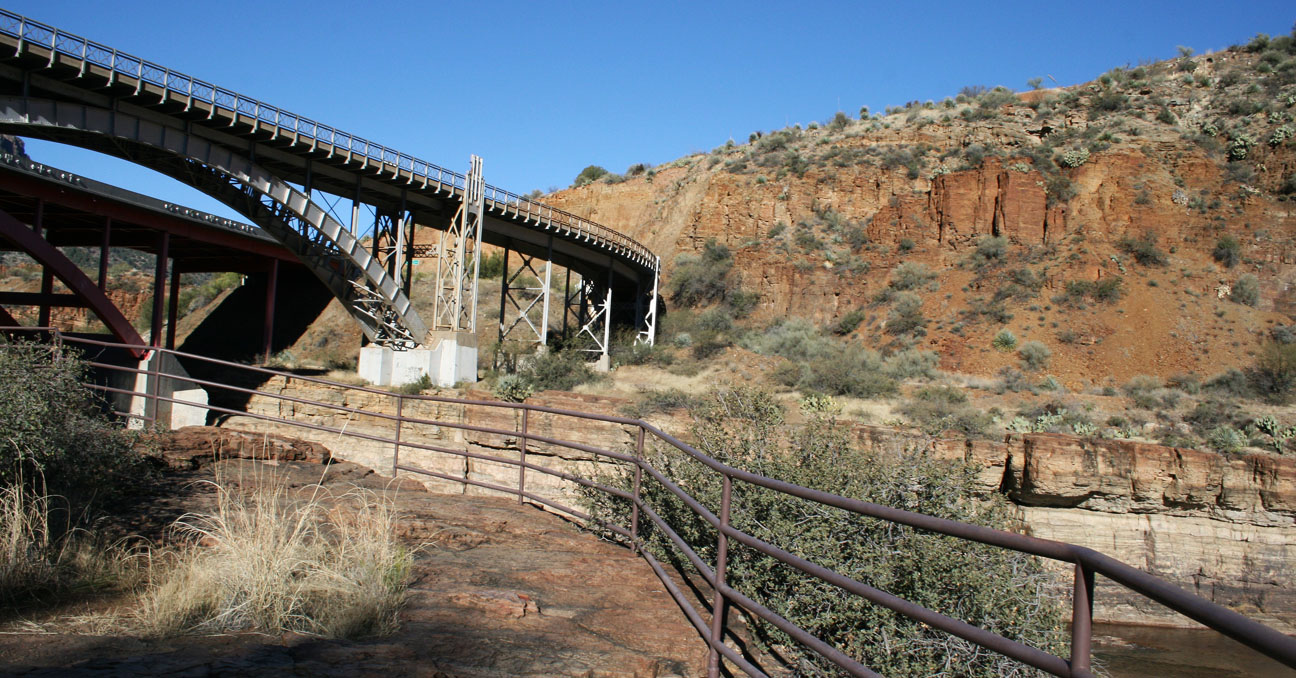
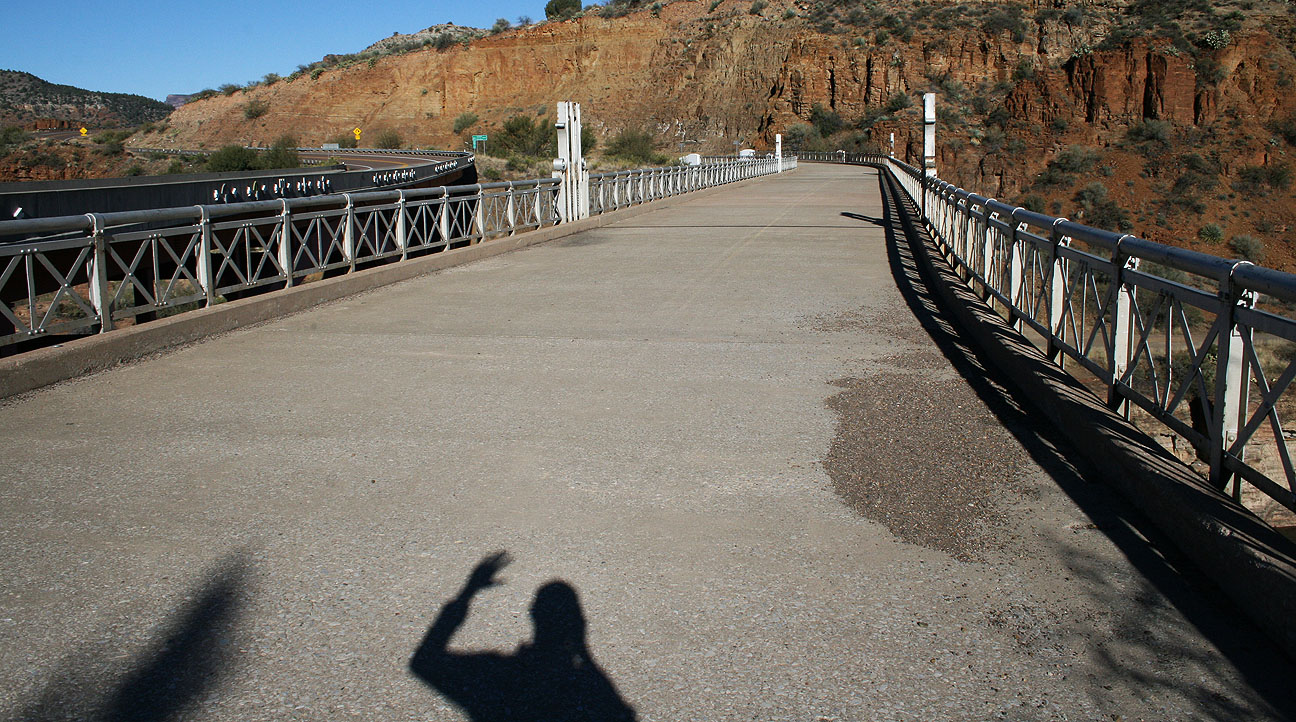
At the base of the canyon, an eerily vacant rest area along the river’s edge provided a prime place to view the existing bridge as well as the old bridge which runs parallel to it. A concrete barricade prevented me from being able to use the rest area parking lot. Grass was growing over a foot tall out of the pavement, so it was very clear that this place hadn’t been in use for quite some time. I took the opportunity to park the ILX a little further up the road and do a little hiking around. Constructed in 1934, the original bridge is 454 feet in length and is still fully intact, though it’s used only for foot traffic. I walked across it – as fascinated with the canyon view as I was with the historic bridge itself.
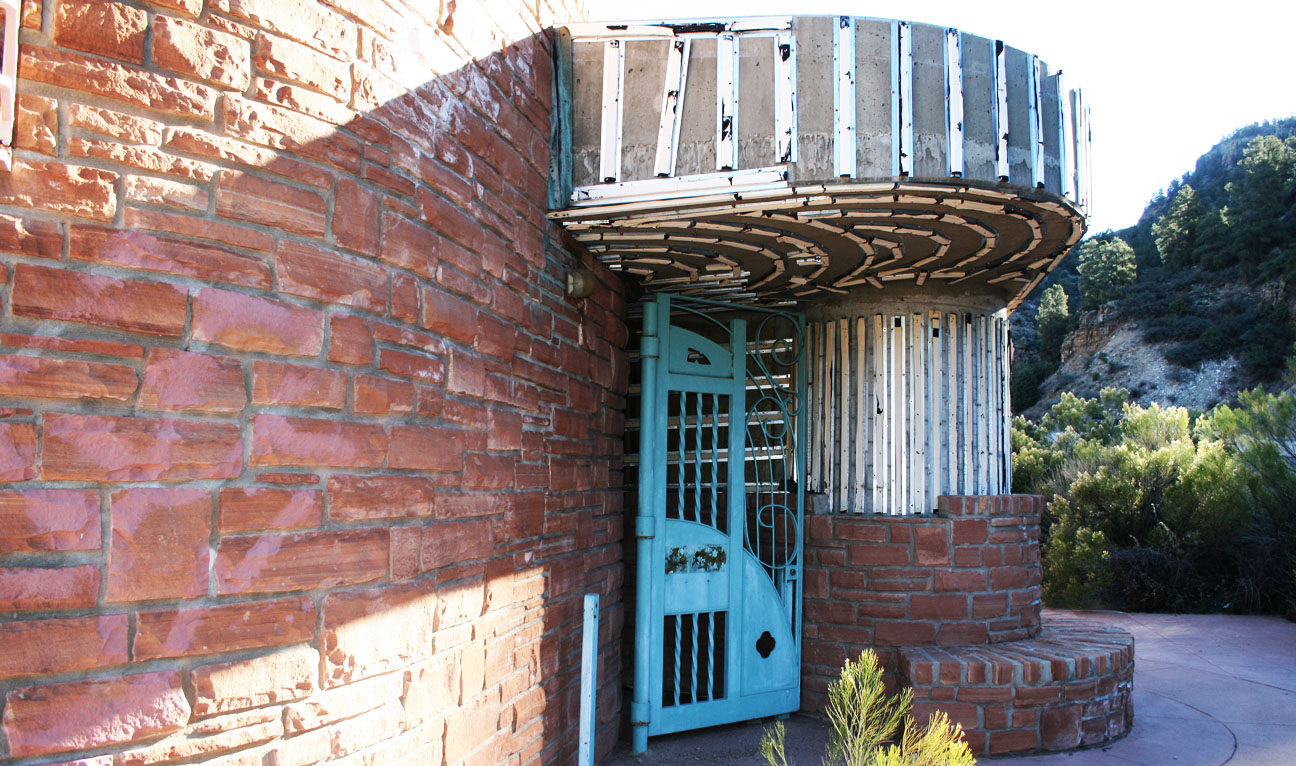
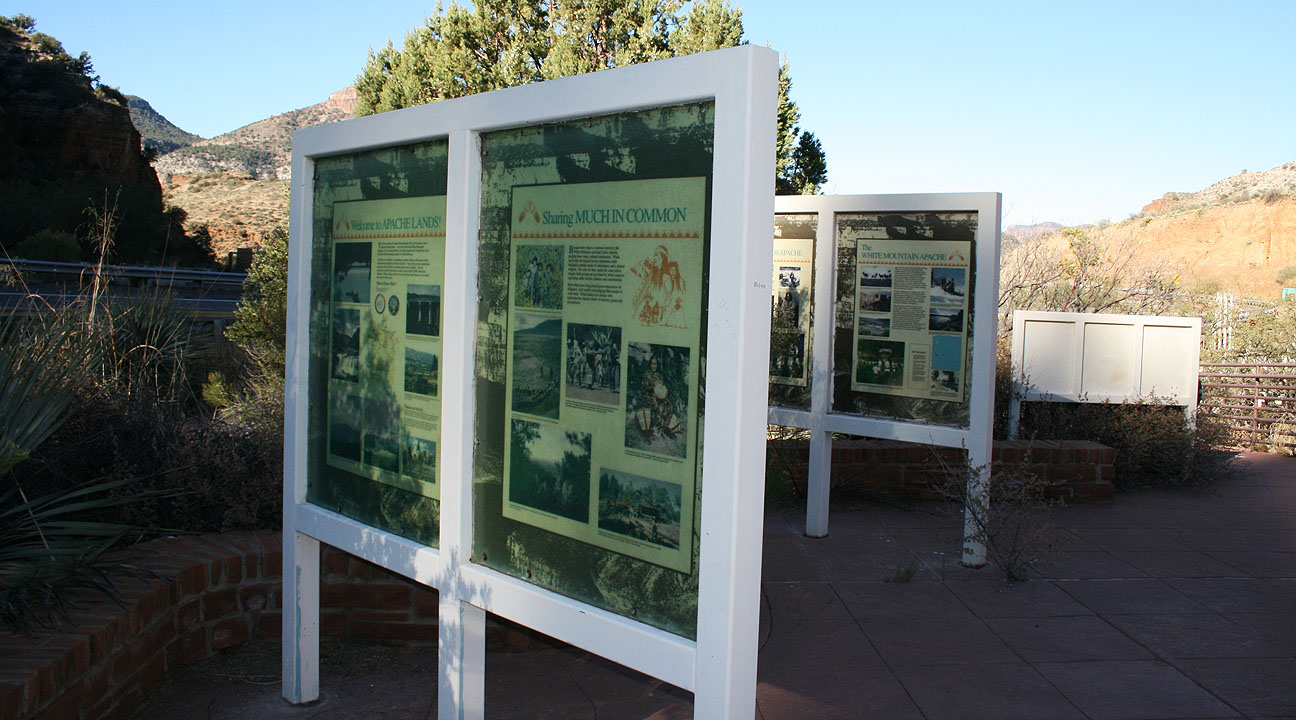
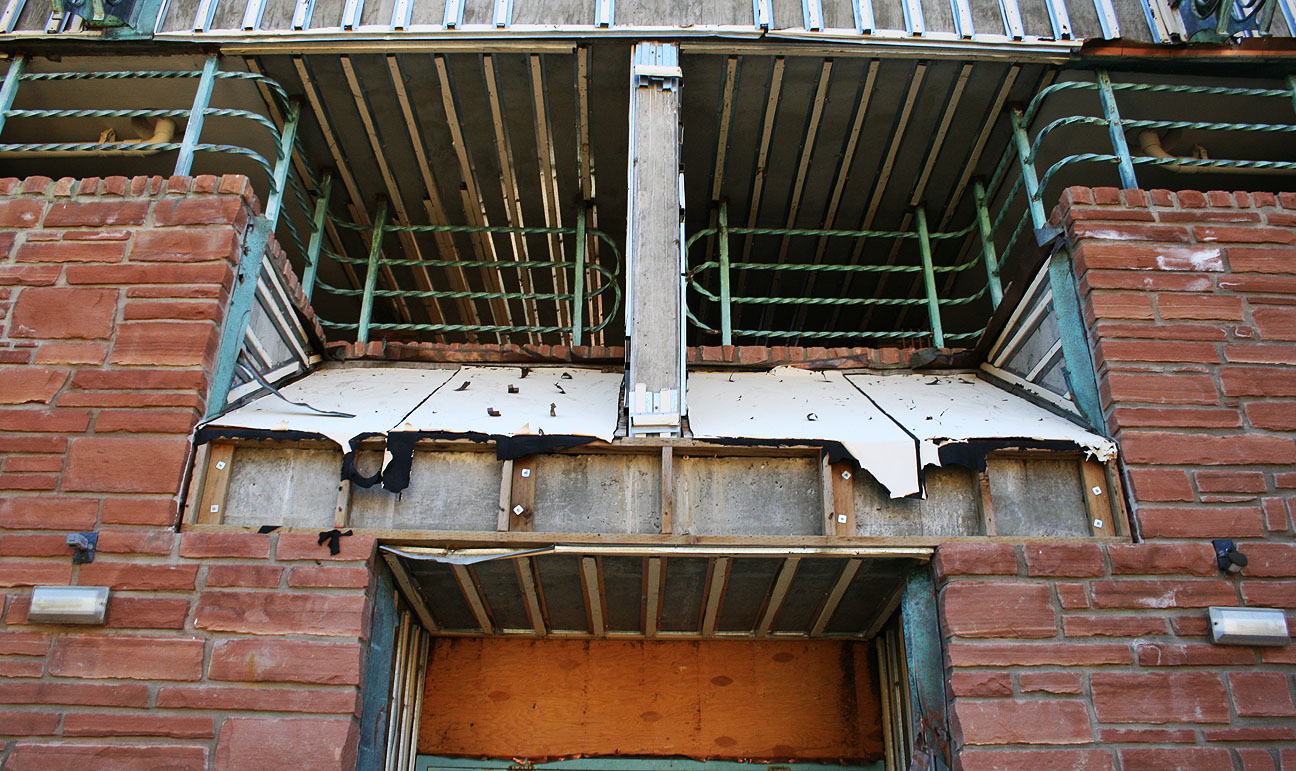
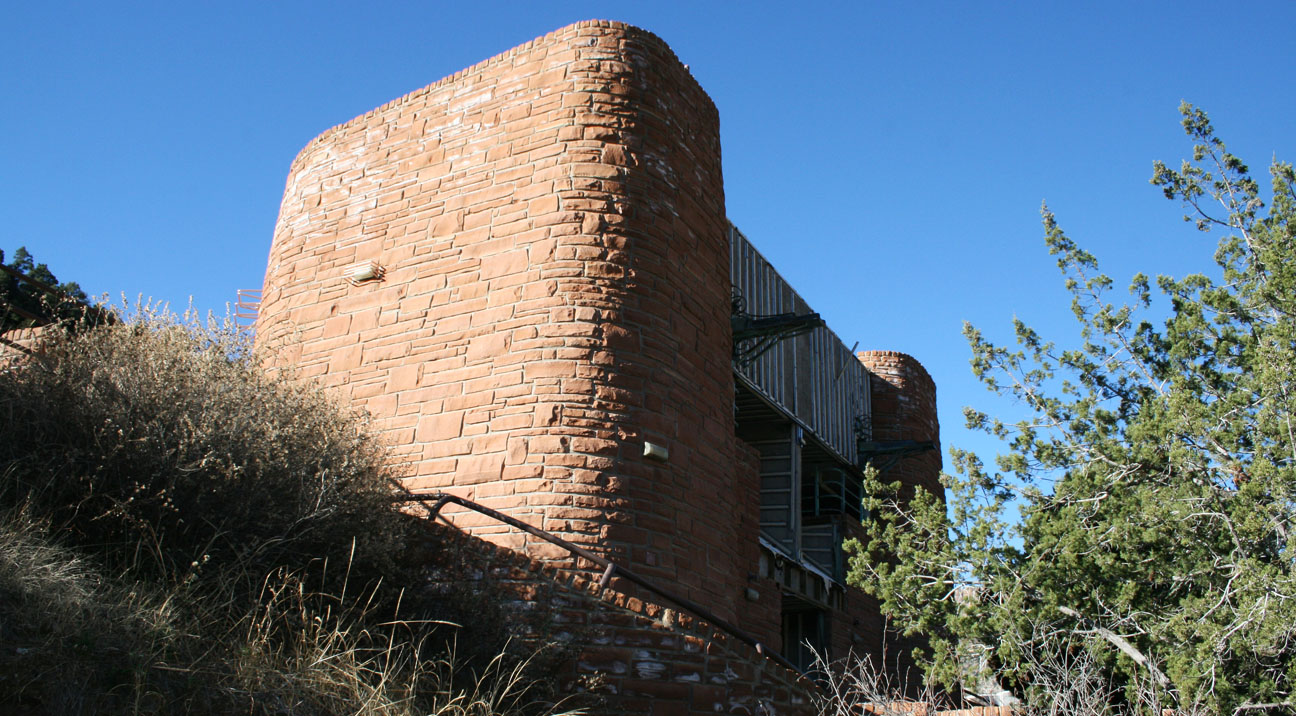
The Salt River Canyon rest area (among many others in the state) was closed in 2007 due to budget issues. In the 6+ years since that time, it’s fallen into quite a state of disrepair. Some of the interpretive signs were vandalized, the landscaping has overgrown, and the building itself has taken on a scary appearance with chipping paint on its trim. I walked around the stone building with is intricate staircases and metalwork, thinking to myself what a shame it was that people could no longer stop there. I did learn some good news, though. As of October of this year, it was announced that restoration efforts will bring the rest area back into service sometime in summer 2014. I’m anxious to see how the facility turns out.
With eagerness, the ILX ascended those 2,500 feet to put me back among the pine trees and a light dusting of recent snowfall along the road’s edge. I powered through the curves with the road almost entirely to myself. The Salt River Canyon scenic drive is one that should not be missed. Check out my pics below for a taste of some of the terrain that I covered on a beautiful Christmas Day drive.
Miami, Arizona – like so many other historic towns of the southwest, this place got its start in mining.
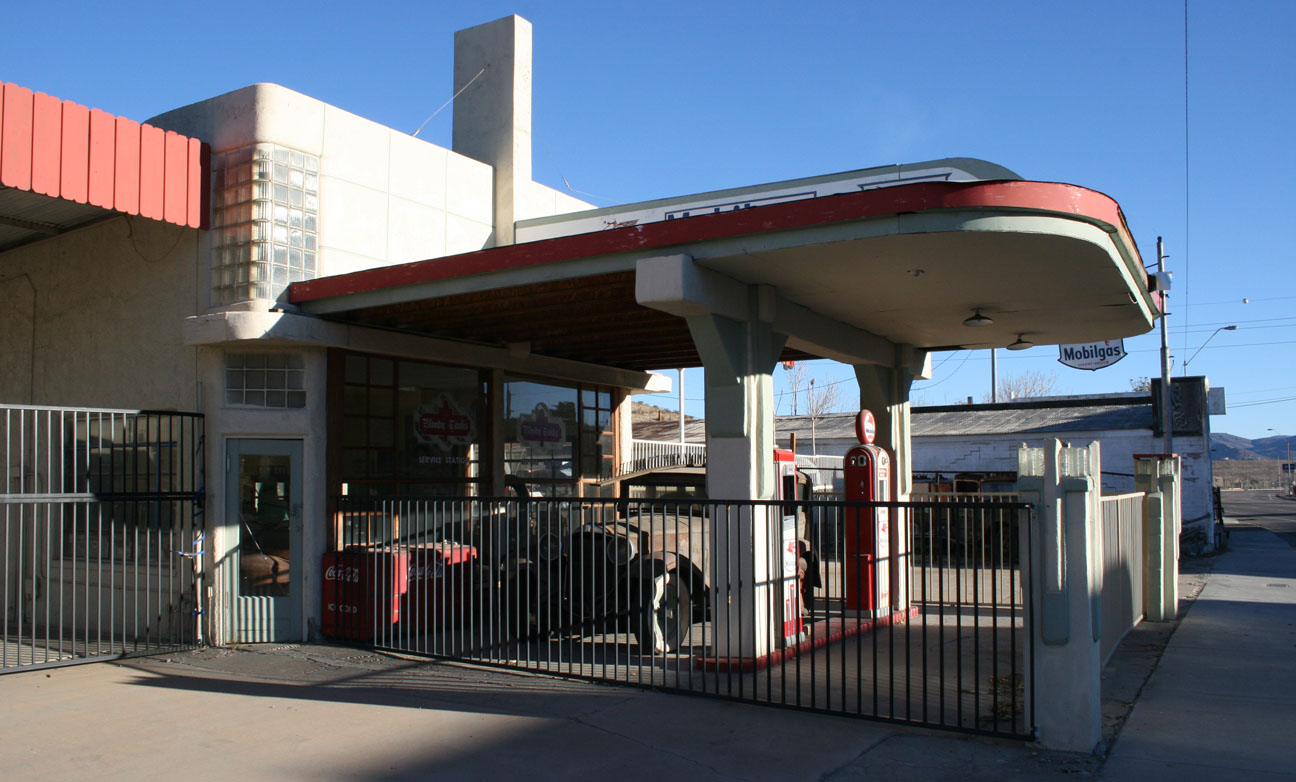
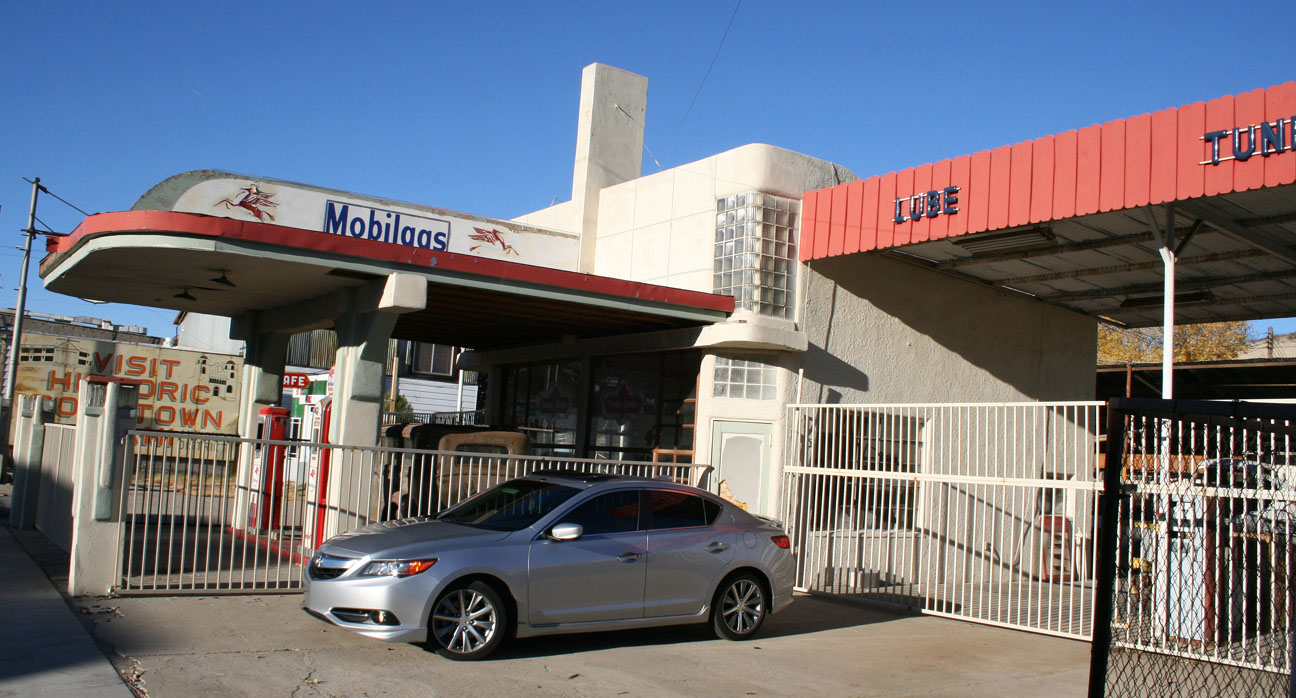
This Mobil station stands as a forgotten relic of the past. It’s been fenced off and closed up, but is a clear reminder of the olden days.
There are even vintage vehicles sitting around.
I would have loved to see this station in its heyday.
Next stop: Show Low! Odd name for a town, right? It actually has a reference to gambling. Here’s the full story:
According to the legend, the city was named after a marathon poker game between C.E. Cooley and Marion Clark. The two men decided there was not enough room for both of them in their settlement. The two men agreed to let a game of cards decide who was to move. According to the tale, Clark said, “If you can show low, you win.” Cooley turned up the deuce of clubs (the lowest possible card) and replied, “Show low it is.” The stakes were a 100,000 acres (400 km2) ranch. Show Low’s main street is named “Deuce of Clubs” in remembrance.
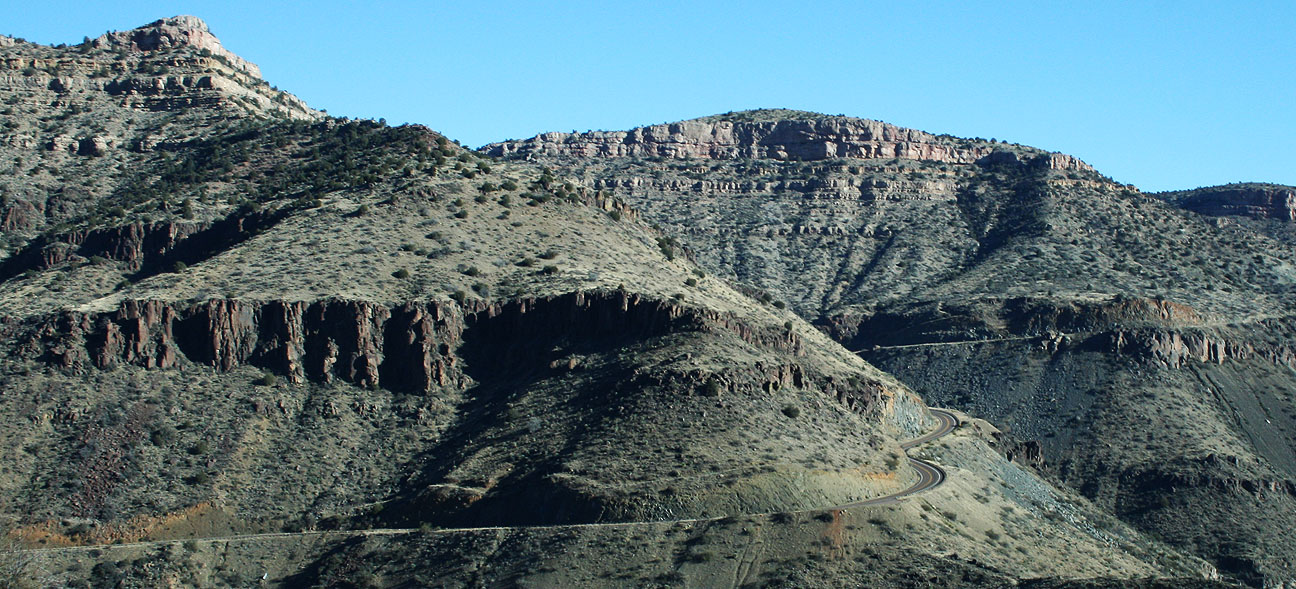
Visible from one side of the canyon is the road that escalates up the other side. See that slice toward the bottom of the picture frame?
Here is the approach to the (now-closed) rest area.
Approaching the old 1934 bridge here from the north:
Pavement markings are still visible, even though this has been closed to automobile traffic since 1996 when it was bypassed.
Photo of the new (red) bridge, as taken from the old.
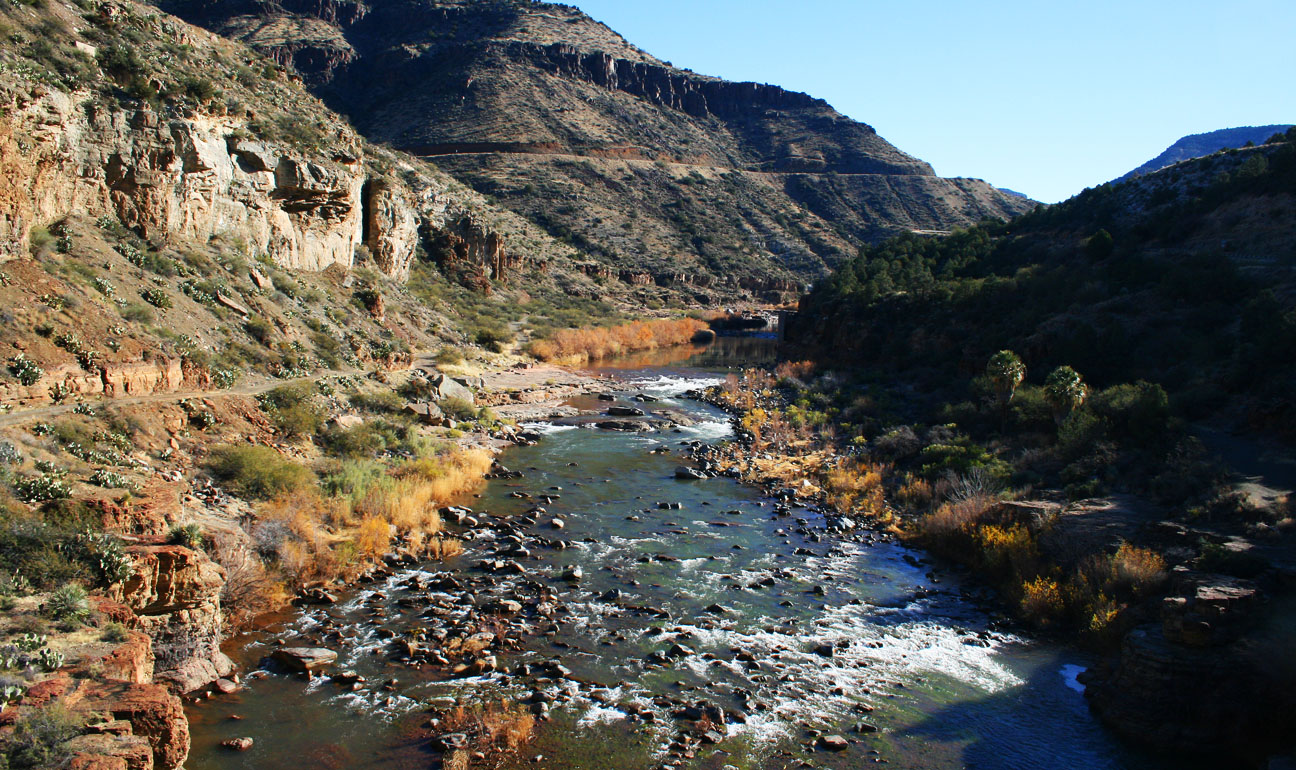
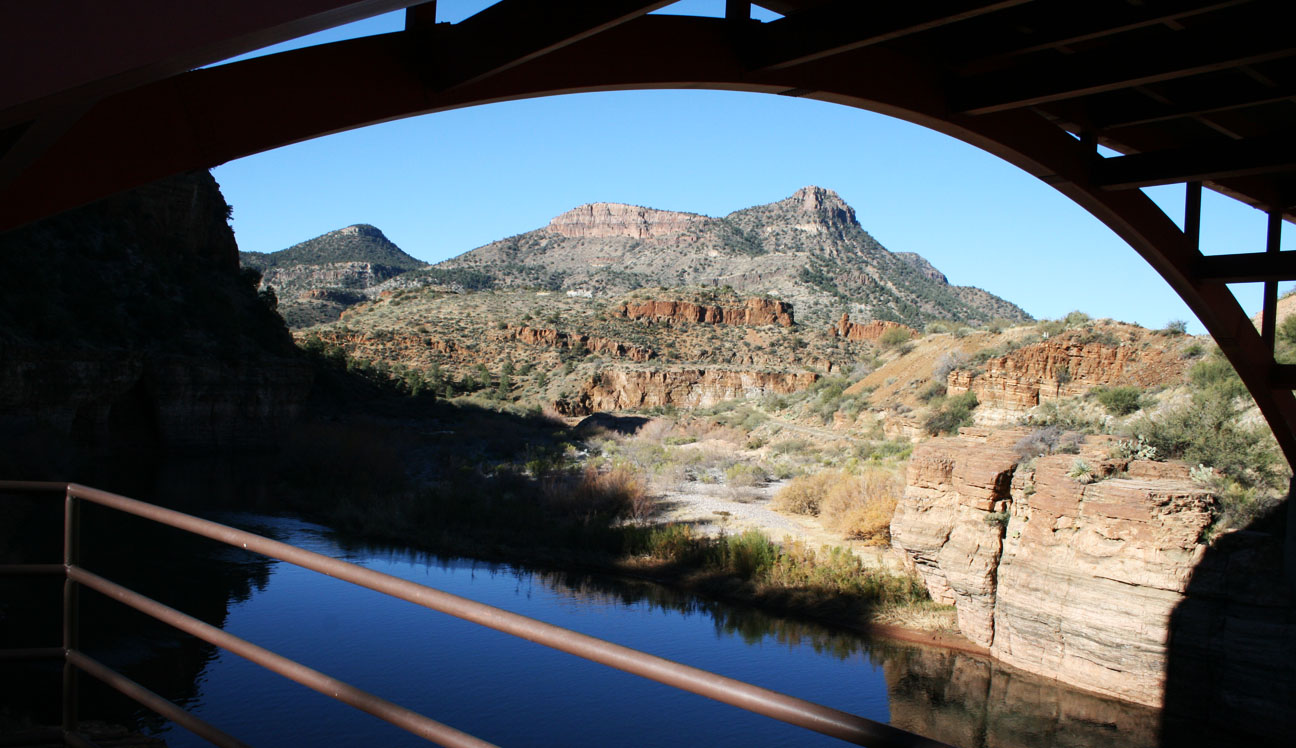
View of the Salt River, looking east while standing on the old bridge. Also visible is the highway which ascends about halfway up the mountainside.
This is the rest area parking lot – clearly showing the overgrowth that has taken its toll on the facility.
Following are a few pictures of the rest area which has been closed for over 6 years.
Interpretive signs
View of the backside of the building. Large metal doors into a utility room of sorts were wide open. I walked inside and found only trash and rubble.
These elaborate curved staircases line each side of the rest area.
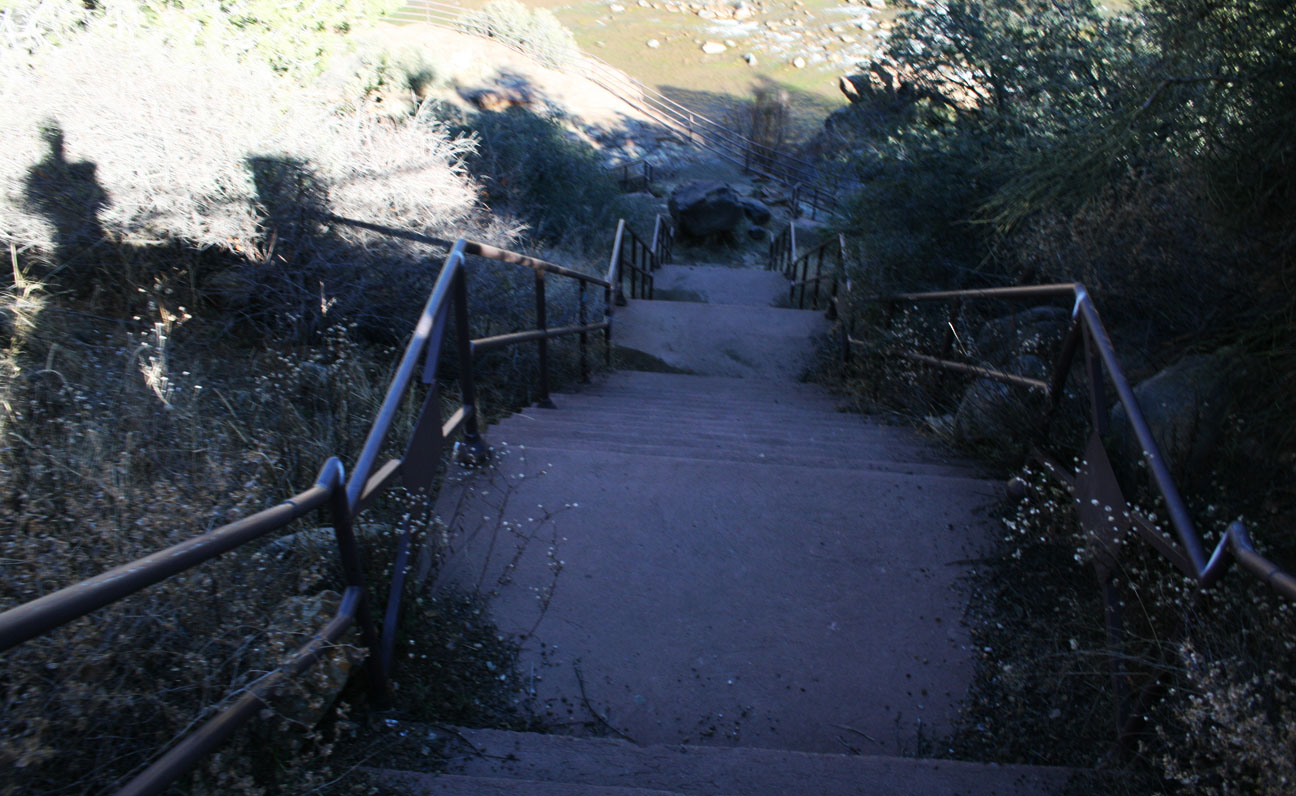
Steps leading down to an observation deck overlooking the Salt River.
View looking up toward the rest area building from the staircase.
Observation deck down below the bridges
Old bridge in the foreground; new in the background. This was a peaceful, serene place to hang out for a few minutes. I heard only 2 or 3 cars drive by during my entire stay at the vacant rest area.
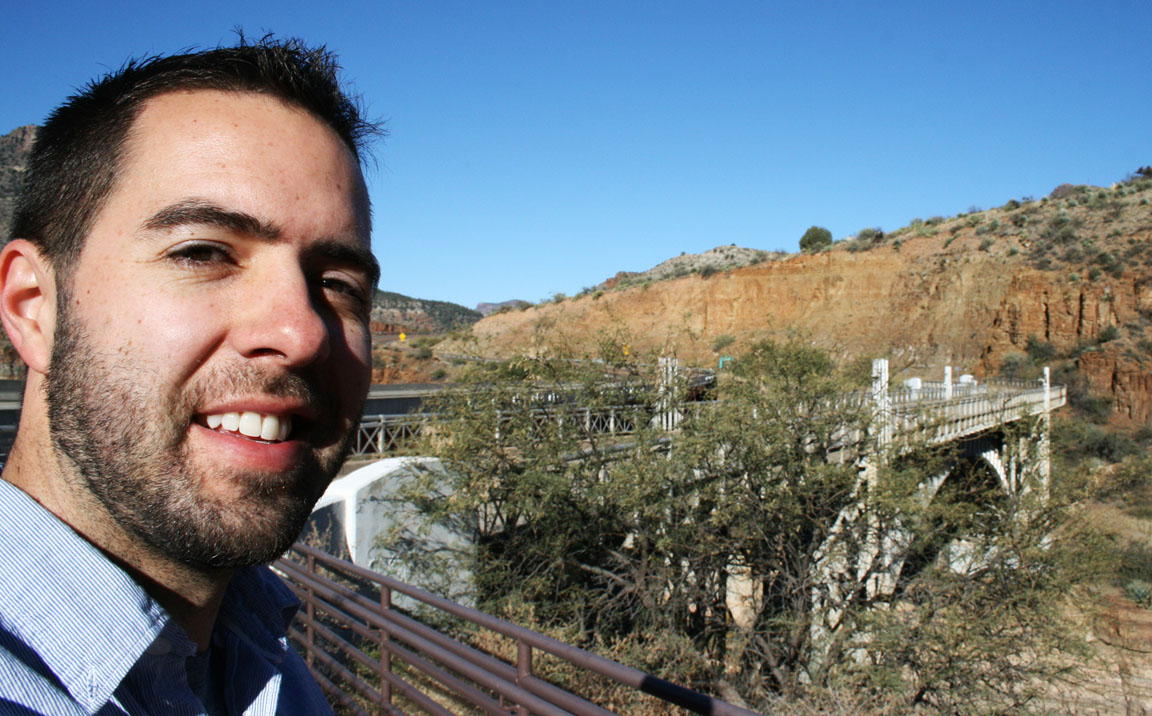
Back at road level, a picture of me with the two bridges in the background.
Hello there!
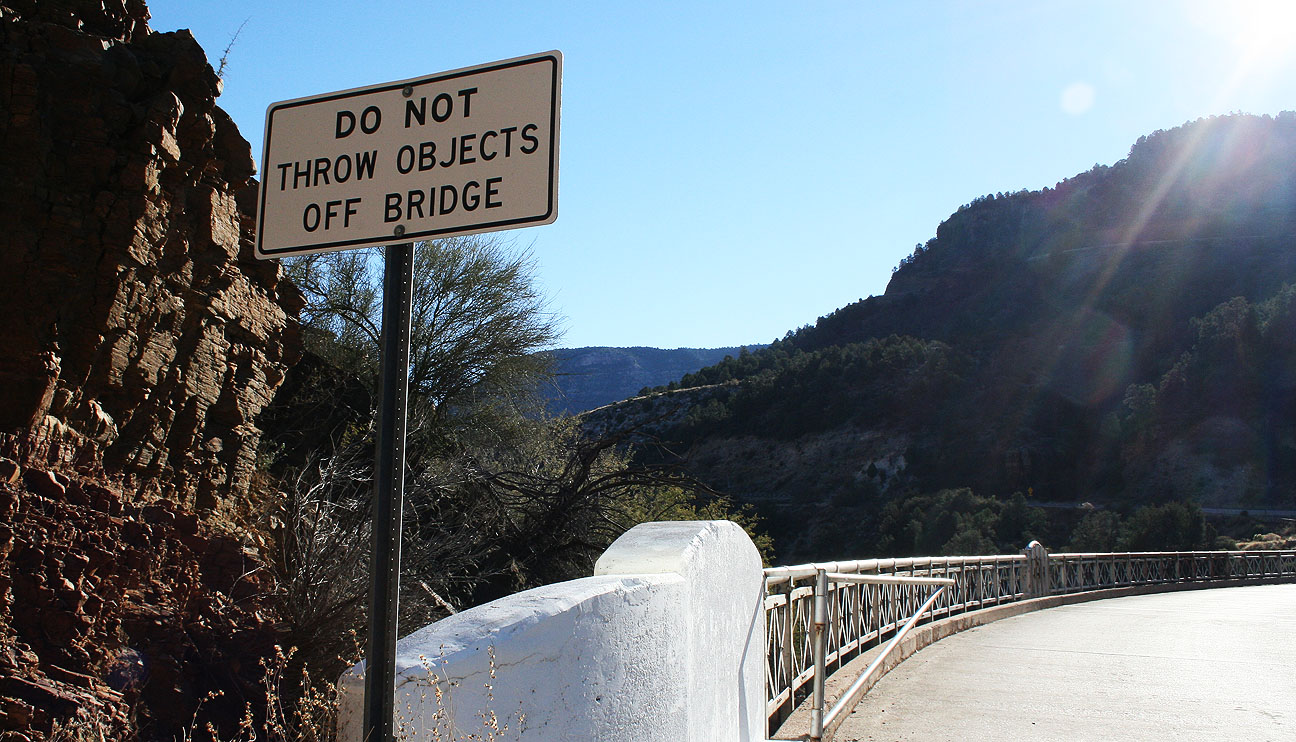
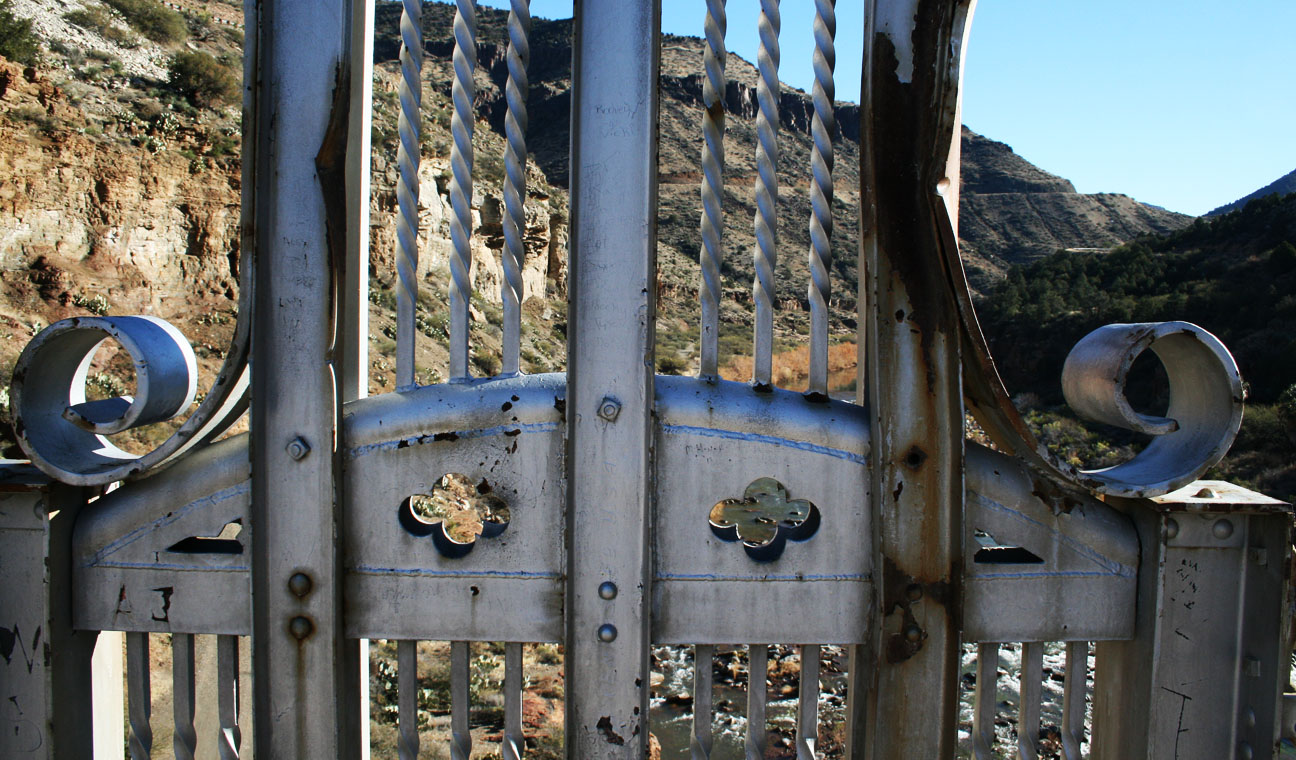
One thing that I love about old infrastructure is the level of effort that has gone into making things beautiful. Look at the intricate metalwork on the railings that line the bridge deck.
Here’s where I’d parked the ILX during the time I was hiking around. “Medecine” Ranch – anyone else want to guess that label on this crudely made wooden sign was a typo?
Words to live by, as stated by the US Department of the Interior, Bureau of Indian Affairs:
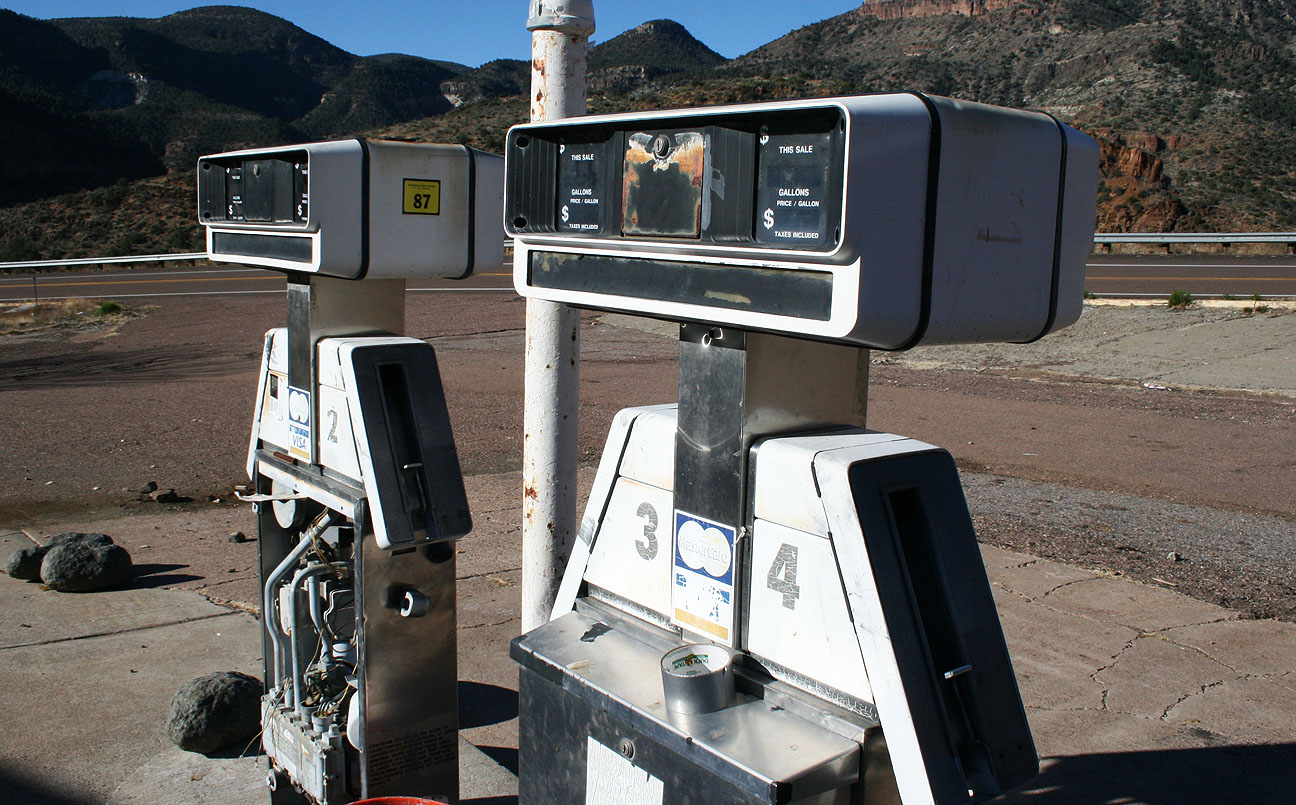
A short hike up the road, this abandoned gas station offered some entertainment.
I don’t know why, but those made me think of the robot character Johnny 5 from the 1986 movie “Short Circuit.”
Here’s the rest of that old gas station.
Inside, it’s a griffiti’d mess.
Need to use the restroom?
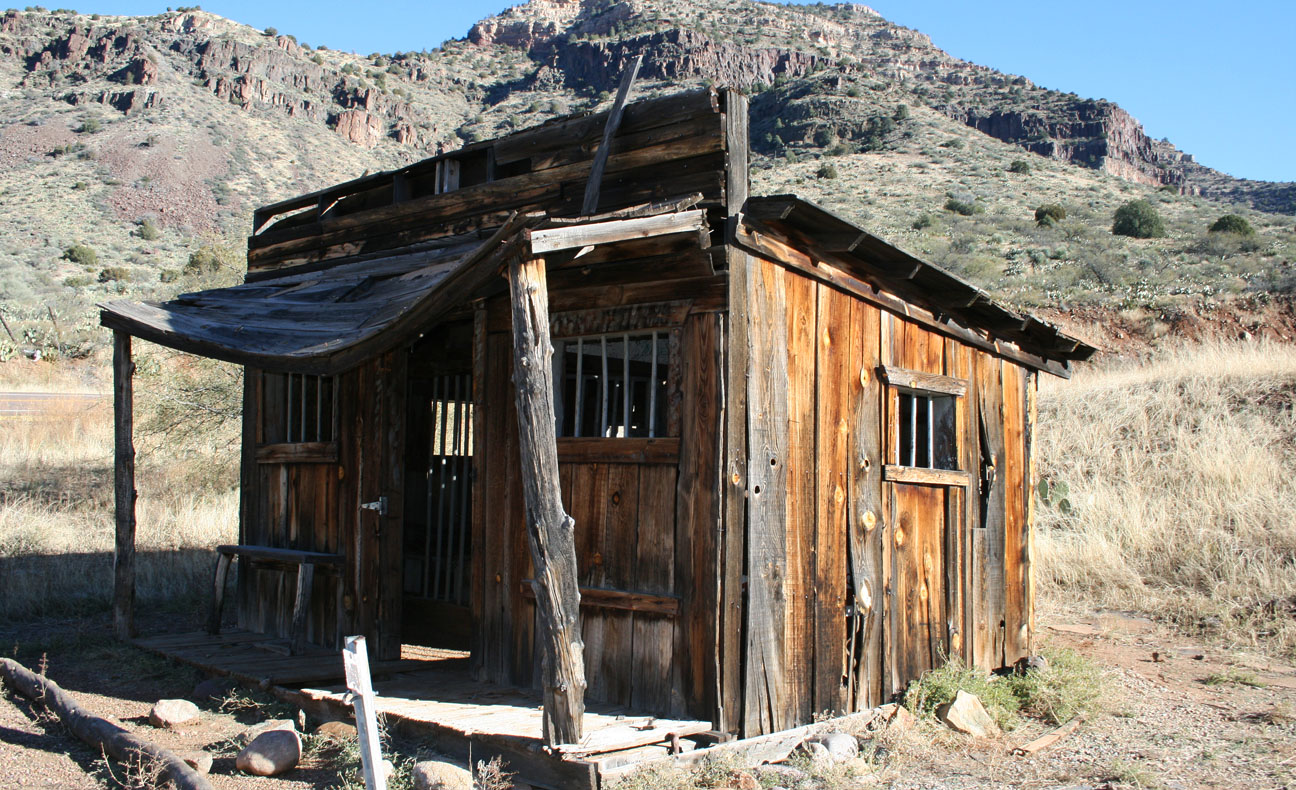
Not sure what the story was on this wooden shack out back.
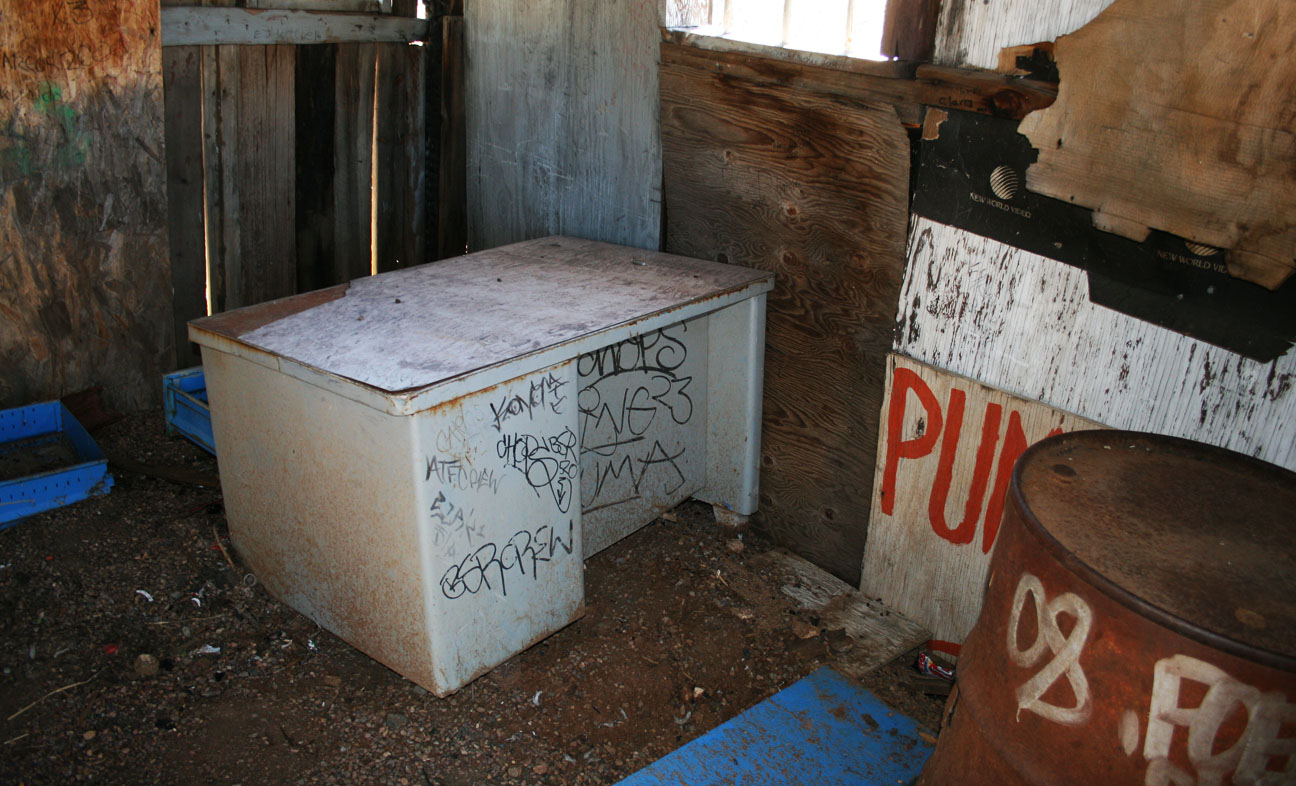
Inside, more trash, and a metal desk that might be nice with some restoration effort.
This weekend I decided to change things up a bit and hop onboard a train instead of hitting the highways for a long distance. The Verde Canyon Railroad is based in Clarkdale, Arizona and operates 20 miles of track. The company’s slogan is “It’s Not the Destination; It’s the Journey.” Sounded like the perfect type of experience for me!
My friend Chris and I headed northbound in the ILX on Saturday morning despite inclement weather. The car was surefooted and easy to control on the wet surfaces of Interstate 17 which climbed several thousand feet in elevation out of the Phoenix valley. By the time we reached a summit near Camp Verde, the rain had transitioned into snowflakes but thankfully they weren’t sticking to the roadways. Once we arrived in Clarkdale, Chris and I enjoyed some lunch what appeared to be the only place in town that was open: Main Street Cafe. We were the only ones there, and as a result had the attention of the entire wait staff. Score!
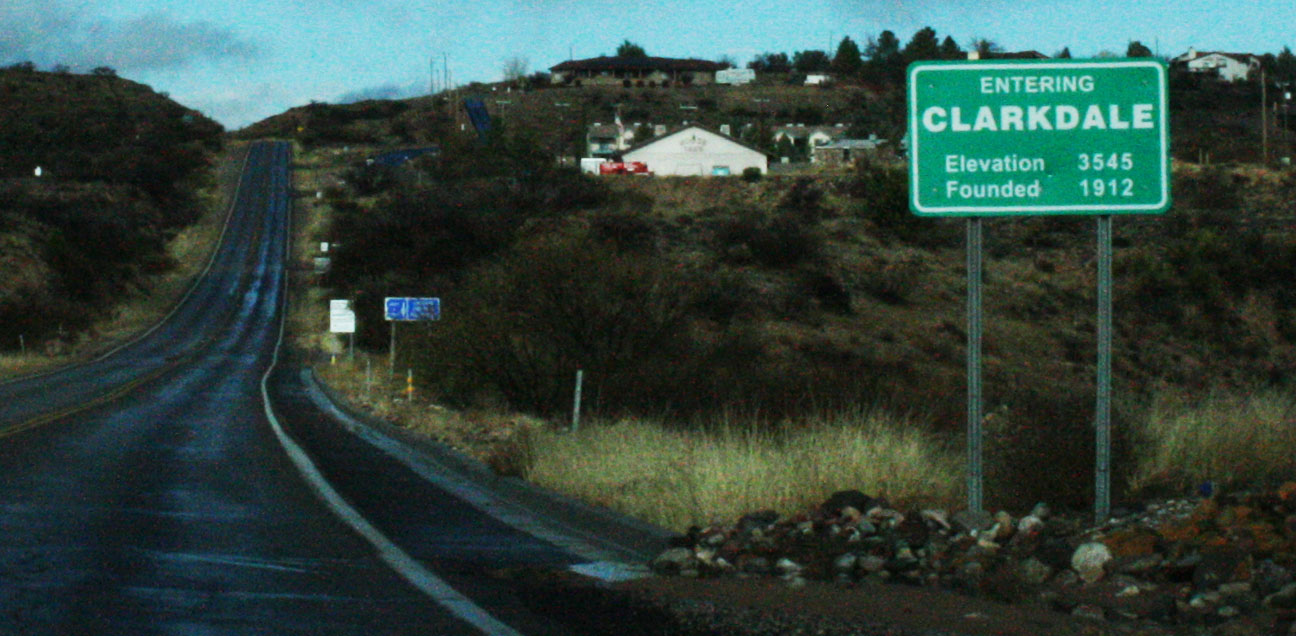
Clarkdale was founded in 1912 as a “company town,” much like the mining town of Bagdad which we visited this summer. It was named for Senator William A. Clark who owned the United Verde Copper Company. In its day, Clarkdale’s amenities were cutting edge, with electric streetlights, telephone/telegraph, sewer system, and public parks being some of the features of the master planned community.
The mine closed in 1953 and there were tough times for the town, but it was incorporated in 1957 and lives on today, with the Verde Canyon Railroad as one of its hub attractions. In fact, the railroad was originally built as a means of serving the mine. It connected Clarkdale with two other small towns, Drake and Perkinsville, which are now ghost towns (making notes here so I can visit both of those at a future date in the ILX).
Chris and I made our way to the railroad station and checked in, then met up with our friends Matt and Alan who would be joining for the experience. Our out-and-back, 40-mile round-trip ride took about 4 hours. The train’s pace was perfect to allow us time to soak in the great scenery along the way, as we followed the path of the Verde River westward. First Class accommodations were very comfortable, affording two plush couches to our party of four. Select beverages, snacks, and appetizers were included with the $79 fare, and each of us made multiple trips to the concessions area of our car, which was named “Sycamore.”
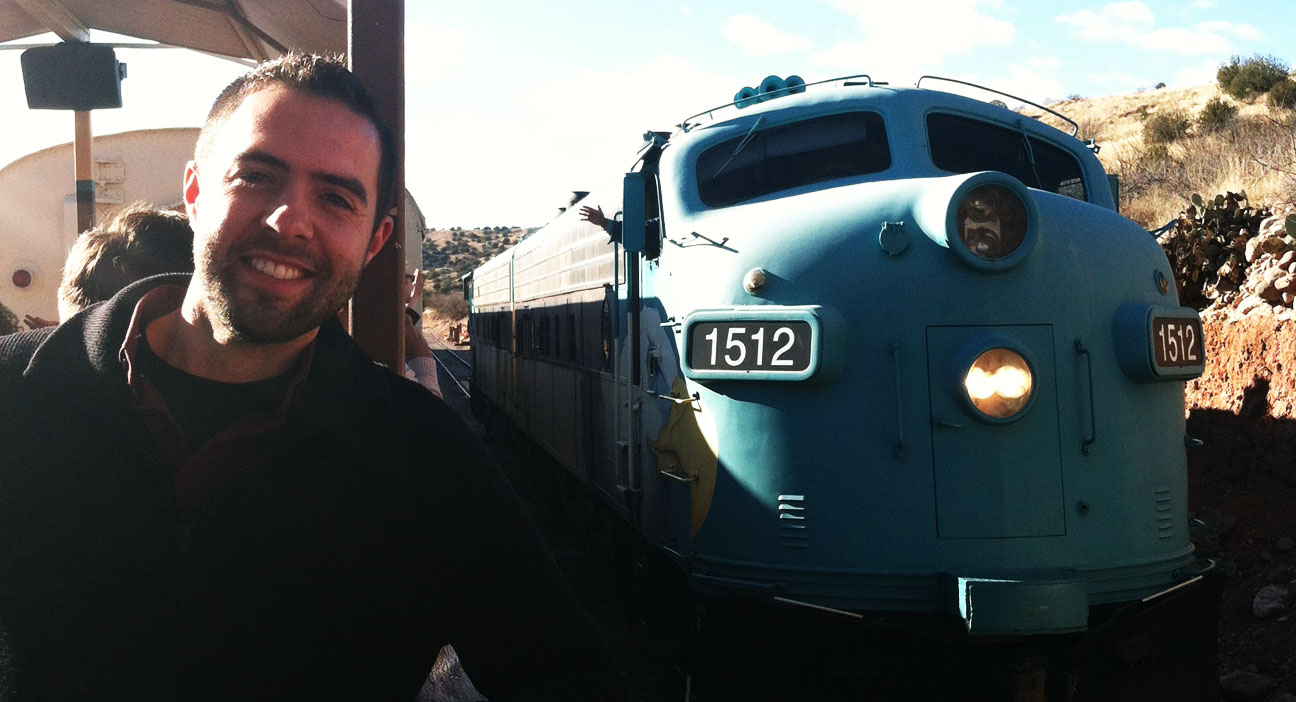
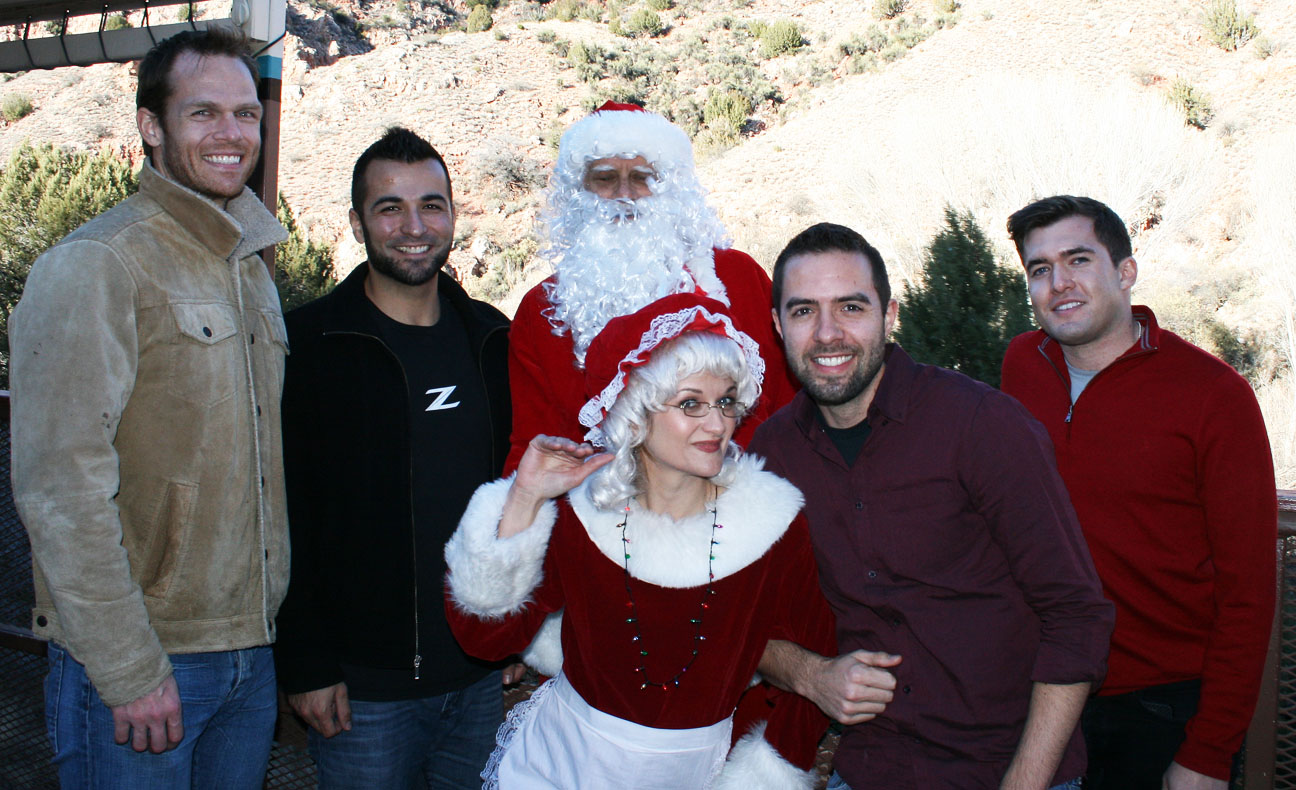
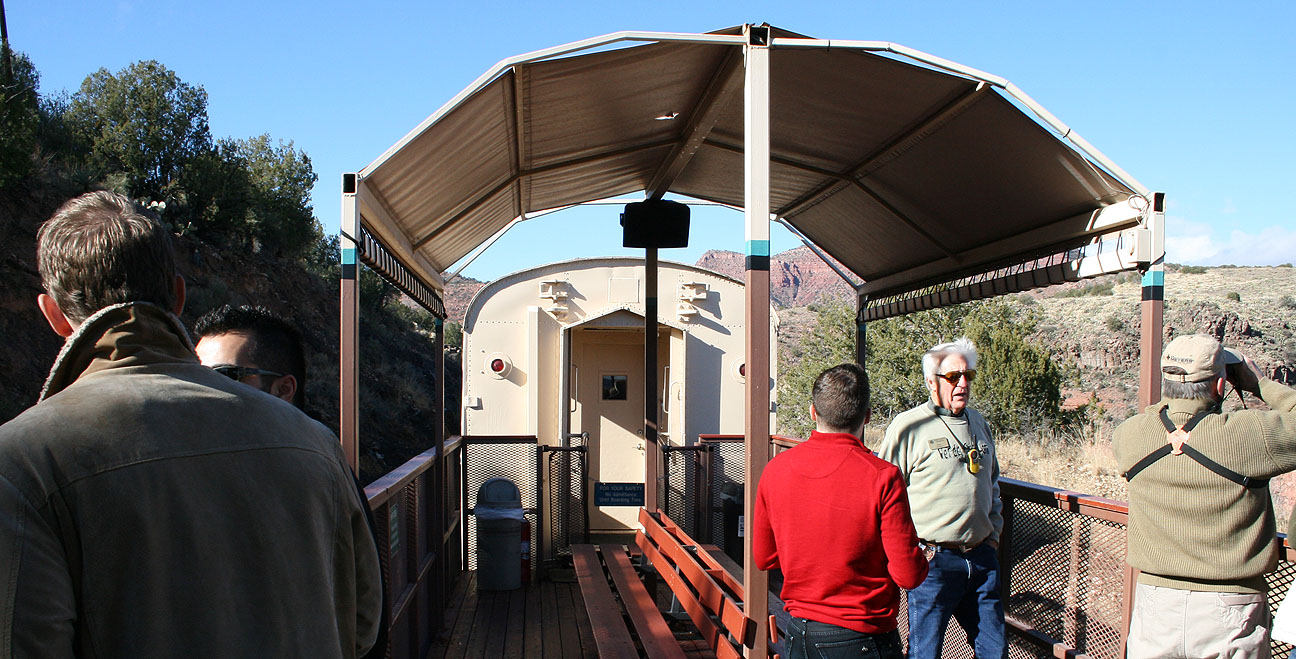
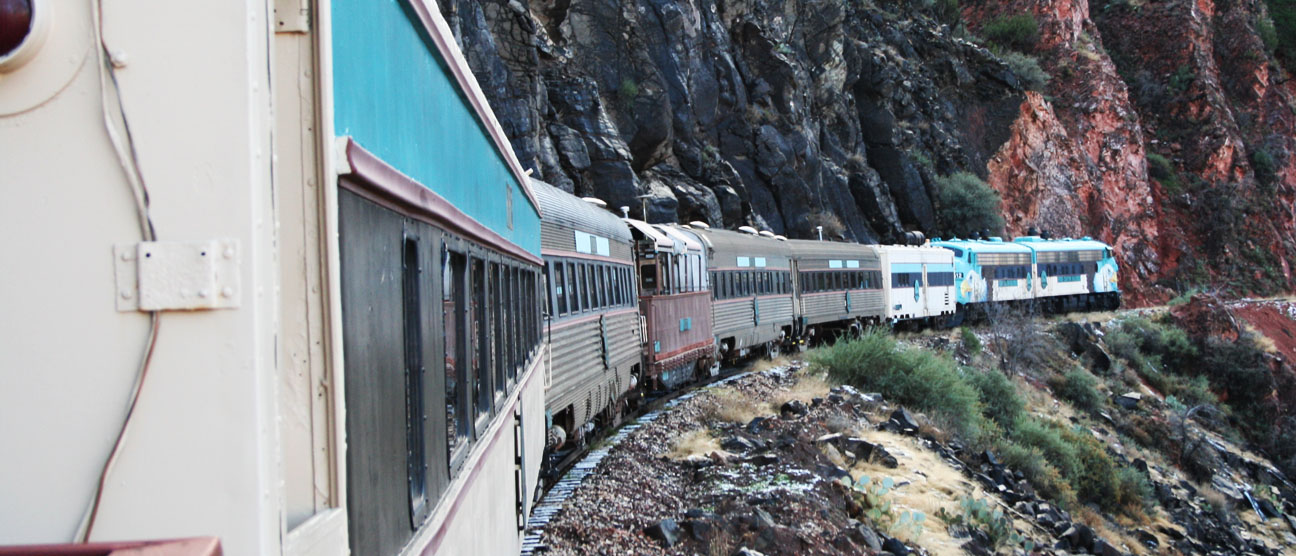
Power was provided by two vintage FP7 diesel engines, built originally by the Electro-Motive Division of General Motors for the Alaska Railroad in 1953. It’s amazing to me that 60 years later they are still providing reliable service. Connected to our passenger car was an open-air “gondola” car with small canvas umbrellas and wooden benches in the center. As long as we had our sweaters on, it made the best place from which to view the Verde Canyon’s scenery. We had a special visit from Santa and Mrs. Claus along the way. Oh what fun it was to ride!
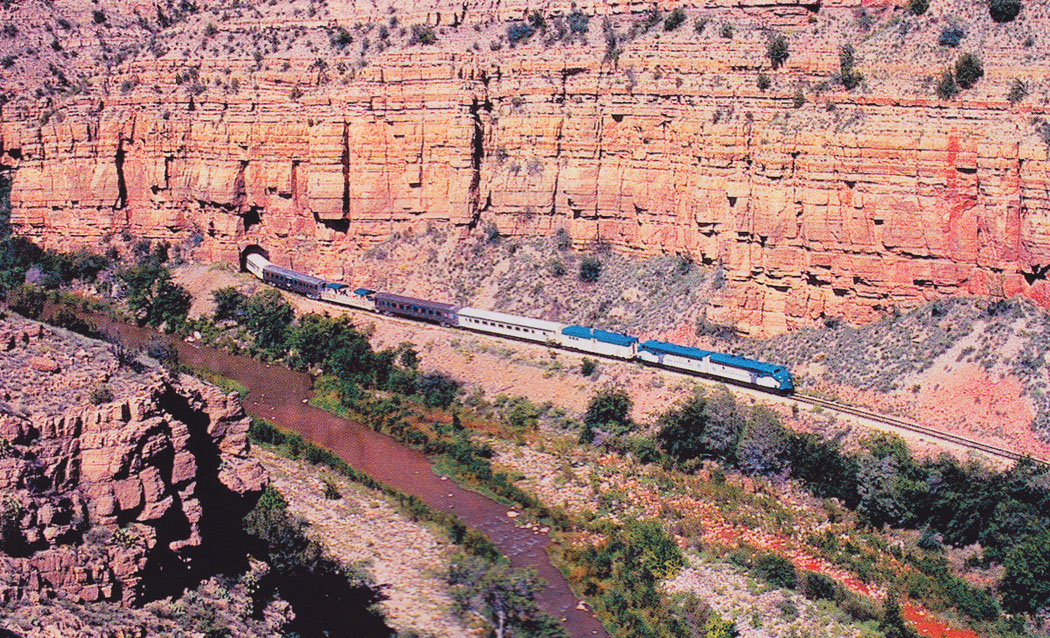
My favorite part of the trip was going through the 680-foot-long (curving) tunnel that took 6 months to carve out in 1911. At times, the train came within only 6 inches of the walls. Our ride was full of other attractions along the way, including cliff dwellings, caves, bald eagle sightings, and an up-close view of the abandoned train depot building in Perkinsville, Arizona that has fallen into disrepair.
Check out the many pictures and video below for a more detailed look at our Verde Canyon Railroad experience. Thanks for joining!
Jump starting our morning with some beverages from Starbucks. The ILX has some of the best cupholders in the industry!
Happy campers, heading northbound.
The Prescott National Forest welcomed us with its 1.25 million acres of land in north-central Arizona.
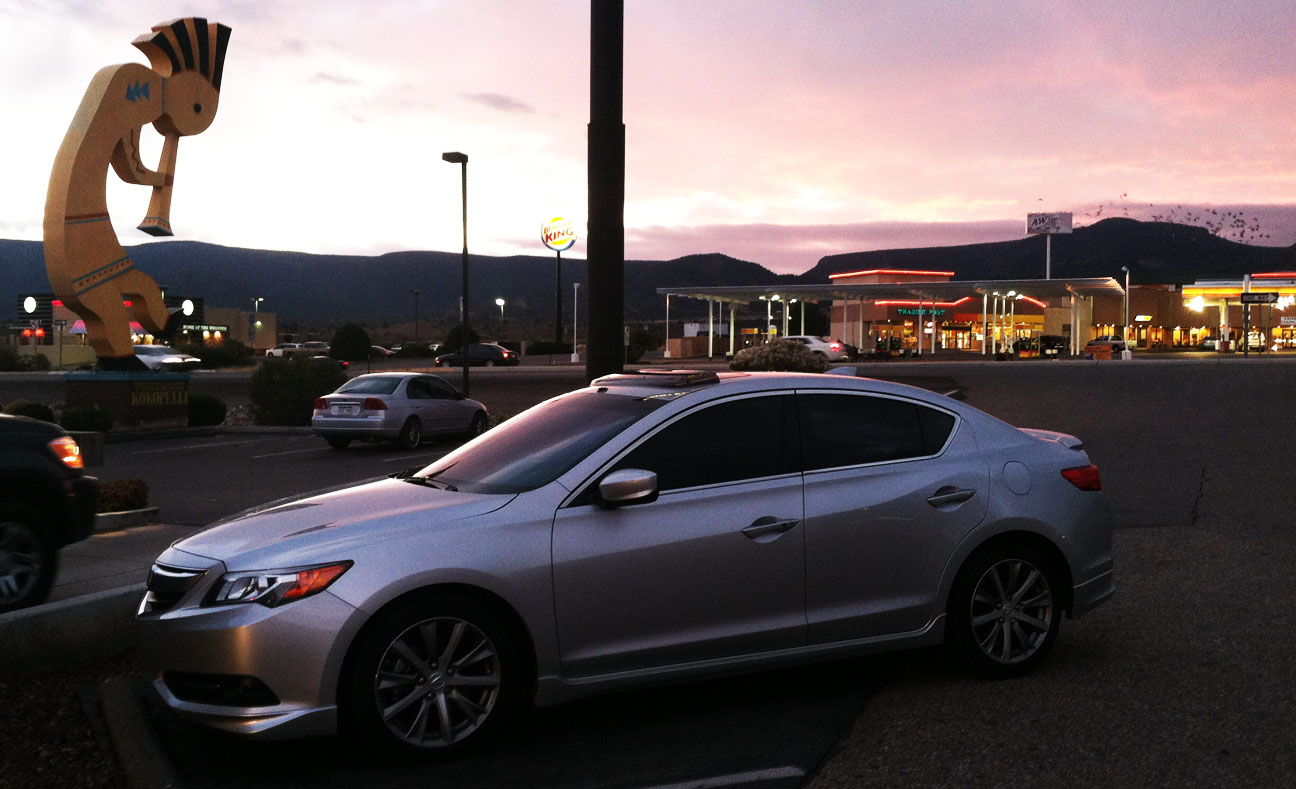
Camp Verde, Arizona. Bathroom break at the BK with rain that was just a few degrees away from becoming snow.
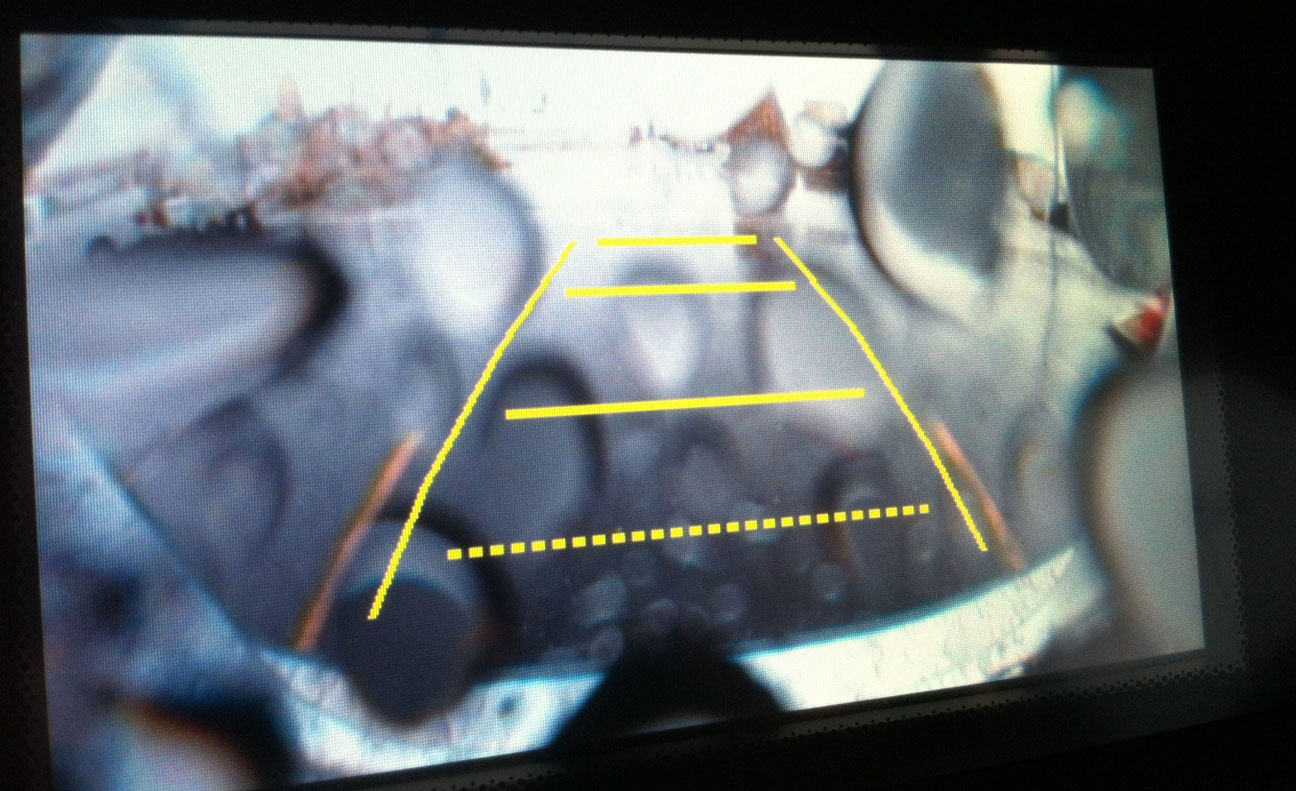
Backing out… err… guess that rearview camera won’t be doing us much good!
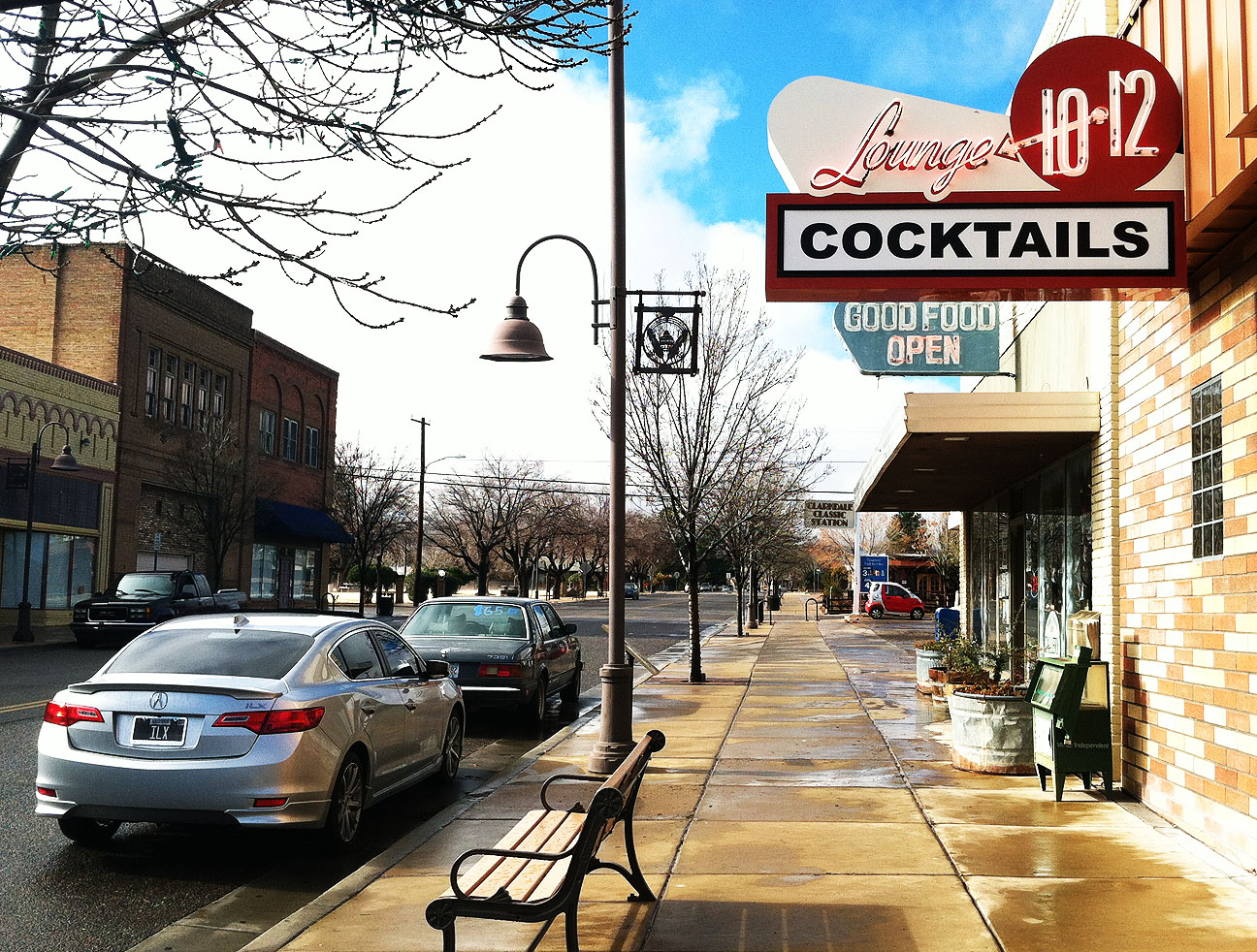
Highway 89A weaved through a neat historic business district in the town of Cottonwood.
Soon we pulled into Clarkdale town limits.
It’s been years since I saw a gas pump with “rolling” numbers like this instead of digital ones. Believe it or not, this one in Clarkdale is still in service.
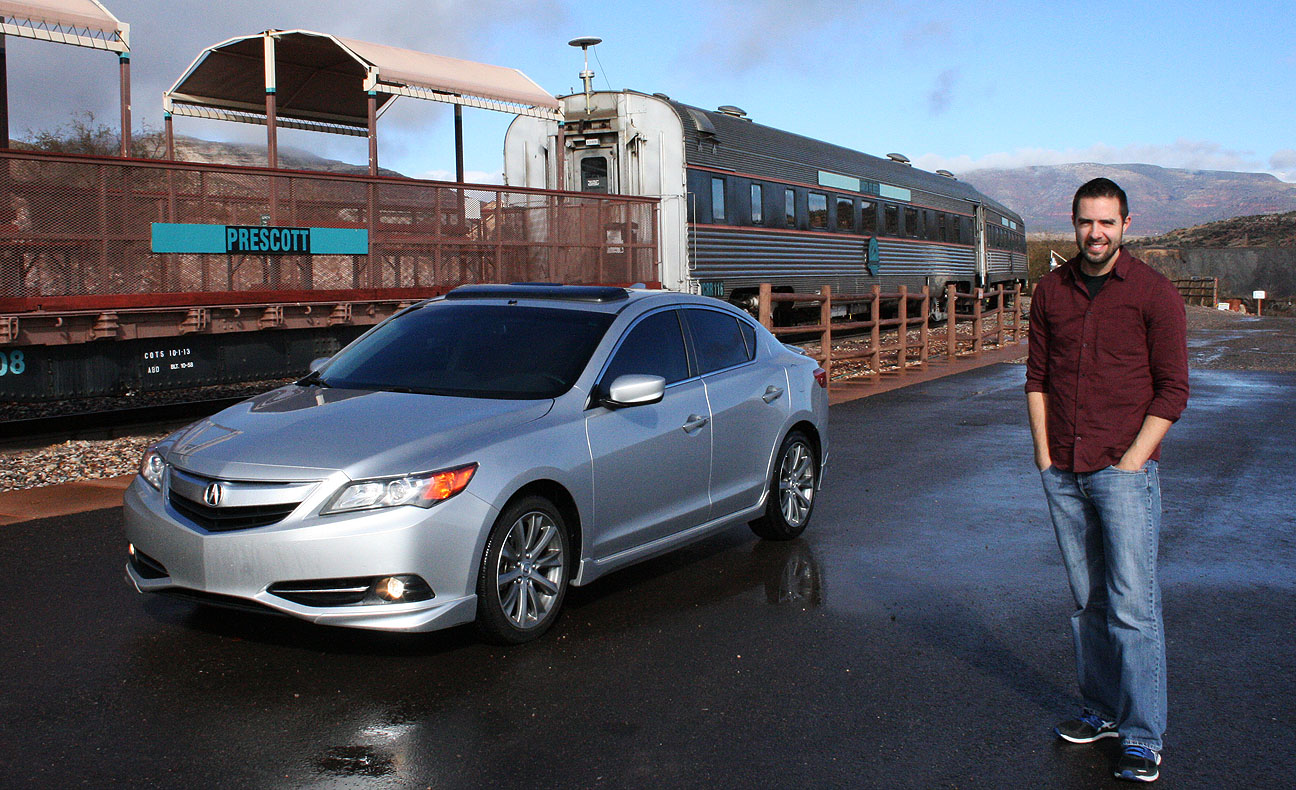
Our train was waiting for us when we arrived at the station 15 minutes prior to departure.
Beauty shot before getting checked in.
All aboard!
We were assigned to the Sycamore car.
Among our first attractions were these ancient Sinagua Indian ruins, high in the canyon walls. These date back to around 1100 – 1125 AD!
We got settled in for the ride in our comfortable couches.
The gondola car was an inviting place to hang out, though a little chilly when we were rolling through the shade.
Don, one of the many guides who we had, was pointing out something to Matt here.
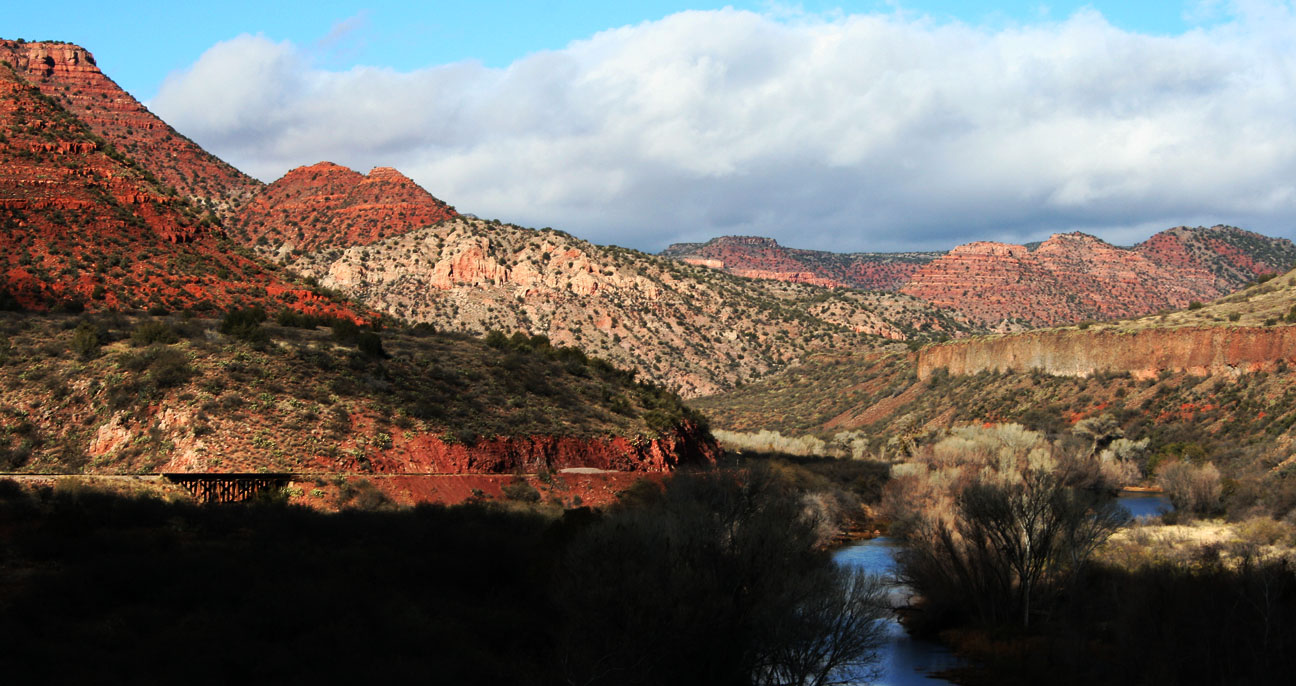
For 20 miles, we curved along the Verde Canyon crossing trestles and bridges.
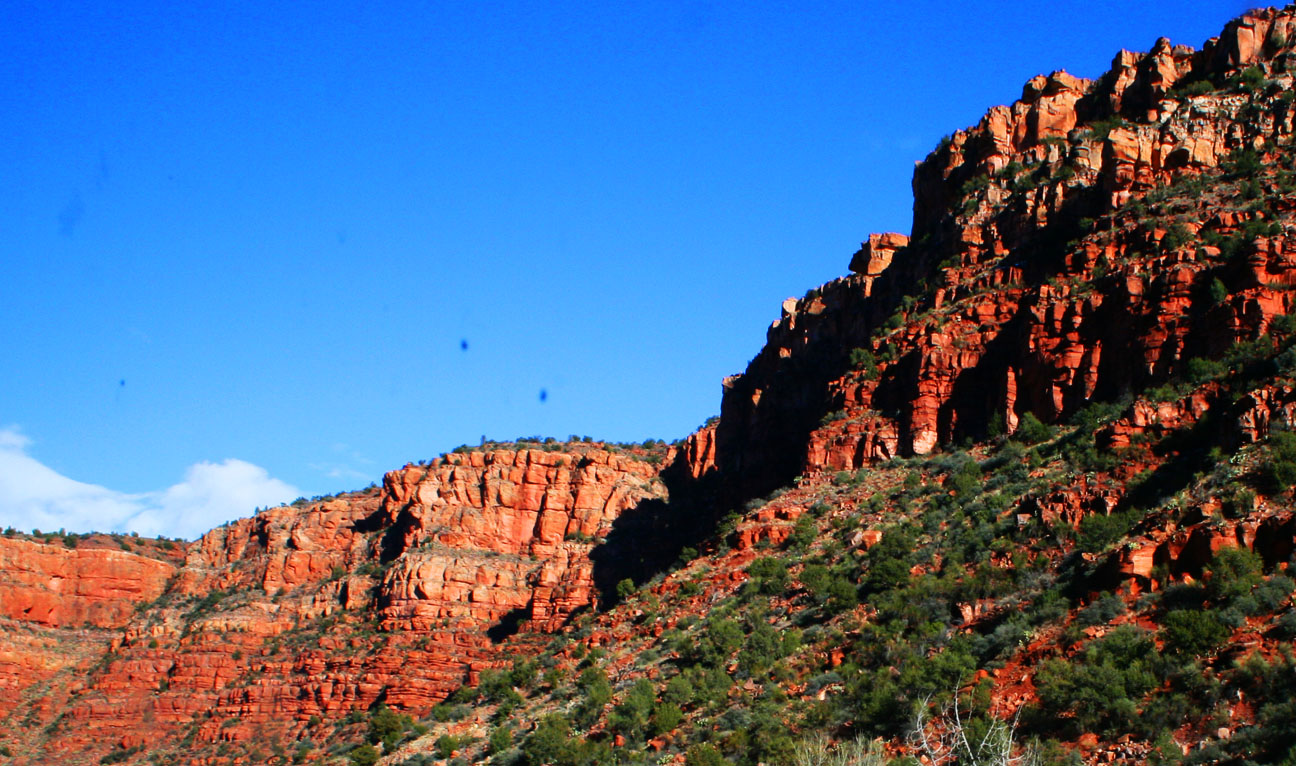
Red rock scenery is similar to that of neighboring Sedona.
This is what the inside of our First Class car looked like. These passenger coaches were originally built in 1946 and used in a commuter capacity.
It was great to kick back and relax. The train is a slow-paced way of travel but it’s a great escape from the hustle and bustle of the city.
More from the gondola car.
This was my favorite part of the train ride: the 650-foot-long tunnel. Photo scanned from Rail Magazine, the official magazine of the Verde Canyon Railroad, page 32.
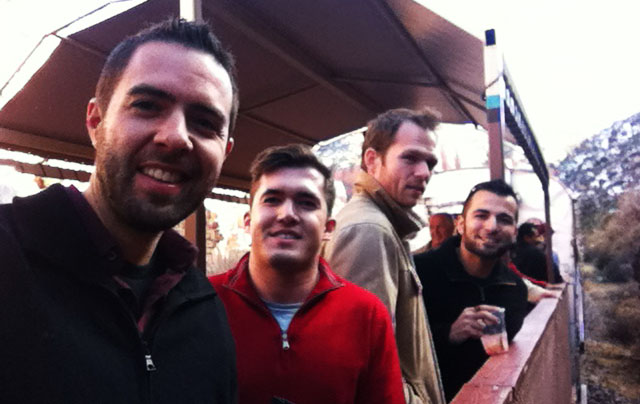
Matt, Alan, Tyson, and Chris
Chris taking a peek at something in the distance. It was neat to see some snow on the ground outside.
This is the old 1911 Perkinsville Depot that we passed, just before the diesel engines uncoupled and switched ends of the train for our return trip. Perkinsville is now a privately owned place, with a population of 10.
The Perkinsville Depot was featured briefly in the 1962 film “How The West Was Won.”
Heading back on the return ride!
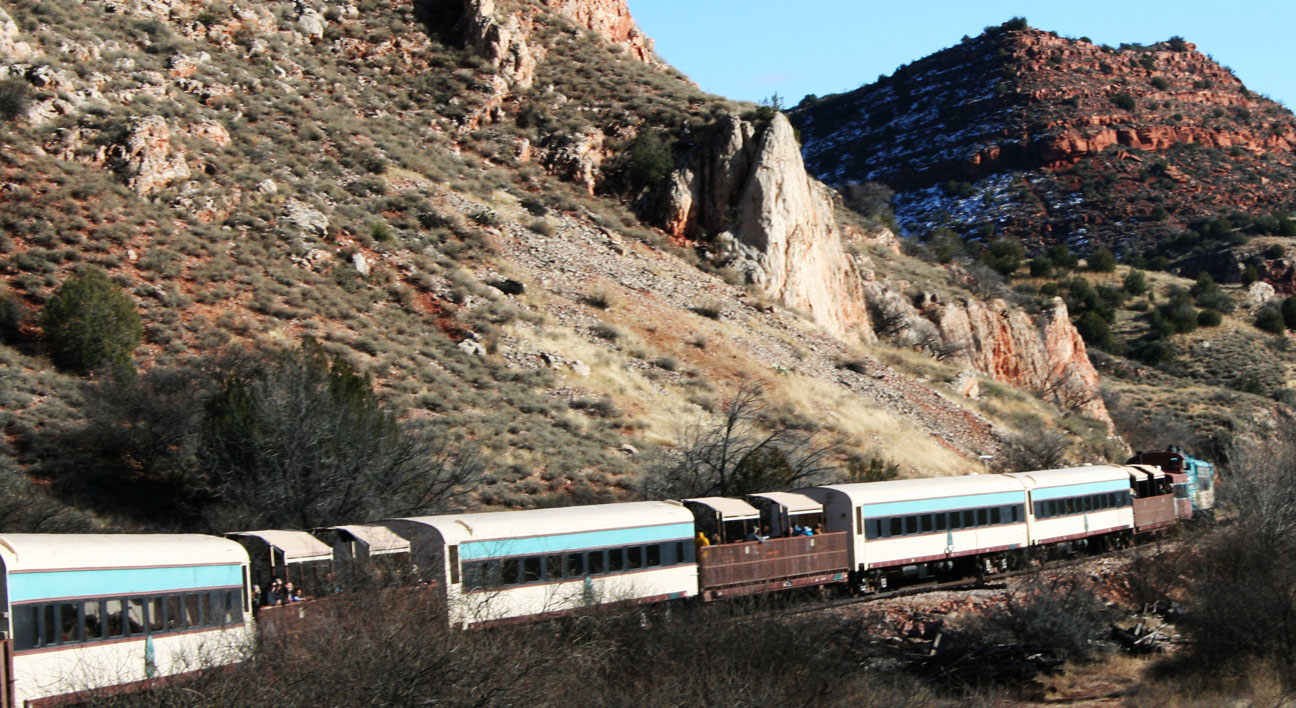
View toward the front of the train, showing the alternating passenger cars & gondola cars.
Alan looked a little too excited to be there.
Chris captured a photo of two of the bald eagles that reside in the Verde Canyon, on top of a dead tree.
Thanks, Mr. and Mrs. Claus, for a great ride!
Closing out a memorable adventure with a sunset drive back to Phoenix via I-17 in the ILX.
1. a salt of hydrochloric acid consisting of two elements, one of which is chlorine, as sodium chloride, NaCl.
2. a compound containing chlorine, as methyl chloride, CH3Cl.
To me, the word itself carries a vibe of toxicity, harshness, and abrasion. The rusty pots and pans that were hanging along the fence at the entrance to town thus provided a curious, yet fitting, welcome to a community that resembles 1913 a lot more than it does 2013. Join me on a drive to the oldest continuously-inhabited mining settlement in the great state of Arizona: Chloride.
I could drive the Highway 93 corridor between Phoenix and Las Vegas with my eyes closed – that’s how familiar I am with that 292-mile stretch of road. In the hundreds of times I’ve passed the turnoff for “Chloride,” though, I never let my curiosity get the best of me and actually checked it out. That is, until last Saturday when I was on my way home from the Thanksgiving holiday in Utah. “Today’s the day,” I thought to myself as I hit the brakes in the ILX and made my way to the left hand turn lane. “I’ve gotta see what this place is all about.”
For each of the 4 miles that I rolled eastward on Route 125, I journeyed deeper and deeper into the past. I ended up in the year 1864, when Chloride was bustling with commerce and was home to 2,500 people who rushed to settle there in search of silver, gold, lead, and zinc deposits in the Cerbat Mountains. My ‘ILX stagecoach’ kicked up a few billowing dust clouds in the sections of two-lane, winding road that had experienced flooding recently. I drove in search of the various attractions advertised on a crude wooden sign alongside the road. It promised “Old Buildings.” What more enticement did I need?
Approaching town limits, I passed a cattle guard at the west end of town and saw a small sign that said CEMETERY alongside the road. I downshifted the ILX to 2nd gear and slowed to 15 mph in the 25 mph zone because there was simply too much scenery to soak in. All around me were relics of the past, homes that stood half-boarded up like they were one step away from being good for nothing more than firewood.
A gas station on the north side of Route 125 had antique pumps out front that have been dry for decades. As I neared the intersection of 2nd Street & Tennessee Avenue, I saw that life did exist in Chloride. Two bearded men were smoking in front of a tavern and gave me a stare-down as I slowly rolled past them. I might as well have been driving a spaceship because that’s how much of an outsider I felt. If it was possible to “tiptoe” in a vehicle, that’s what I felt like doing. I didn’t want to call any attention to myself as I explored this fascinating little town.
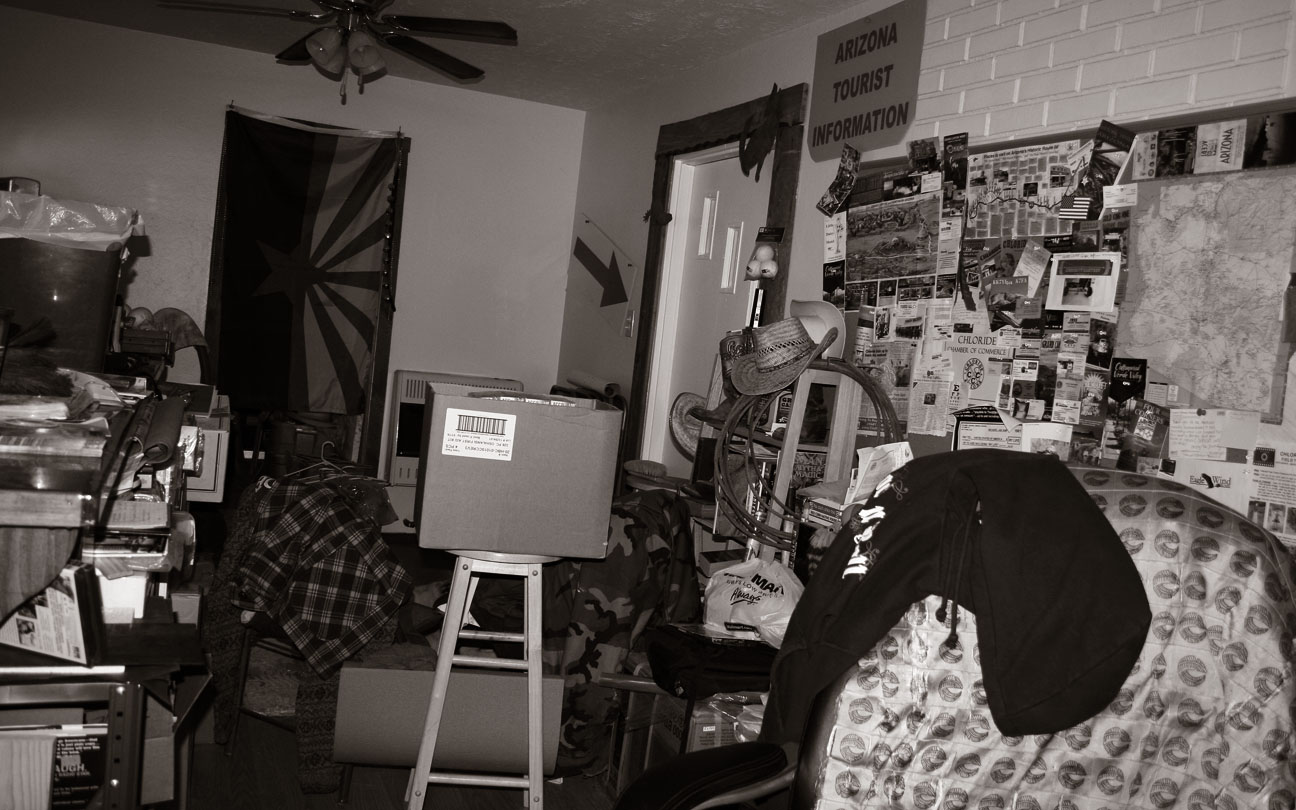
My first stop was the Mineshaft Market & General Store. One step inside the front door and I quickly recognized why the sign out front said, “Pack Rat’s Porch.” This place was chock full of… well… stuff. Basic food items lined one wall while the rest of the shelves were filled with trinkets, leather goods, and souvenirs. I used the restroom at the back of the store, then went into an adjacent room with a sign “Arizona Tourist Information.” That tourist information, as it turns out, was a room fitting for the TV show Hoarders. Miscellaneous brochures and pamphlets were scattered around haphazardly as if a tornado had just rolled through the room.
I took a driving tour to explore a few square blocks of Chloride, envisioning what the place might have been like 150 years ago. Still most of the roads are unpaved. “Payroll Avenue” was one of those streets. I wonder if anyone actually ever struck it rich in Chloride? If they did, I certainly imagine they would have since moved elsewhere. I pulled over and got out of the car when I saw a woman who’d walked up to the post office to retrieve her mail. “How long have you lived here?” I asked. “Four years,” she said, “But my boyfriend’s been here 20.”
She confirmed that the few hundred people who still live in Chloride do work primarily in the mining industry. The town attracts a few tourists a year for its St. Patty’s Day parade and an “Old Miner’s Day” parade each June, complete with a gunfight at high noon. The town’s two restaurants and two bars are usually filled to capacity during those seasonal festivities. Perhaps I’ll go back for the “all town yard sale,” held each May and October when residents display their wares on their front lawns in hopes of finding the right buyers.
I thanked the woman for the information, saddled back up in my ILX, and headed westward on Route 125 into the sunset, glad that I had stopped in this quaint little town but also glad to get back to the reality of 2013. Hope you enjoyed experiencing it with me. Below are the photos that I captured during my visit.
A fence lined with pots & pans greet visitors arriving from the west.
It truly felt like I was time traveling as I got closer to the business district.
On the outskirts of town, a May 1976 time capsule created by the students of the Chloride School awaits its unveil at a future unspecified date.
I don’t think this service station had the 91 octane fuel I would have needed. Luckily I had a half tank of gas.
Below (building at left) is the post office which has been in continuous operation since 1873.
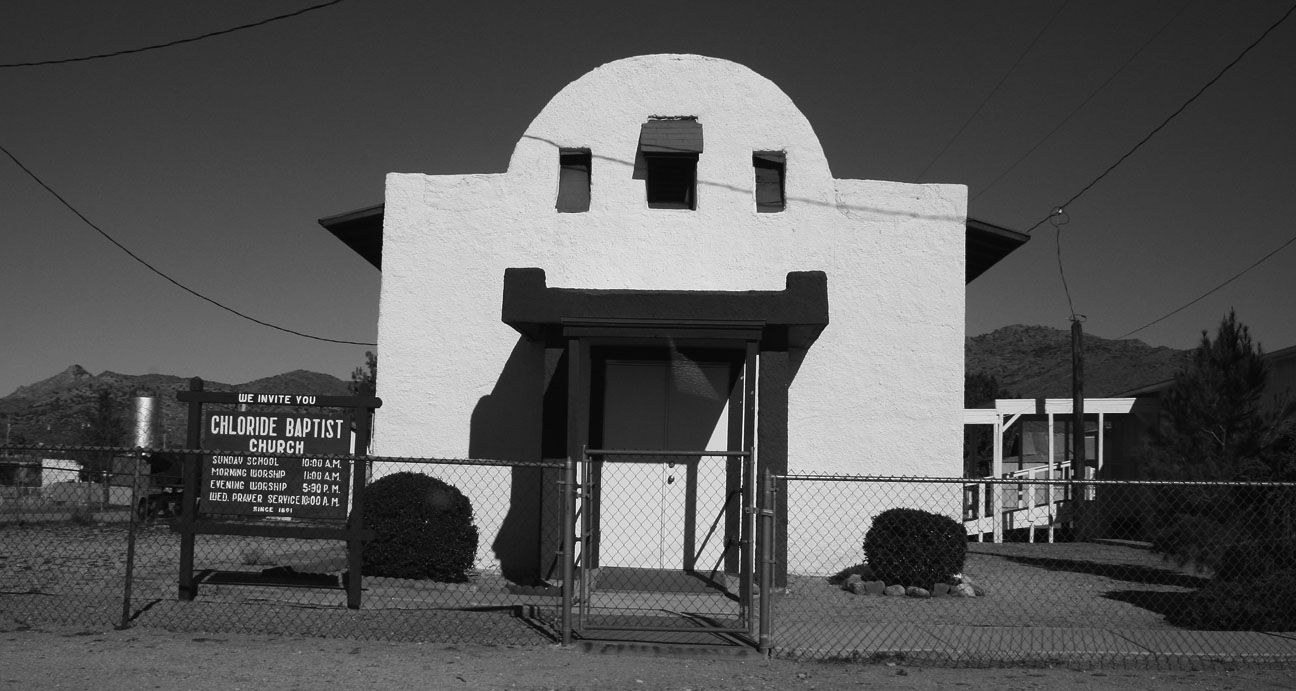
The Chloride Baptist church (established 1891) has Sunday School services at 10:00 a.m. This was the only church building I saw within town limits during my drive through.
This “pedestrian-only” ghost town street looked like a Western movie set. It reminded me of my visit to Old Tucson Studios.
The center of commerce: Mineshaft Market. The Pack Rat’s Porch invites visitors to “Come Sit a Spell.” It’s easy to tell that the pace of life in Chloride is moving in slow motion.
I parked the ILX and took a peek inside to see what kind of wares I could find.
The sign at hanging on the wall at right reads, “Arizona Tourist Information.” Good luck finding it in this disastrous room.
When’s the last time you used a pay phone?
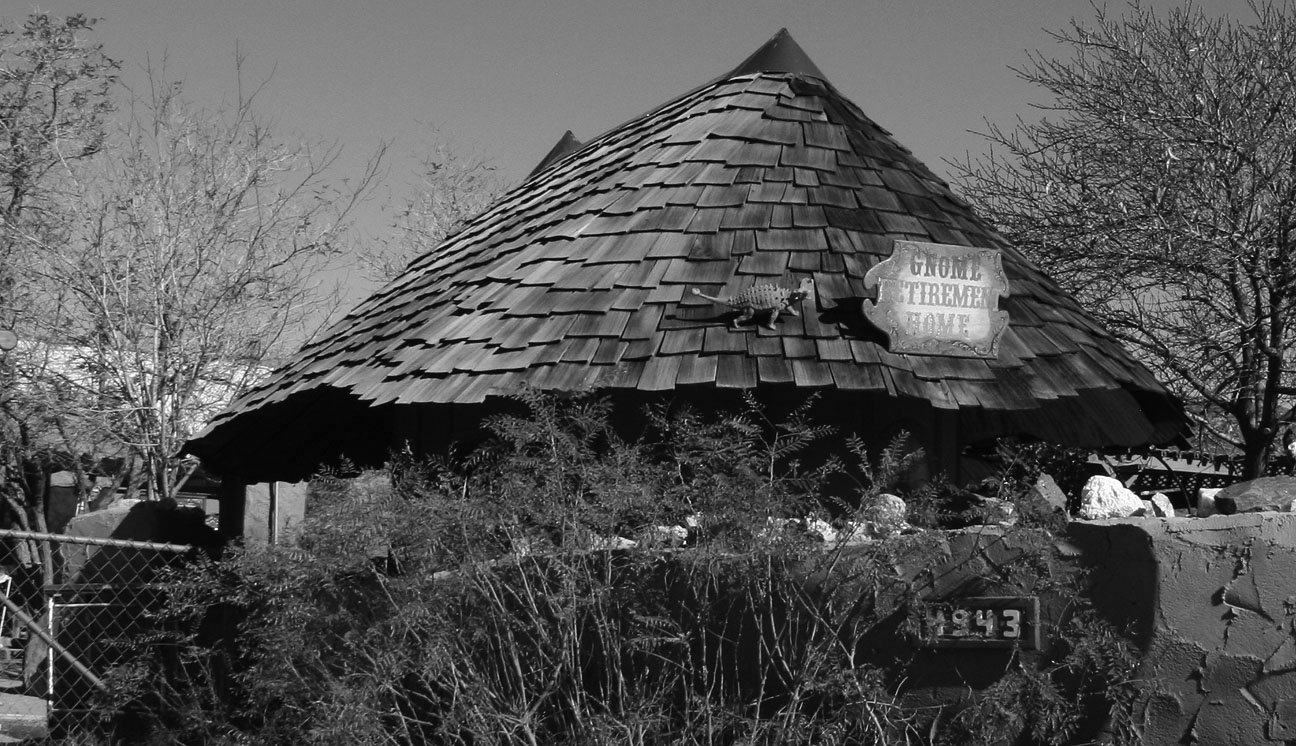
A small building (it stood no taller than my height) had a sign out front that said “Gnome Retirement Home.”
Finally, heading back to civilization in the real world and happy to set foot back in 2013.
SWEET ILX
Thanks to my friend Paul for capturing some pictures of the sporty looking ILX at the Phoenix Auto Show this past weekend.
MAINTENANCE UPDATE
On Monday, my ILX received an “A13” service from Acura of Tempe, Arizona. It included:
Oil change (0W20 synthetic): $46.70
Tire rotation: $20.00
Manual transmission service: $69.95
“Shop supplies”: $8.28
Total invoice with tax: $150.92
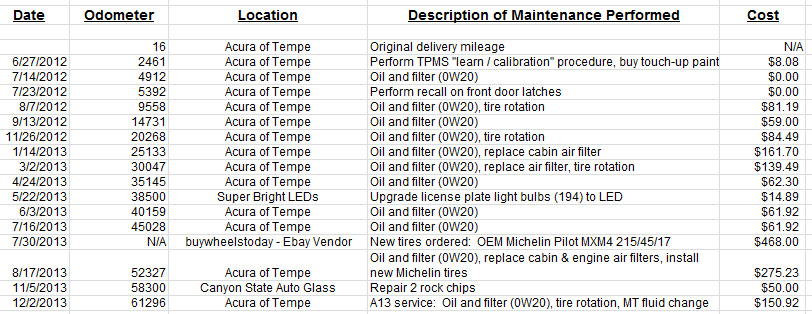
Current maintenance summary since new (click to enlarge):
Back on the road I go, riding into the sunset until the next episode!





































































































 drivetofive